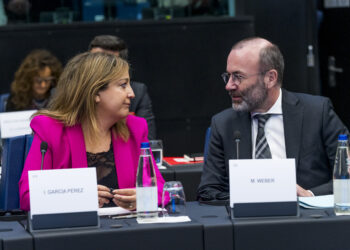
Brussels – Confindustria welcomes the report by Massimiliano Salini, MEP for Forza Italia and Vice-President of the European People’s Party in the European Parliament, on the proposed revision of the car and van CO2 emissions regulation. Presented yesterday (2 June) to the Environment Committee (ENVI), Salini points out that the text represents “a concrete proposal that combines sustainability and competitiveness, without ideological deviations,” and which aims “to establish an effective and realistic decarbonisation pathway consistent with the principle of technological neutrality.” According to the Vice-President of Confindustria for the European Union, Stefan Pan, “the draft report overcomes many of the critical issues in the Commission’s proposal, addressing the sector’s concerns with concrete solutions: it is now important that it is approved without weakening its content.”
The proposal will be discussed in the Environment Committee, with the final vote scheduled for this autumn. It will then be put to the plenary for consideration. The report introduces a new category of vehicles with zero tailpipe emissions, powered exclusively by renewable fuels (biofuels and e-fuels), which will be treated in the same way as electric vehicles. Salini stressed that “only by also promoting renewable fuels can we ensure true technological neutrality and accelerate the decarbonisation of road transport.” Furthermore, the proposal adjusts the 2035 reduction target by proposing a 90 per cent emissions cut for cars, incorporating the flexibilities provided for by the Commission – namely credits for low-carbon fuels and steel – without, however, imposing strict limits on their use or viewing them as mere compensation for the remaining 10 per cent. For vans, the target is lowered to 80 per cent, maintaining the same flexibility mechanism as for cars. Finally, the compliance period (averaging) is extended from three to five years, giving manufacturers more time to meet the interim reduction targets and also providing a gradual pathway for vans. For vans, moreover, the 2030 target is reduced from 40 per cent to 30 per cent, while “super-credits” for small cars and vans are strengthened and expanded, to incentivise the production and uptake of more affordable, low-emission models. Finally, the report also proposes freezing the “Utility Factor” parameter, which governs type-approval testing for plug-in hybrid vehicles.