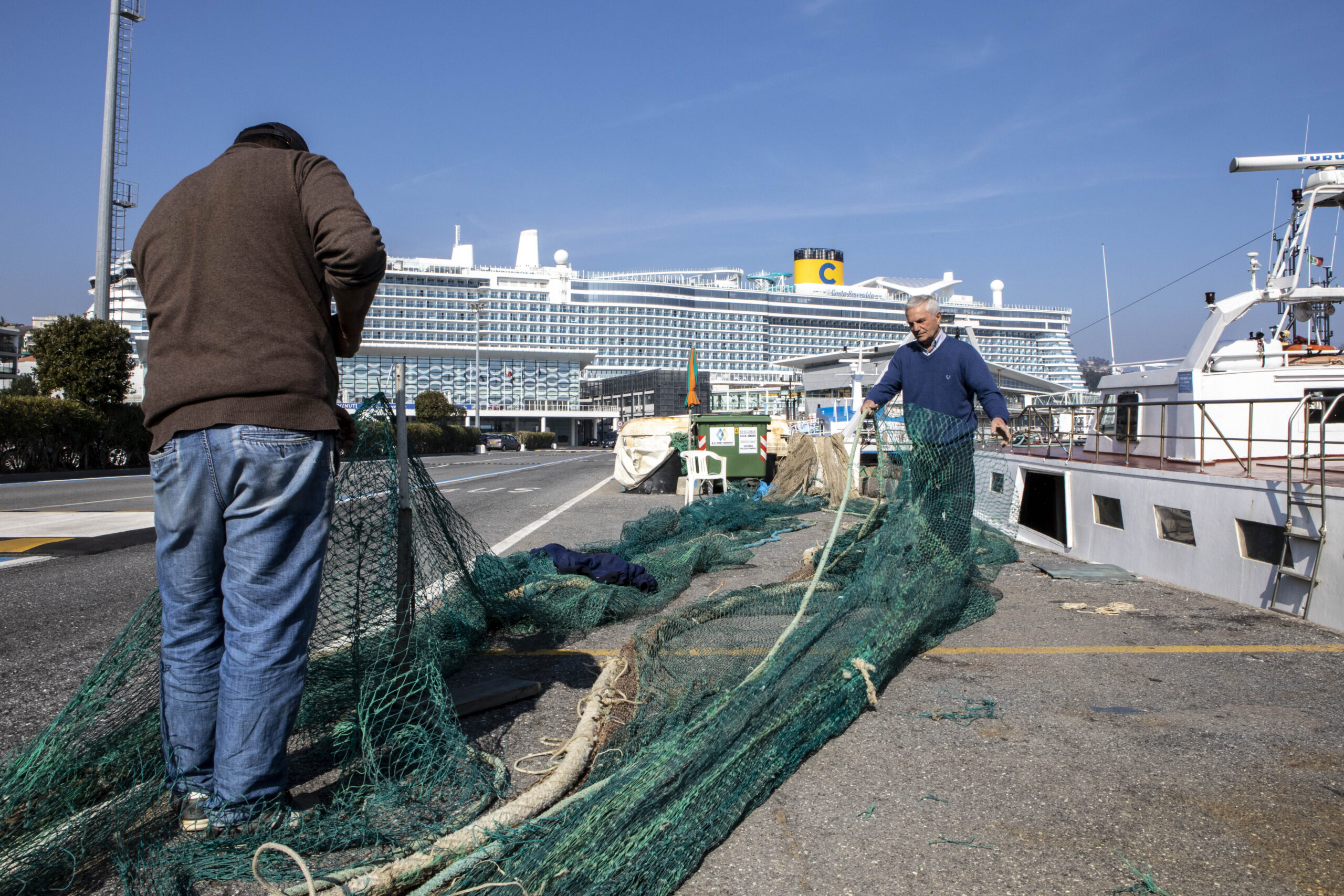
Brussels – “France will work toward the next multiannual financial framework and toward a solid budget for the fisheries sector,” said the French Minister for the Sea and Fisheries, Catherine Chabaud, upon her arrival at the informal meeting of EU fisheries ministers held today (29 July) in Cork (Ireland). Paris is taking a combative stance because, as the minister herself explains, “we no longer live in the same world in which the common fisheries policy was conceived. We need to attract young fishermen.” This is why a sound agreement on the next seven-year budget (MFF 2028–2034) is needed, “because it is difficult for fishermen to cope year on year without a long-term outlook.”
France appears to have found an ally in Ireland, a country whose government currently holds the rotating presidency of the Council of the EU: “If recent experience has taught us anything, it is that, in an increasingly uncertain and unstable world, the regulatory framework must be flexible enough to adapt to developments, both positive and negative,” said the Irish Minister for Agriculture, Martin Heydon.
For Ireland, negotiations on the MFF for the period 2028–2034 are crucial, given that the overall aim is to reach an agreement by the end of the year. Regarding fisheries, the Commission has proposed a reorganisation that abolishes the sector’s autonomous funds in favour of unified management. In particular, the new framework has done away with the European Maritime, Fisheries and Aquaculture Fund (EMFAF). Resources for fisheries will therefore be brought together under the new national and regional partnership plans (NRPP), an 865 billion euro fund, including 2 billion earmarked for the fisheries sector. Sector associations have expressed serious concern about the loss of a vertical fund, fearing that fisheries will be sidelined in favour of agriculture and cohesion. As of today, the figures are still the subject of ongoing negotiations.
English version by the Translation Service of Withub


![Da sinistra: il presidente del Consiglio europeo, Antonio Costa; il presidente dell'Ucraina, Volodymir Zelensky: la presidente della Commissione europea, Ursula von der Leyen [Bruxelles, 18 giugno 2024. Foto: European Council]](https://www.eunews.it/wp-content/uploads/2026/06/euco_ua260618-120x86.jpg)
![[foto: Saverio De Giglio/imagoeconomica]](https://www.eunews.it/wp-content/uploads/2026/10/cpt-120x86.png)