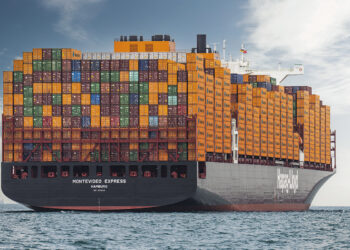
Brussels – The trade surplus of the European Union’s agri-food sector rises: the industry increased its trade surplus in the first six months of 2026, recording a €23.9 billion surplus, €1.4 billion more than in 2025. The figures come from the European Commission’s report on the “Monitoring of EU agri-food trade: developments until June 2026”.
Cumulative exports—statistical data obtained by adding up the value or volume of goods sent abroad over a rolling period—for the period January–June amounted to €117.2 billion, down 2 per cent on the previous year. Reasons for the decline include the fall in the value of cocoa-based products, pork, and olive oil. By destination, cumulative exports to Egypt rose by €278 million(+28 per cent) year-on-year, driven mainly by wheat. Similarly, exports to Ukraine rose by €247 million (+12 per cent) and those to India by €174 million (+26 per cent). Trade with the Gulf States was affected by the disruption to shipping through the Strait of Hormuz, with exports to the United Arab Emirates falling by €395 million (-25 per cent). Looking at individual products, exports of spirits and liqueurs rose by €405 million (+10 per cent), while those of coffee, tea, cocoa, and spices fell by €1.1 billion (-16 per cent).
Cumulative imports—that is, the cumulative total of the volume or value of goods purchased from abroad—stood at €93.4 billion, down by €3.6 billion (-4 per cent) compared with the previous year. Nevertheless, imports from Brazil rose to €425 million (+5 per cent), thanks to higher soya imports. Imports of coffee, tea, cocoa, and spices, on the other hand, fell by €3.6 billion (-17 per cent), while those of cereals fell by €715 million (-15 per cent). Imports of fresh and dried fruit rose by €503 million (+3 per cent), as did those of sunflower seeds, which doubled following two unfavourable agricultural seasons in the EU.
English version by the Translation Service of Withub