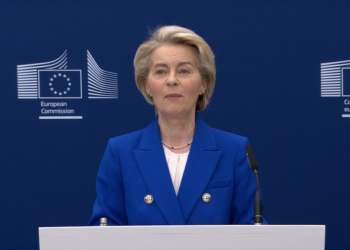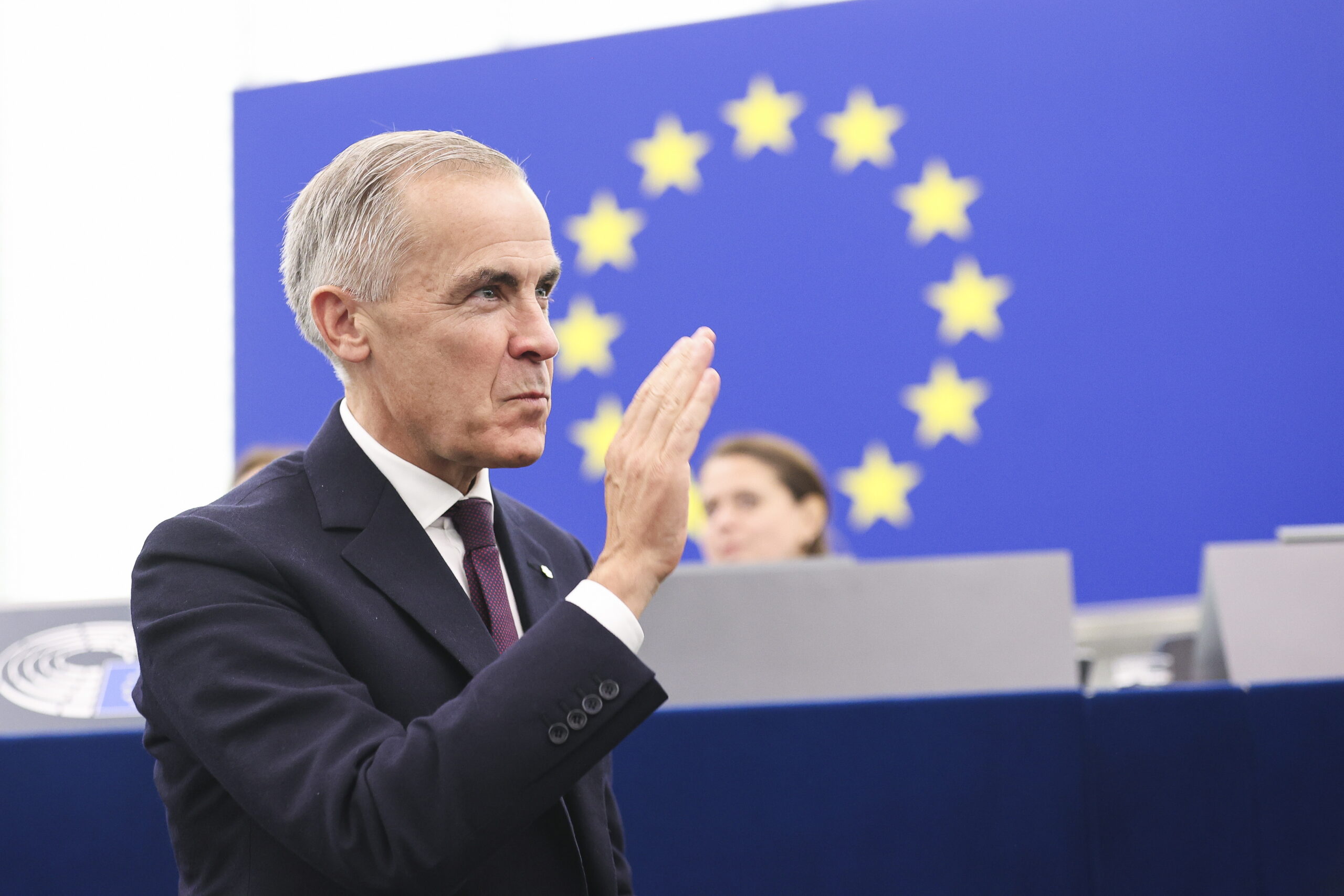
Brussels – There is no such thing as “associate members” of the European Union. However, in her State of the Union address delivered this morning (16 September) before the European Parliament, Ursula von der Leyen announced: “We want to bring our relations with Canada to the highest level possible. We must urgently reimagine our partnerships. So, I would like to work with you (the Canadian Prime Minister Mark Carney, who was present in the Chamber, ed.) on opening the door for Canada to be the first associate member of the EU.”
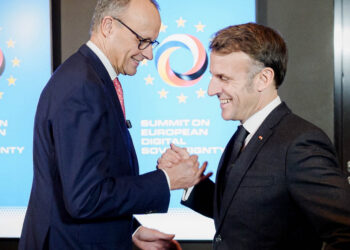
These words were met with thunderous applause; von der Leyen and Carney left their seats and kissed and embraced each other. A scene carefully staged, designed to give maximum drama to a project that many — probably very many — like as a general idea, but about which the Commission president has spoken to no one in Europe; whose legal basis is unknown; whose timeline is unknown. Not exactly a crystal‑clear project, then
The first to highlight this was the leader of The Left, Manon Aubry, who, speaking in the Chamber, asked the Chair of the Committee: “Who gave you the mandate?” As we were saying, von der Leyen has not discussed her proposal with anyone; indeed, she has already announced the outcome without even bothering to involve Parliament (and probably not even all the governments), which raises a question of legitimacy and, consequently, of democracy.
Von der Leyen’s move is mostly just an announcement, perhaps even a stretch to achieve the objective. “Associate member” is not a category provided for in the Treaties of the European Union. Article 49 of the Treaty on European Union (TEU), which governs accession to the group, merely provides that a “European State” may formally apply for membership. Canada, of course, is not a European State. So perhaps von der Leyen is envisaging a new, structured relationship that goes deeper than the current CETA free trade agreement (which has not yet been ratified by as many as nine European countries, including Italy and France, though it has already brought them considerable economic benefits).
This is therefore something new, which must find a legal basis in the EU Treaties, and whose scope, duties and obligations must be defined. This is a task that could take as long as a decade. Unless, as is likely, it is simply a matter of intensifying and strengthening economic and political relations without a formal framework. This is also because many European governments have shown no interest in strengthening ties with Ottawa – some due to pressure from their own farmers (see Paris and Rome), others because they do not wish to risk creating new tensions with Donald Trump’s US.
The President set out a roadmap: “We will move from CETA to an Alliance for the Future to create a common prosperity and economic security space. We will work on intelligent manufacturing. We will create a tech alliance. We will integrate defence industrial bases. We will make the Arctic a flagship joint project.” And she added: “We will work on energy, critical minerals and batteries. On AI, quantum, cyber and economic security.” In short, on everything relating to defence, security and economic growth. “This is a partnership not against anyone else, but for our common strength,” she stressed.
It should be noted that the proposal comes at a time when trade relations between Canada and the United States have deteriorated, with President Donald Trump having on several occasions raised the possibility of Canada being annexed by the US. Carney has already said he is seeking a “unique alliance” with the EU, but not membership. Tomorrow it will be his turn to address the Strasbourg Chamber; we shall see whether he raises the issues that von der Leyen did not.
English version by the Translation Service of Withub