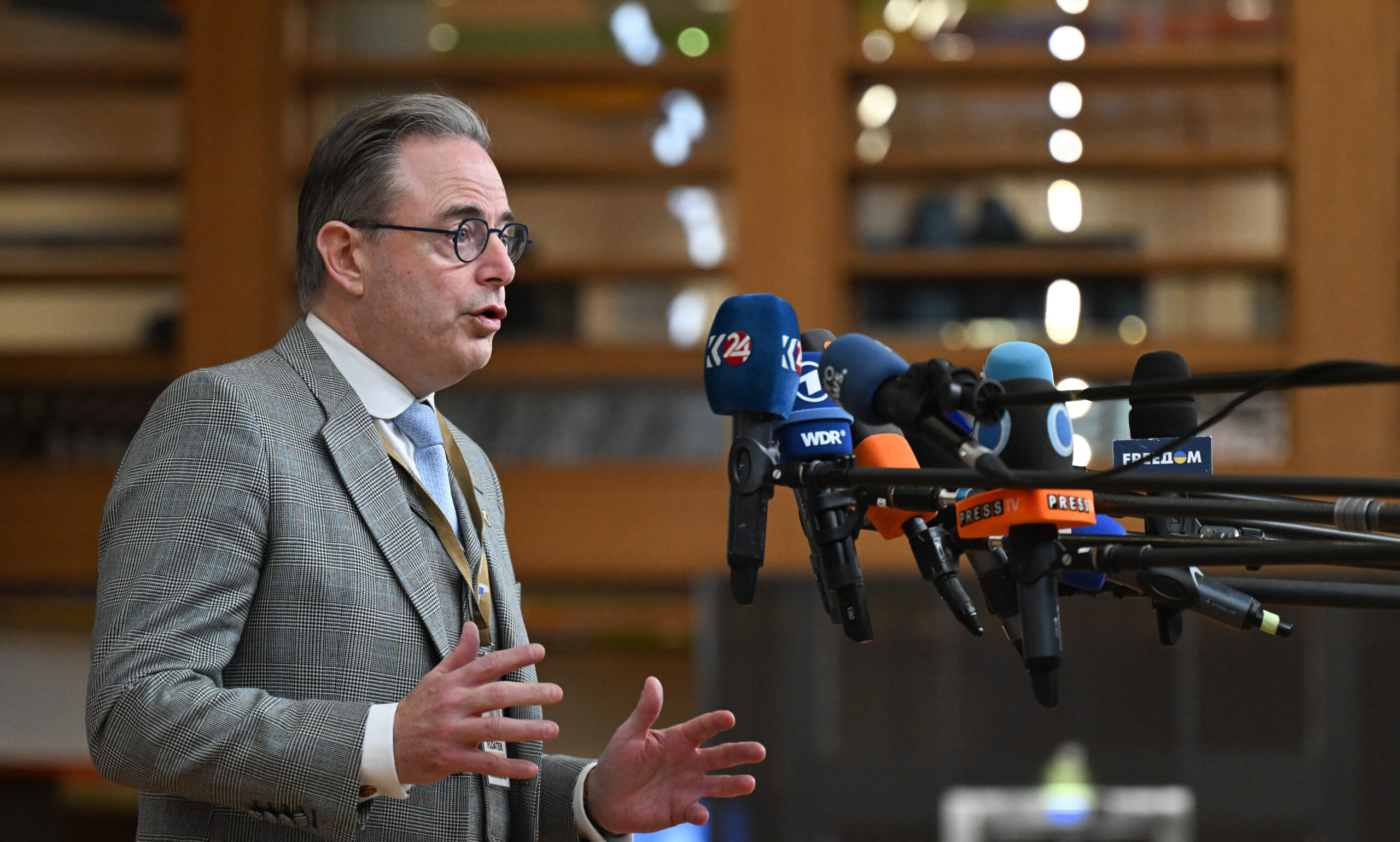
Brussels – The Belgian Prime Minister Bart De Wever has tendered his resignation to King Philip, but the King has not accepted it. The Prime Minister arrived at the Royal Palace at 9.30 am (today, 2 November), following yet another night of budget negotiations that ended without an agreement. The Palace has announced that the King “is keeping his decision on hold” and that, from Tuesday, he will begin “consultations with the leaders of the various parties in the majority coalition.” De Wever will be received again on Friday 6 November, leaving him four days to break the deadlock within the coalition before the King decides to accept his resignation, plunging the country into a period of great institutional uncertainty as has been the case for several decades.
In the statement, the monarch stressed “the lack of an agreement aimed at providing the country with a credible budget capable of meeting the current challenges.” Philip, king of a country that has become something of a champion in recent years when it comes to having no government in office, added that “in a context marked by significant geopolitical uncertainties and major economic challenges, the country cannot afford a prolonged political crisis,” and urged the parties to prioritise “the public interest and a spirit of compromise.” In short, the Head of State is keeping his fingers crossed.
The ‘Arizona’ government – a right-wing coalition with a large majority, comprising five diverse parties ranging from the Prime Minister’s Flemish independence-seeking right to the socialists, though only those from Flanders (N-VA, MR, Les Engagés, Vooruit and CD&V) – formed in January 2025 following seven months of negotiations – has failed to pass either the 2027 federal budget or a 10-billion-euro recovery plan to be implemented by 2029. According to the Belga news agency, the differences between the right-wing faction, represented by the MR liberals, and the centre-left faction, comprising Vooruit and Les Engagés, are too big.
Underlying the debate are figures closely watched by Brussels in its role as a European institution. Last year’s deficit stood at 5 per cent of GDP, compared with the 3 per cent ceiling set by European rules, and debt exceeds 735 billion, more than 110 per cent of GDP. Belgium is subject to an EU excessive deficit procedure, which is to be resolved by 2029, and in June the Commission deemed the measures adopted effective – as was the case for Italy – without calling for further action.
This is not the first time the prime minister has sought the King’s intervention over a budget deadlock: in November 2025, he requested a 50-day extension to finalise a tax agreement. Now, tensions are also being fuelled by public protests: for weeks there have been successive protests against the high cost of living and cuts to public services, and trade unions have called a new national strike for 23 November (for the past year there has been one general strike a month, as a form of ongoing protest organised by the trade unions).
English version by the Translation Service of Withub