
What’s at stake
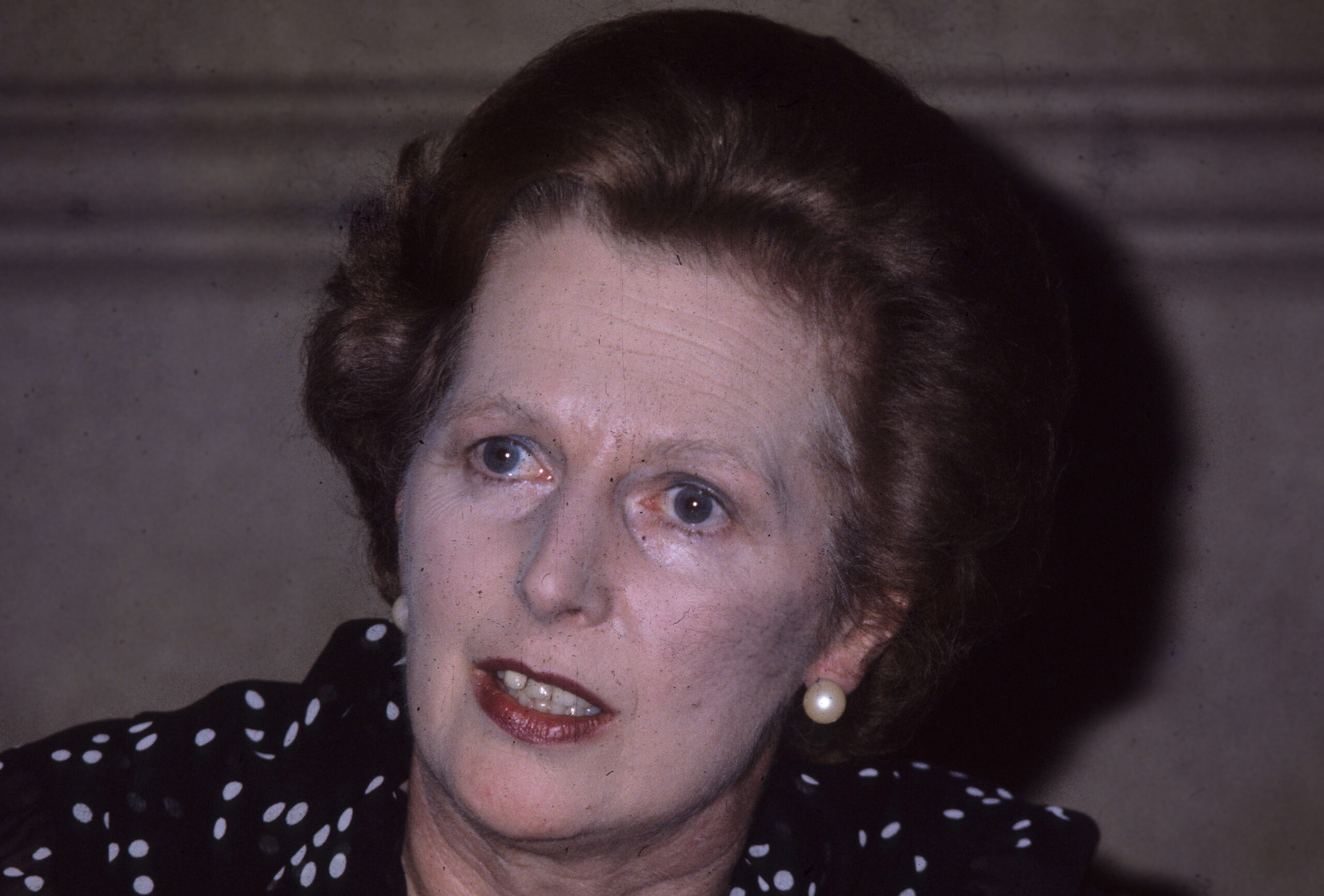
“I want my money back,” thundered the then British Prime Minister Margaret Thatcher back in 1979, because, with all due respect to the principle of solidarity between countries, the money London was paying into the budget of the then EEC exceeded the European funding it received. Just under 50 years have passed, and the United Kingdom, by constantly demanding its money back and persisting with opt-outs (first and foremost that on the single currency), has left the EU after sowing discord in the European context for years, often putting a spanner in the works of the integration process and serving American interests more than European ones.
But Thatcher’s battle cry has set a precedent, and whenever the current 27 EU member states periodically return to discussing the EU’s multiannual budget, the same complex and deeply divisive issues always resurface. Starting with the opposition of the countries most stringent in their management of public finances (the so-called “frugal” states: the Netherlands, Denmark, Sweden, Austria, and Finland, supported more or less explicitly by Germany) to any increase in the Union’s financial allocations, regardless of the reasons behind calls to go well beyond the taboo threshold of one per cent of EU Gross National Income (GNI).
This time, however, it is clearer than ever that economic and financial issues are not the only ones at stake. The decisions to be taken within the EU budget regarding defence, competitiveness, the energy transition, climate change, and migration will have a decisive impact on the Union’s future geopolitical role on the international stage. Therefore, there are many more reasons than in the past to view the outcome of the extremely difficult negotiations already underway to define the next Multiannual Financial Framework (MFF) with greater attention and concern. The Union’s 2028–2034 budget could, in fact, well be the opportunity (the last one?) for Europe to find the necessary resources and a shared political will to launch the initiatives that the current international context demands with growing urgency in order to stand up to the US, China, and other emerging powers. The alternative risks being a Union condemned to a slow decline and to playing a marginal, if not irrelevant, role on the global stage. This prospect is already before our eyes, as many authoritative commentators have highlighted, particularly since Donald Trump returned to the White House.
Draghi dixit
Draghi, former President of the European Central Bank and of the European Council, and author of the report on competitiveness commissioned by European Commission President Ursula von der Leyen, is firmly convinced of this and has stated it publicly on several occasions.
The Union cannot stop at the 1992 Maastricht Treaty, that is, at the single currency and economic union. To carry more weight, it must also make progress on the front of political union (also enshrined in Maastricht but which has remained virtually a dead letter), aiming to transform the current confederation into a federation. And it must overcome the deadlock of cross-vetoes in the Council, even at the cost of having, depending on the scenario, a Union with first- and second-class countries, or a multi-speed Union, or one with concentric circles.
At the same time, according to the Draghi report, the EU should invest at least €800–850 billion a year, from both public and private funds, to close the technological gap with its main competitors (the usual suspects, to which we can add India, Brazil, and other Far Eastern nations), accelerate the eco-energy transition and pursue strategic autonomy whilst safeguarding free trade from Trump’s follies.
The European Commission’s proposal
The Commission, led by von der Leyen, has put forward a proposal to the Council and the European Parliament for the next seven years worth, at current prices, around €2 trillion, equivalent to 1.26 per cent of GNI. After deducting the €168 billion that will be needed from 2028 to repay the bonds issued to raise the €557 billion for the Recovery and Resilience Facility (RRF) launched after the Covid pandemic as part of the EU’s Next Generation EU initiative, the share of GNI allocated to the next budget, in real terms, falls to 1.15 per cent, just 0.02 per cent higher than the 1.13 per cent in the 2021–2027 budget.
A completely marginal increase, which the pro-European camp considers utterly insufficient to meet the needs outlined in the Draghi report and dictated by developments on the global stage. Yet the “frugal” countries have already begun to dig in their heels over it.
The Commission’s proposal also contains many other contentious points. Among the most significant are undoubtedly the reforms to the functioning of the two budget headings that currently account for around 60 per cent of the EU budget: the Common Agricultural Policy (CAP) and the cohesion funds allocated to less developed regions, which are the main instrument of solidarity between EU Member States.
Von der Leyen, in the spirit of simplification and flexibility so dear to Berlin (and also to Rome), wants to radically overhaul how they operate by merging them and strengthening the role of national central authorities in their management, following the model used for the National Recovery and Resilience Plans (PNRR). Many—particularly the regions and local authorities—fear, however, that this will grant governments excessive discretion in managing resources that will, in any case, be cut to fund joint initiatives in defence, restoring competitiveness, the green and digital transition, and the reconstruction of Ukraine.
Italy’s little treasure

As things stand, Brussels’ proposal for the next MFF—according to recent assessments by experts at the Chamber of Deputies—provides for Italy to receive €31 billion in support of the Common Agricultural Policy (compared with 50.9 billion for France, 37 billion for Spain and 33 billion for Germany) and 27 billion for the cohesion policy, the same amount allocated to Romania and just over half of the 47.2 billion allocated to Poland.
According to the draft EU budget, Italy will also receive a substantial portion of funding from the new Competitiveness and Security Fund. This Fund, which will bring together 14 of the current EU programmes, will have a total budget of €409.3 billion, far exceeding the funds allocated to agriculture (€293.7 billion) and second only to those for cohesion (€452.9 billion).
According to estimates by Chamber of Deputies experts, all things being equal, Italy is set to receive around €86.6 billion from EU funds between 2028 and 2034, placing it fourth among beneficiary countries behind Poland (€123.3 billion), France (€90.1 billion) and Spain (€88.1 billion), and ahead of Germany (€68.4 billion)
Stop national discounts; new sources of funding are needed
There are also at least two other areas where a battle is bound to break out among the 27 member states. The first concerns rebates, which, following the example of what the United Kingdom secured at the time, have been granted repeatedly in recent years to Denmark, Germany, the Netherlands, Austria, and Sweden to reduce the shortfall between what they pay into the EU and what they receive through various European programmes. The Commission is proposing their abolition, and the beneficiary countries are, of course, opposed to this.
The other key issue under discussion is the use of the new instruments (so-called “own resources”) to supplement the GNI-based contributions paid by individual countries, with a view to raising additional funds to finance the EU budget and repay the debts incurred for the Recovery Fund. In essence, these would be new taxes which, as is currently the case with part of the VAT and customs revenue, would flow directly into the EU’s coffers.
A practical system, yet one that is unpopular with many leaders because it is politically and potentially explosive in the context of nationalist policies that seek to blame Brussels for all the world’s ills, without ever acknowledging either their own responsibilities or the fact that it is now the governments that set the agenda, not the Commission and the Parliament.
Moreover, the idea of Eurobonds or other forms of joint debt—although advocated by figures such as Draghi, Macron, Prodi, and many leaders from southern European countries—is not to the liking of either Germany or the group of frugal countries. The result is likely to be that the proposal will remain on the European Council’s back burner.
The debate among the 27 member states, which has been ongoing since 2020 in the post-COVID era without yielding any results and appears to be an uphill struggle, is therefore set to focus on new own resources. With the web tax sacrificed on the altar of the extremely difficult relations between the US and the EU, the Commission has proposed focusing on revenue that could come from the ETS and CBAM schemes linked to polluting emissions, from a tax on electronic waste, from new excise duties on tobacco and from a minimum tax on large companies. Alternatively, according to the position expressed by the European Parliament in calling for greater resources for the next MFF than outlined by von der Leyen, new taxes could be introduced on digital services, online gambling, and capital gains realised through crypto-assets
Criticism from the EU Court of Auditors
In addition to all the issues mentioned so far, there are also those highlighted by the European Court of Auditors regarding the system set up by Brussels for the implementation of the Recovery and Resilience Facility (RRF) through the national Recovery and Resilience National Plans (NRRPs)—the very model that the Commission is now proposing to apply to the disbursement of funds from the next EU budget as well. The Court of Auditors has pointed the finger in particular at the lack of transparency regarding the final beneficiaries of the funds and the difficulties encountered in assessing the impact of the initiatives carried out.
The next steps
Over the coming months, particularly from September onwards, discussions amongst the 27 Member States on the MFF for 2028–2034 will really get underway, as the next rotating presidency of the Council of the European Union, to be held by Ireland from next July until December, aims to reach an agreement by the end of the year. But few in Brussels and the capitals believe this will happen, particularly given the many issues that still need to be resolved.
The EU budget must be approved unanimously by the Council and given the green light by the European Parliament. We will need to wait and see what the search for a delicate balance between objectives and the possibility of reaching the necessary consensus yields.
If we are to be optimistic, the hope is that, in the face of pressing international developments, individual countries will manage to move beyond a short-sighted focus on defending national interests and take responsibility for joint decisions that now appear urgent and indispensable.
“Inaction threatens the EU’s competitiveness and sovereignty,” was the warning recently issued by Draghi. What better opportunity than the 2028–2034 budget to breathe new life into the EU’s project and role? Before it is too late.
English version by the Translation Service of Withub