
Brussels – Conditions for the development of the “civic space” in Europe have deteriorated, according to the latest report by the European Civic Forum(ECF), published in May 2026. The CIVICUS Monitor, an overall assessment index, has downgraded the assessment of civic space in France, Germany, and Italy from “narrowed” to “obstructed.” The decline is steady: in 2019, 58.3 per cent of the population of Europe and Central Asia lived in countries classified as “open” or “narrowed.” By 2025, that figure had fallen to 26.5 per cent.
In last year’s report, the Forum – which is co-funded by the European Union – highlighted that developments at the EU level were increasingly affecting civic space across Europe, often negatively. “The interplay between EU and
national policies is clear: restrictions in member states
are reinforced in Brussels, with EU-level measures
legitimising crackdowns on civil society“, said Aarti Narsee, senior policy officer at the European Civic Forum.
The report claims that some MEPs are “fuelling suspicion towards NGOs (non-governmental organisations), making unfounded allegations of misuse of public funds and setting up a scrutiny working group in the European Parliament.” The group was established in June 2025 and is tasked with examining EU funding to NGOs, with the support of the European People’s Party (EPP), the European Conservatives and Reformists (ECR) and Patriots for Europe (PfE). “Civil society has condemned the working
group as part of the ongoing delegitimisation of their work, while a
European Court of Auditors report found
no evidence of irregularities or misuse of EU grants,” the report explains.
The ECF’s work “highlights a new push within the European Parliament to institutionalise harassment of NGOs”, said Natacha Kazatchkine, Secretary-General of the European Civic Forum. By 2025, restrictions on civil society had become institutionalised. Restrictive models, the report explains, “are increasingly being adopted, legitimised and reinforced at European Union level.” According to the report, similar trends have been observed in at least five EU countries: Austria, Bulgaria, Germany, Hungary, and Slovakia. For example, in Austria, the far-right Freedom Party (FPÖ) has launched a parliamentary inquiry into funding for NGOs.
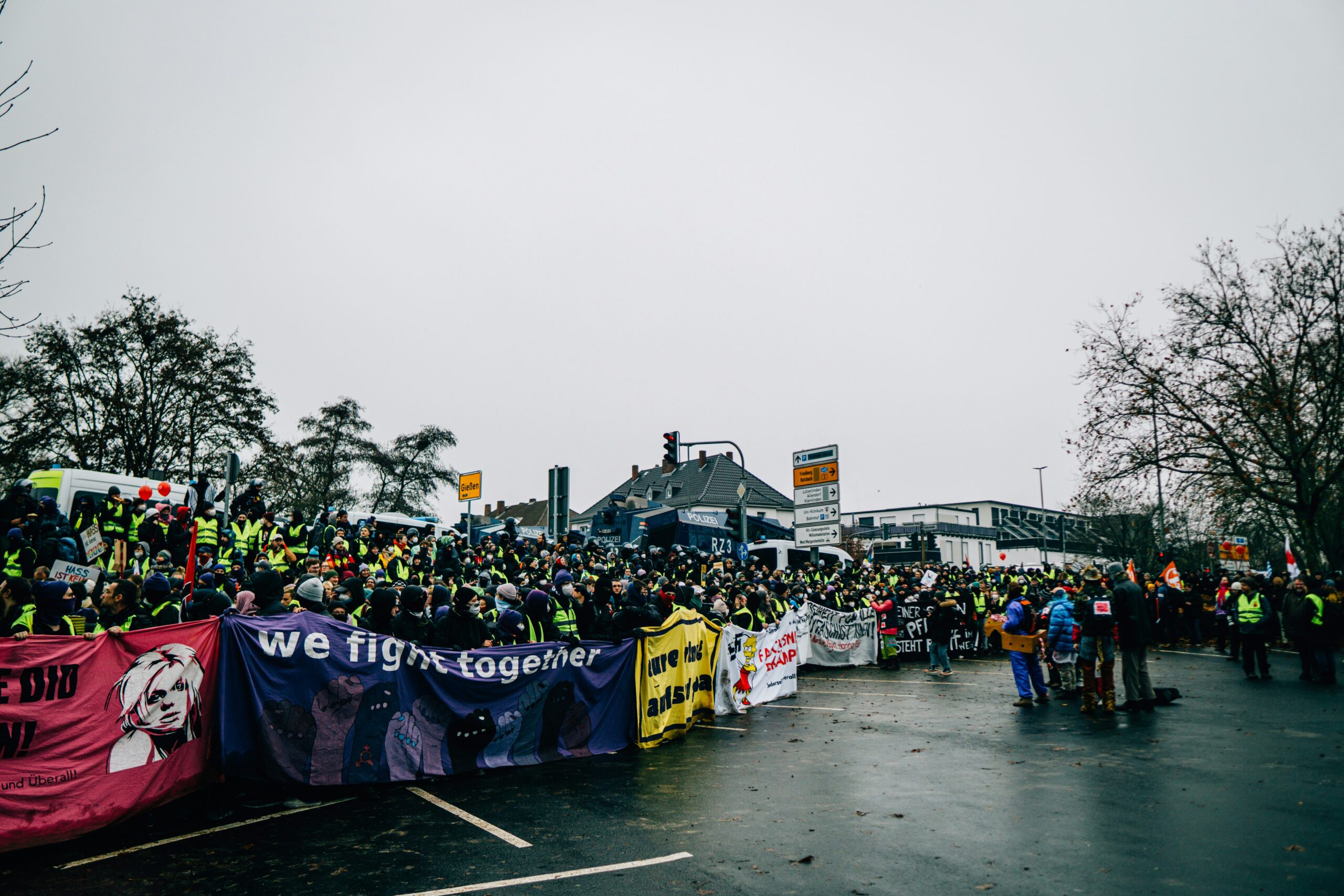
The report also focuses on the criminalisation of protest movements, “a practice that is becoming increasingly widespread across Europe. In 2025, new restrictive laws were proposed or passed in seven EU countries, exacerbating an already alarming situation,” according to the authors of the report. In Italy, the security decree, which civil society organisations “say is the greatest attack on protest rights in the history
of the country, introduces new criminal offences and
expands police powers to restrict protest.” Italy was included on the CIVICUS Monitor Watchlist in 2025.
The first Strategy for Civil Society, published by the EU at the end of 2025, fits into this context. The plan sets out a framework for supporting, funding, and protecting non-profit organisations and human rights defenders. The European forum, however, remains sceptical. “While EU institutions have become more aware of the importance of protecting civic space, their policy responses remain contradictory,” according to the report. Indeed, alongside initiatives such as the proposal to increase funding for organisations promoting democracy in the EU’s next long-term budget, restrictions on civil society’s work have remained unchanged.
English version by the Translation Service of Withub