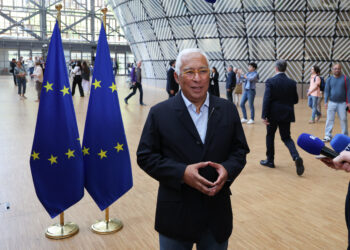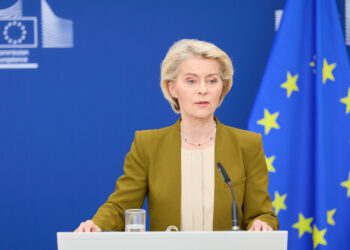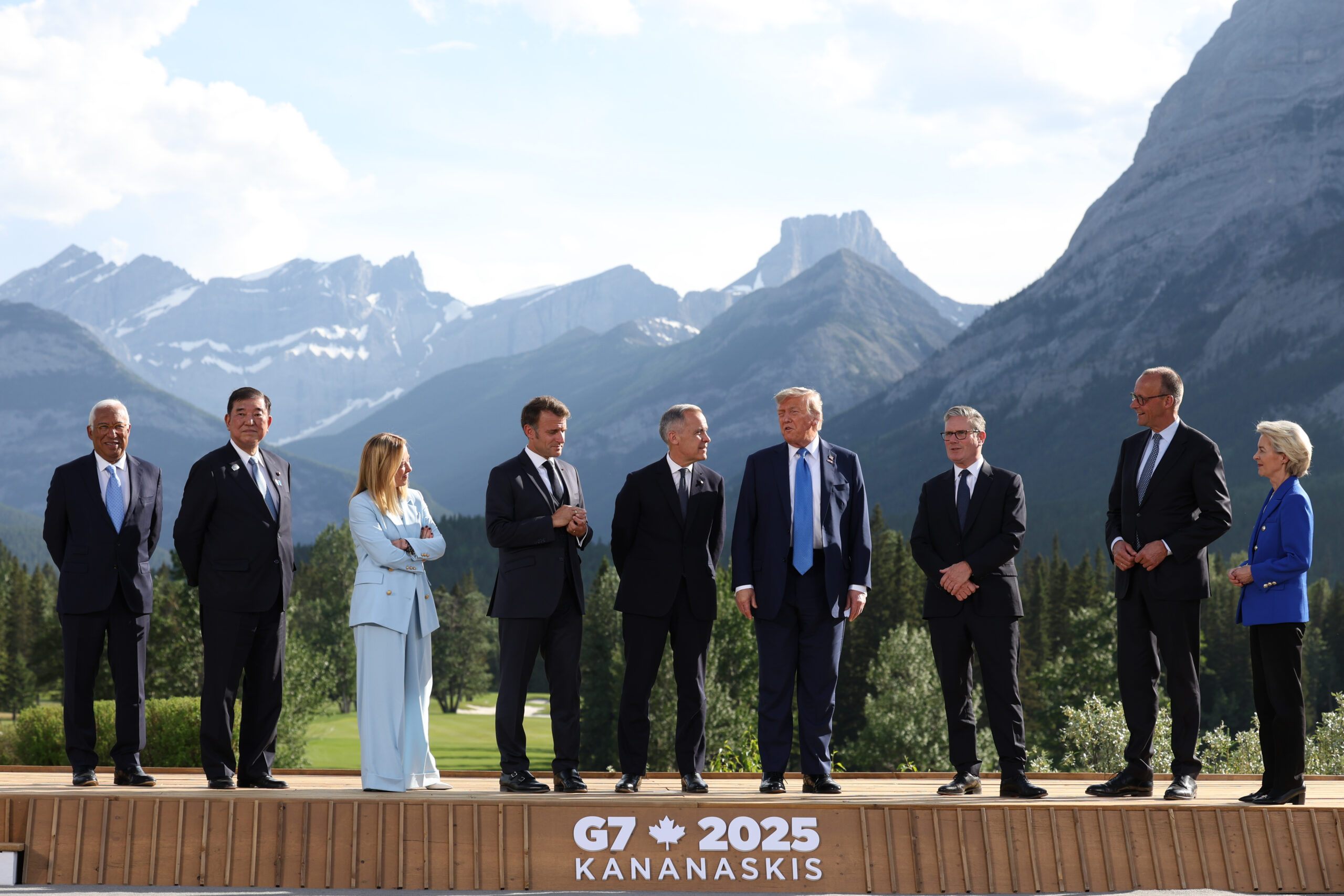
Brussels – Macroeconomic imbalances, digital security, the war in Ukraine, and the Middle East. These are the key issues to be discussed at the G7 summit taking place from Monday 15 to Wednesday 17 June in Evian, France. A summit that “is both the combination and the culmination of an ambitious programme and agenda of the French G7 presidency” and which “takes place at a crucial juncture regarding some of the major political and geopolitical conflicts,” explain some European sources. “In an era of geopolitical uncertainty and macroeconomic imbalances, G7 unity and effective multilateralism are essential to strengthening global stability, promoting sustainable growth and addressing common challenges,” commented the President of the European Council, António Costa, who will attend alongside the President of the Commission, Ursula von der Leyen. “The Evian summit will provide an opportunity to advance these priorities through constructive dialogue and action, including support for Ukraine and ensuring balanced global growth,” added Costa.
The leaders of France, Germany, the United Kingdom, Italy, the United States of America, Canada, Japan, and the European Union will be faced with the state of the global economy and, in particular, the issue of macroeconomic imbalances, which was the focus of the video conference held yesterday (11 June) by the French President, Emmanuel Macron, with the G7 countries and representatives from China, India, Brazil, the Republic of Korea, and Kenya. “I believe it emerged clearly, not only from the discussions but also from the meeting, that at a global level there is a serious problem of macroeconomic imbalances that poses risks to the world economy. I believe this problem is generally recognised not only by financial institutions, but also by the major economies,” explains an EU source. The spotlight is on China and its overcapacity. In particular, it is noted that “it is not sustainable for the global economy to continue with these imbalances, and a coordination forum such as the G7 and the G20 has an important role to play in addressing this problem and in having a more structured dialogue on these issues.” The issue will not be exhausted at Evian and will also feature at the summit of EU heads of state and government next Thursday and Friday (18–19 June) in Brussels. For the EU, “it is obvious that the world’s major economies, including the European Union, the United States certainly, and China, have specific responsibilities” and “one of the most important outcomes of this initiative by the French G7 presidency has been to involve China in the dialogue” because “we need it” and “we need it to deliver results.” Therefore, the expectation is that we will emerge from Evian with “common messages on this issue” and “on how to proceed in addressing the matter.” Therefore, “it will be interesting to see how the leaders intend to tackle the issue,” a chapter that includes matters such as critical minerals or controls on the export of certain goods.
Another topic of discussion, where Paris is recognised as making a “significant” contribution to the G7’s leadership, is digital safety and, in particular, the safety of children. On this issue too, there is “global recognition of the need to take action to guarantee the safety of children online, to ensure safe experiences, to ensure that access not only to social media is age-appropriate, and to prevent the development of illegal criminal activities, particularly those harmful to children.”
However, the main focus of the discussions in Evian is clearly the geopolitical situation. “This is a crucial moment for some of the major geopolitical conflicts, particularly in Ukraine, the Middle East, and Iran,” note senior EU officials. “We have seen a number of developments regarding Iran in the last few days and hours. I believe we all hope for a positive outcome to the negotiations, particularly regarding the peace agreement. We believe the leaders expect to receive updates from President Trump,” they add. And they reiterate that the position of Brussels and the EU-27 is “clear”, with a few key points. First, “this war must end, and this applies to the entire region, so it includes the situation in Lebanon where we are supporting the Lebanese authorities.” Second, “the Strait of Hormuz must remain open and freedom of navigation guaranteed.” In this context, “many EU Member States, and the EU itself, have already declared their willingness to contribute to maintaining stability after the end of the war, in particular to maintaining freedom of navigation, especially in the Strait of Hormuz.” There is, as is well known, complete unanimity on the fact that “Iran must not be able to develop a military nuclear programme.”
The Ukraine chapter. In Evian, “coordination among G7 leaders will be crucial.” And that’s not all. The summit will include a session with President Volodymyr Zelensky. “This war has now lasted longer than the First World War, and so I believe everyone’s goal is to achieve peace,” the official noted. But peace must be “just, sustainable, and lasting.” At the same time, “what we are seeing in this war is that we find ourselves in a different situation compared to six months ago, or a year ago,” and this is “the result of the Ukrainians’ strategy and the way they have defended their country, but it is also thanks to our help and financial, military, and economic support, as well as the pressure we have exerted on Russia.” In this regard, “the challenge will be to understand how to continue supporting Ukraine and then move towards lasting security and peace in Europe.” At this moment, “we must also focus on the path to ending the war, and this must involve meaningful negotiations.” On this point, leaders will need to “coordinate their messages.” At the EU level, “we will have to defend our interests, continue to coordinate and maintain coordination among all Member States, and support Ukraine, always with a view to achieving a just and lasting peace.” And then understand what the United States’ role will be in this context.
In practical terms, the summit will begin on Monday with an informal dinner reserved exclusively for G7 leaders. The meeting with Zelensky will take place on Tuesday morning, while discussions on the Middle East and Iran will be held over lunch, with the presidents of Egypt, the United Arab Emirates, and Qatar in attendance. In the afternoon, there will be a discussion on international partnerships and solidarity. This working session will be attended by the G7 leaders, the leaders of Brazil, Egypt, India, Kenya and South Korea, the President of the World Bank, Ajay Banga, and the President of the African Development Bank, Sidi Ould Tah. On Wednesday morning, the debate will focus on macroeconomic imbalances, with the Managing Director of the International Monetary Fund, Kristalina Georgieva, and the Secretary-General of the Organisation for Economic Co-operation and Development, Mathias Cormann. Finally, one topic the leaders could address is the Ebola outbreak. “There is, of course, the provision of resources to support our African partners. And there is also, of course, the question of how to further contain the spread of Ebola,” EU sources note.
English version by the Translation Service of Withub