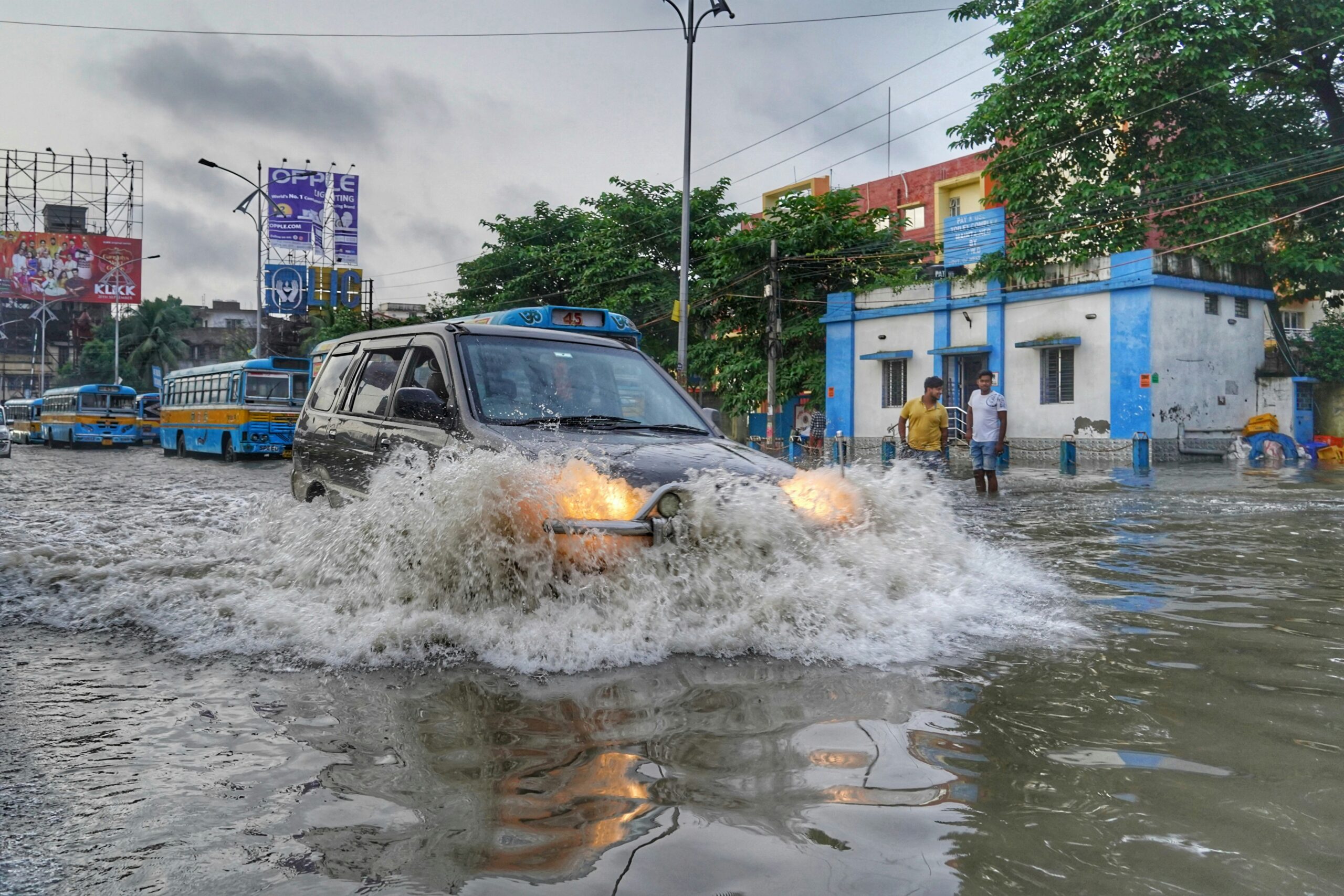

Brussels – Railway tracks warped by the heat, rivers too dry for navigation, roads submerged by floods, and airports forced to scale back operations. This is no longer a future scenario, but a reality that is already putting pressure on the European transport network. And, without a decisive cut in CO₂ emissions, it is set to worsen rapidly. This is the finding of a fresh study led by the Free University of Brussels (VUB), which analysed the vulnerability of roads, railways, ports, inland waterways and airports to extreme weather events. According to the research, heatwaves, droughts, fires and floods are already causing infrastructure damage, service disruptions, and economic and health impacts across Europe.
There are many examples. Among those mentioned, the 2018 drought on the Rhine reduced water levels to historic lows, disrupting river transport and causing economic losses estimated at 2.4 billion euros in Germany alone. Instead, last June, the record-breaking heatwave forced France, Belgium, and the United Kingdom to reduce or slow down rail traffic to prevent damage to trains, power lines, and tracks.
The study compares two climate scenarios: one consistent with current policies, which would result in global warming of around 3 °C by 2100, and one in line with the objective of limiting global warming to 2 °C. In the first case, the vulnerability of transport infrastructure would increase dramatically. By mid-century, exposure to heatwaves could increase up to 30-fold compared with the period 1980–2009, while more than half of Europe’s inland waterways could be affected by drought. By the end of the century, roads and railways could face up to 26 times as many forest fires, while exposure to river flooding would increase locally by up to eight times.
The Mediterranean is particularly vulnerable, set to become a “climate hotspot” – that is, an area with a high concentration of extreme weather events, with the greatest increase in heatwaves and wildfires. Between 2010 and 2018, Italy, France, and Germany were the most affected European countries, with floods alone causing over 6 billion euros in damage to roads and railways.
“It is important to note that climate impacts are not limited to direct damage to infrastructure,” warns Cristina Deidda, author of the study and a postdoctoral researcher at the VUB. “Delays, route closures and interruptions to passenger and freight services can affect supply chains, economic activity and public health.” For this reason, she adds, “urgent action is needed to prepare Europe’s transport systems for a changing climate,” by investing in more resilient infrastructure and integrating climate risk into planning.
According to Wim Thiery, professor of climate science at the VUB and co-author of the study, “our results show that adaptation alone is unlikely to be sufficient.” Rapidly reducing greenhouse gas emissions, he concludes, “will substantially reduce the future exposure for European transport infrastructure to extreme events. Ambitious emission reductions combined with targeted adaptation measures will be essential to maintain the reliability and resilience of Europe’s transport infrastructure.“
English version by the Translation Service of Withub