

Brussels – In July 2026, the eurozone recorded a trade surplus in goods of €14.2 billion with the rest of the world, according to preliminary data released today (15 September) by Eurostat. The figures, as highlighted by the European Statistical Office, show an improvement in the trade balance, given that in July 2025 the eurozone’s surplus stood at €10.7 billion.
Looking at the two different trade flows, exports of goods and commodities from the euro area to the rest of the world in July 2026 totalled €276 billion, representing a 9 per cent increase compared with July 2025 (€253.3 billion). Imports from the rest of the world, on the other hand, stood at €261.8 billion, marking a 7.9 per cent increase compared with July 2025 (€242.6 billion).
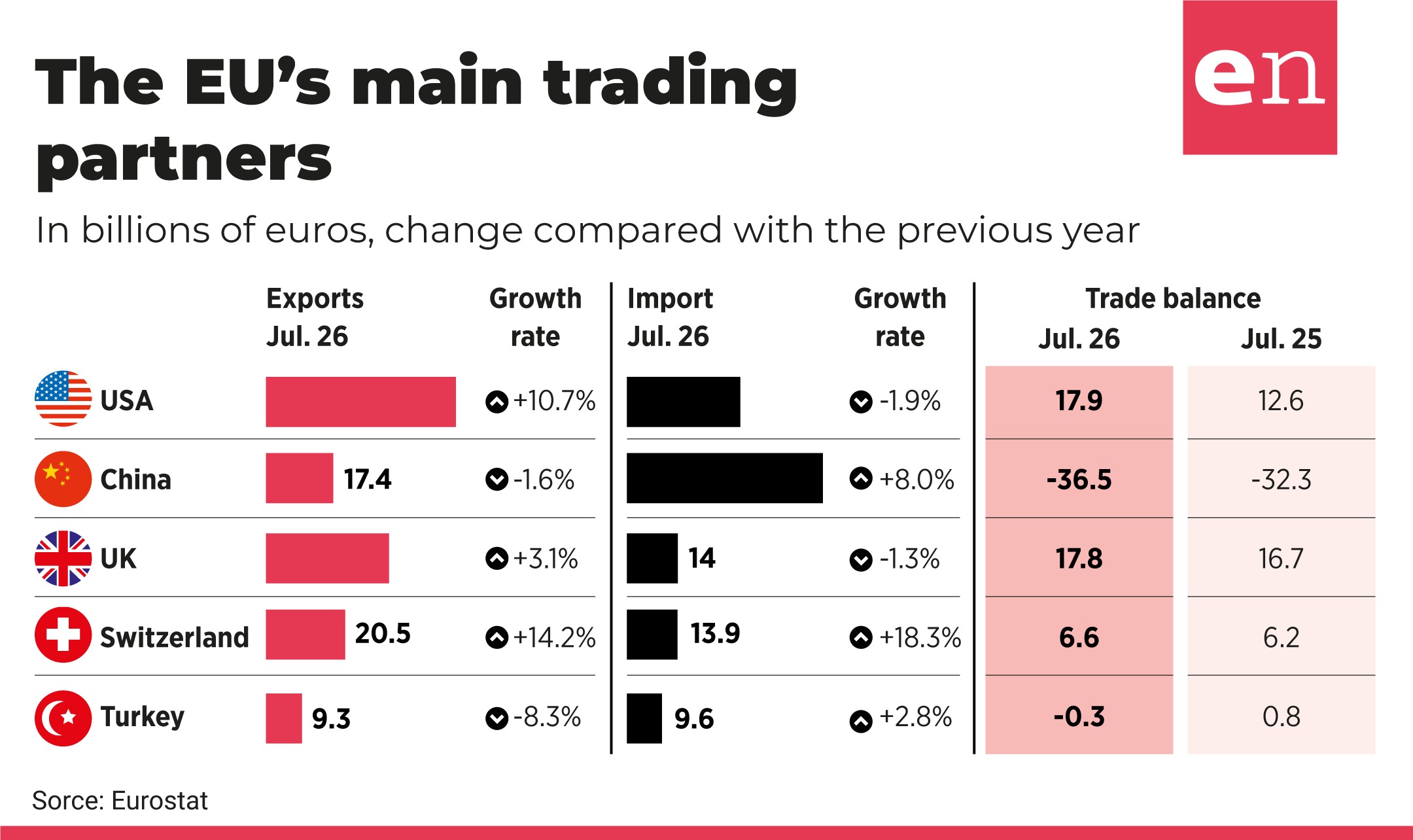
Looking in more detail at trade between the euro area and the rest of the world, the increase in the surplus is mainly driven by a larger surplus in the chemicals and related products sector, in the other manufactured goods sector and in the food and drink sector, partially offset by a reduction in the surplus for machinery and vehicles.
The figures for the European Union as a whole, as at July 2026, show a positive balance between exports and imports of €8 billion, down from the €9.8 billion recorded in July 2025. EU exports of goods amounted to €247.1 billion in value, up 7.8 per cent compared with July 2025 (€229.2 billion). Imports from the rest of the world stood at €239.1 billion, an increase of 9 per cent compared with July 2025 (€219.5 billion). The decline compared with July 2025, Eurostat explains, was “mainly” due to a smaller surplus in the machinery and vehicles sector, partially offset by larger surpluses in the chemicals and related products and food and beverages sectors.
English version by the Translation Service of Withub