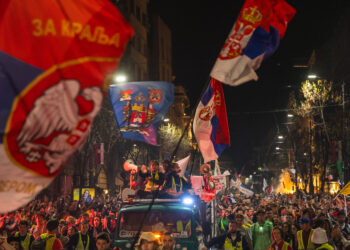
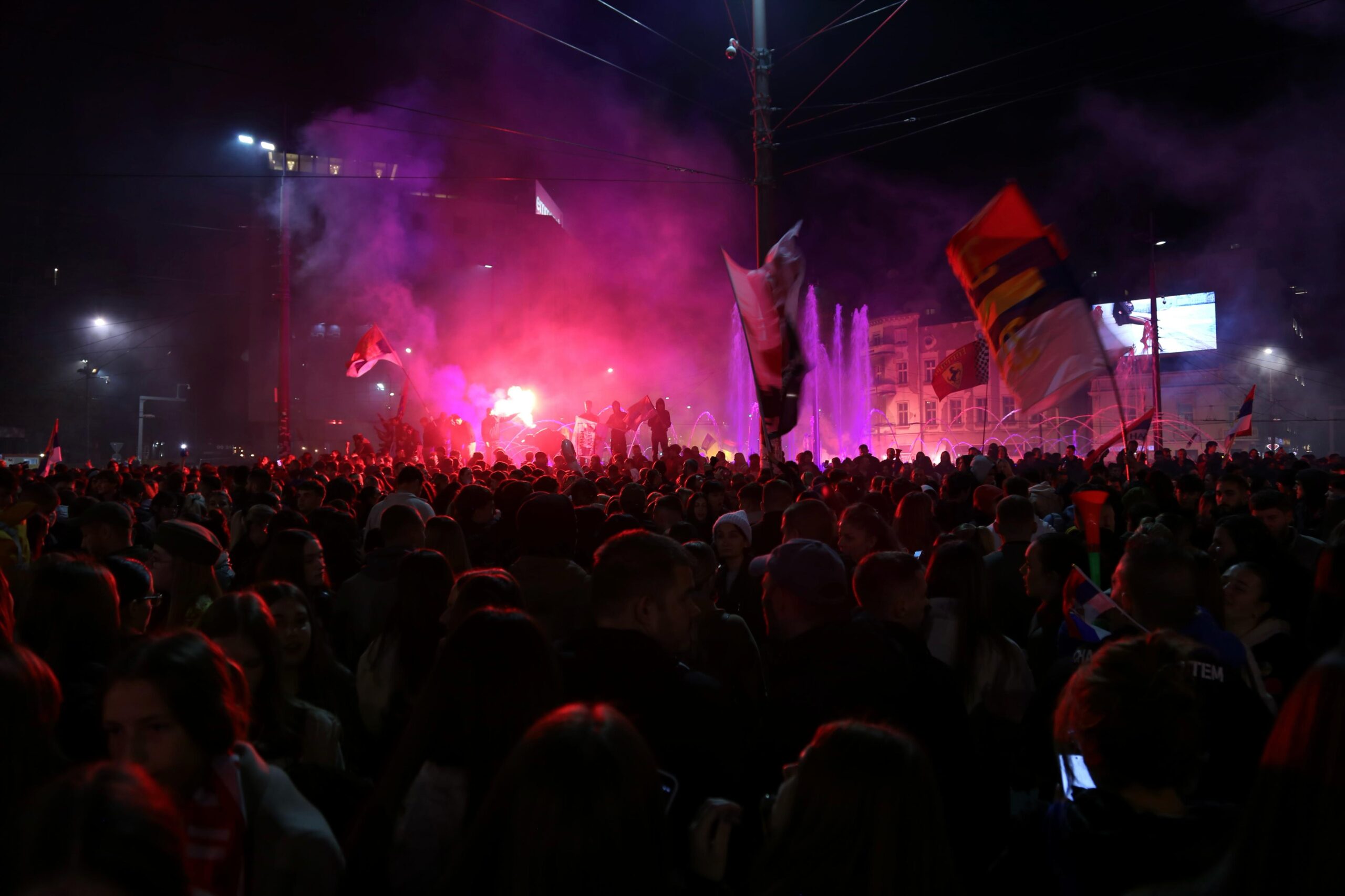
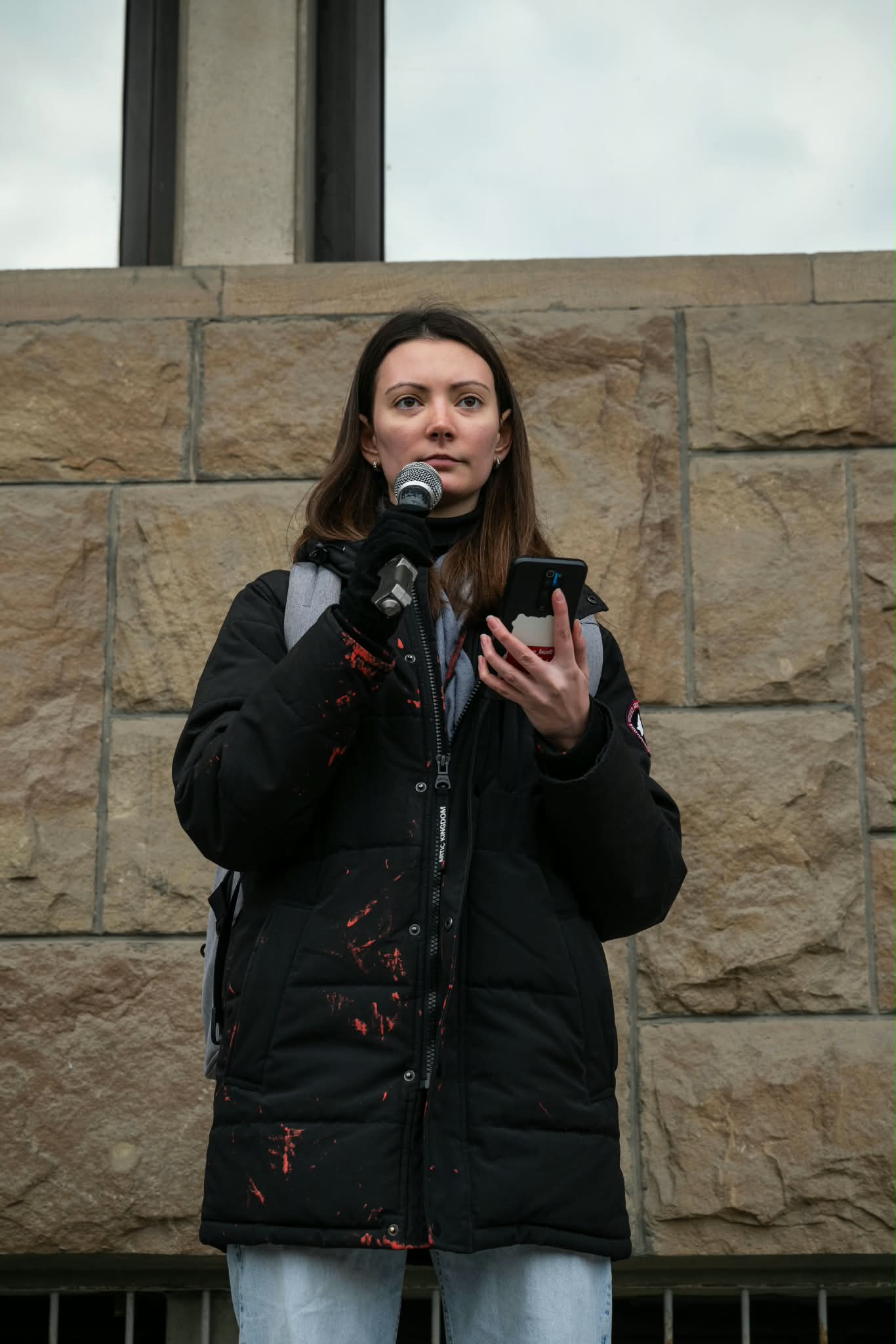
Brussels –When your own country says ‘no’ to an authoritarian president, you’d like to be there, take to the streets and celebrate, but in Doroteja Antić’s case, that wasn’t possible. Antić is a Serbian activist and one of the founders of Students Against the Authoritarian Regime (STAV), the movement that, over the past two years, has spearheaded mass protests against corruption and the anti-democratic drift of Serbian President Aleksandar Vučić’s government. On Sunday (25 October), the Student List secured 52.5 per cent of the vote and 140 seats in Parliament, ahead of Aleksandar Vučić’s United Serbia party, which conceded defeat. “It is clear that we have lost these elections,” admitted the prime ministerial candidate, who saw his chances of a new term in office vanish. A graduate in communications, Antić in March was accused of attempting to “violently overthrow the constitutional order” and has since been living in exile in Croatia, where she has been able to remain thanks to an EU law transposed by Croatia that guarantees protection for human rights defenders. Speaking from Zagreb, the activist explained to Eunews the significance of these elections.
Eunews: What does the victory of the Student List signify?
Doroteja Antić: “Nobody expected things to turn out exactly like this. We thought the students might have the upper hand, but not like this: it’s an extraordinary success. It represents a first step towards freedom, and people are finally feeling a sense of relief. It’s something that everyone – or at least everyone I know, a huge number of people in Serbia and the diaspora – has been waiting for for fifteen years. It’s spectacular, and I’m still at a loss for words.”
E.: Will this victory have an impact on the presidential elections due to take place in two months?
D.A.: “Sunday’s elections were the most important ones. As for the presidential elections, under the Serbian Constitution, the president has a largely symbolic role, and Vučić has clearly failed to respect the Constitution. In fact, he has behaved like a dictator and an all-powerful leader, constantly acting beyond his remit, but that is not how it should work. Last Sunday’s elections are significant because they will determine the prime minister, the country’s most powerful figure. We do not yet know how the presidential elections will turn out. We hope for the best in light of what happened on Sunday. I believe, however, that we can be less concerned.”
E.: Could this victory bring Serbia closer to the European Union?
D.A.: “I really hope so. Having defeated the right-wing nationalist party, there is now greater scope to tackle certain issues and, for example, to resume negotiations with the EU – which have been at a standstill since 2021 and were constantly obstructed by the now former government. We can now look to the future with greater optimism. However, this is not the main objective, nor is it the central issue at the moment. The top priority is to free up the institutions and tackle the most urgent issues facing the country. Only after resolving some of these critical issues will we be able to discuss the resumption of negotiations and, perhaps, the opening of a new negotiating chapter within the framework of the EU accession process.”
E.: I know it’s still early days, but what do you think the first steps will be over the coming months?
D.A.: “First and foremost, we must address the media, given that press freedom in Serbia has been in a dire state for years. Just yesterday, there were signs of this. There is a strong desire among the population to shut down certain tabloids and media outlets that are aligned with the regime. This is, among other things, one of the most serious problems we have had to deal with, as these organisations served as propaganda machines, causing profound harm to many people in various ways. Next, we must turn our attention to the judicial system. It will be very difficult, but we must take action against many people guilty of various forms of fraud and numerous cases of corruption, such as in the case of the collapse of the shelter at Novi Sad railway station.”
E.: What does the student movement think of Mladić’s funeral? Does it want to sweep this chapter of Serbian history under the carpet?
D.A.: “There’s nothing to hide; it happened in full view of everyone. It’s been reported in the media across Europe. I’m convinced that most supporters of the student movement do not approve of what happened because it was a humiliation for a section of the nation. To be clear, I am not an official member of the Student List, so I am speaking in a personal capacity: what we witnessed was humiliating. It was terrible. I would also like to point out that the majority of those present at Mladić’s funeral – a convicted war criminal – were also supporters of the Serbian Progressive Party. Having finally won, I really hope we will no longer see scenes like that.”
E. Are you hoping to return to Serbia soon?
D.A.: “I cannot go because our situation has not yet been resolved. The trial brought against us for attempting to subvert the constitutional order is still ongoing. In fact, there is still a national arrest warrant out for us. So, for now, it wouldn’t be safe to return. However, I hope this issue will be resolved in the very near future. With the change of government, I have high hopes.”
English version by the Translation Service of Withub