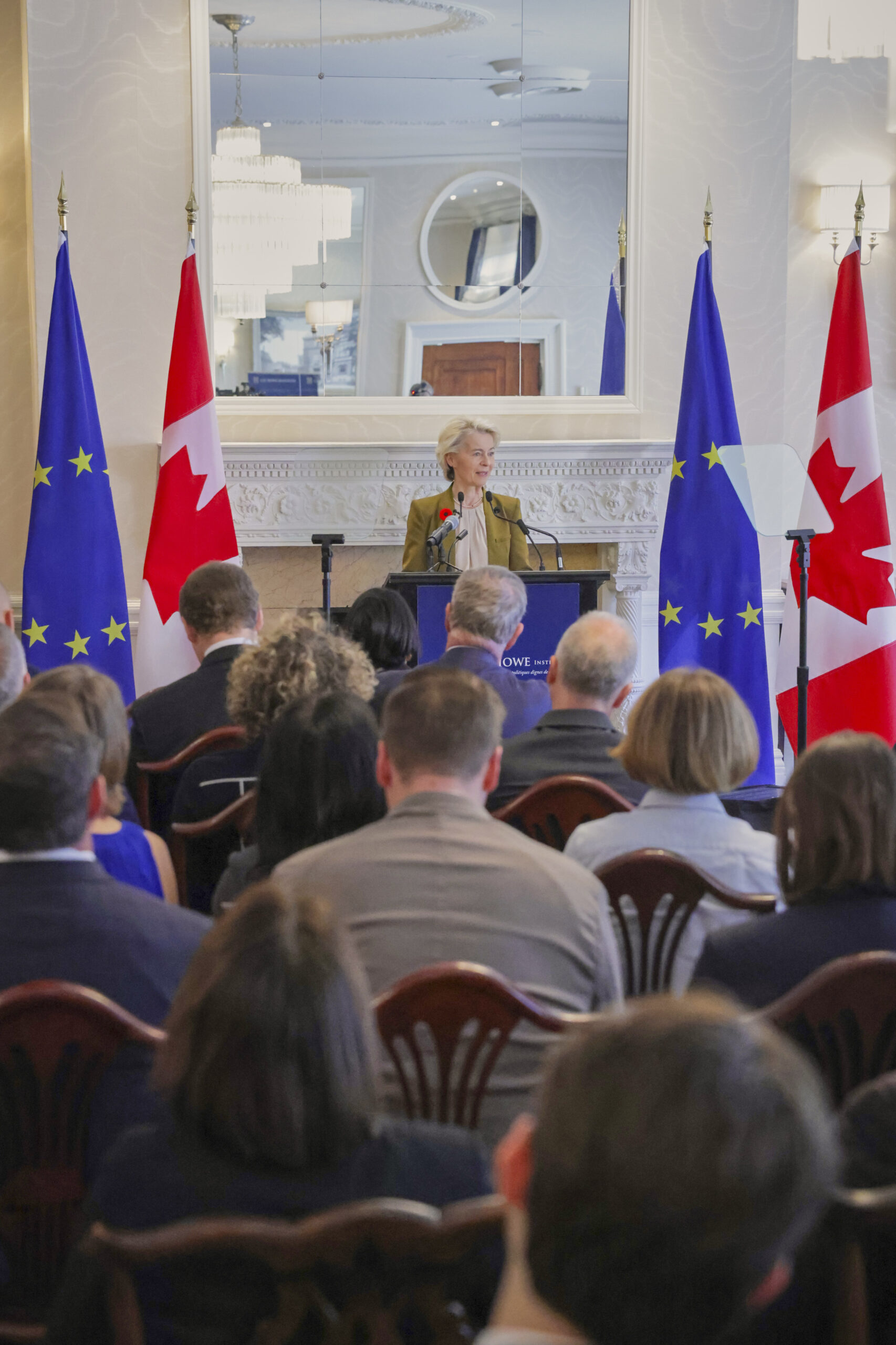
Brussels – The aim? “To bring Canada closer to us than ever before.” The President of the European Commission, Ursula von der Leyen, posted this on her social media channels upon her arrival in Montréal, where the
21st EU-Canada Summit
is taking place today and tomorrow (29 and 30 October). Accompanying her is the President of the European Council, António Costa, both there to represent the European Union. The agenda includes discussions on “a wide range of topics, including trade, the digital transition, critical raw materials, defence and security, cooperation on education, research and innovation, as well as youth policies.”
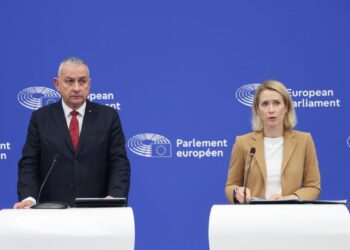
Last September, in her State of the Union address, von der Leyen announced that she wanted to work with the Prime Minister of Canada, Mark Carney, “to pave the way for Canada to become the first EU associate member.” An ambition that may seem daunting, given that the term has been removed from the text of the joint declaration that the two sides are expected to sign at the end of the summit. Nevertheless, the desire to strengthen relations remains, to the extent that an “Alliance for the Future” will be launched, because “together we want to create a common space of growth and prosperity, resilience and economic security,” explained von der Leyen at a press conference.
Although “for geographical reasons, Canada cannot become a full member of the EU,” both “parties wish to elevate their relationship to the highest possible level”. They can achieve much more together “on a bilateral basis.” The approach suggested by von der Leyen therefore envisages a “partnership without membership, in which a shared vision and ambition replace membership.”
At a subsequent press conference, Costa defined the new Alliance as “an even closer partnership. As our relationship is truly special, we want to create something new.” The President pointed out that it is possible to “go beyond a simple partnership, without, however, going as far as full membership of the European Union,” despite agreeing with the “bold proposal” put forward by von der Leyen. “Whether in these terms or others, one thing is certain: ours will be the closest, deepest, and most unique partnership of its kind,” he added.
According to a press release from the Council, the new Alliance is a “framework for shared prosperity and economic security, underpinned by new, concrete initiatives aimed at strengthening ties between people, deepening economic relations, and consolidating our common position on the global stage.” The head of the Berlaymont explained that this vision will require “greater alignment” on three fronts. Firstly, “on policies: we can collaborate on every front, from artificial intelligence and climate change to energy and security.” Secondly, “governance, which entails a broader sharing of work between the European Commission and the Canadian government.” Finally, “on programmes” and for this reason the European Commission intends to step up “Canada’s involvement in the European Erasmus+ programme” and “strengthen Canada’s participation in the next generation of Horizon Europe.”
Among the concrete initiatives, the President announced that the EU and Canada “will create a single space for strategic supply chains.” This means “joint or complementary investments, including private capital from both sides.” In this context, the aim will be to “identify a series of projects, in collaboration with investment banks, export credit agencies, and infrastructure banks on both sides.” Furthermore, “a strategic partnership on raw materials” has been established and “the results are tangible,” von der Leyen emphasised, pointing out that “the value of imports of critical Canadian raw materials in the European Union has risen by 62 per cent, reaching the significant figure of €3.3 billion.”
There is also a shared vision on artificial intelligence. “Both Canada and Europe believe that this technology must serve people,” von der Leyen reiterated. Therefore, “we will work together to tackle head-on the issues relating to security and the risks of AI spiralling out of control.” This “will enable us to derive greater value from AI, to enhance our capabilities, to invest in dedicated infrastructure, to bring our researchers together on joint projects, and to help our start-ups in the advanced technology (deep-tech) sector to compete globally,” she emphasised. At the same time, tomorrow “an agreement to integrate Canada into the European supercomputing infrastructure” will also be finalised.
Like von der Leyen, Costa announced that a “digital trade agreement, which will complement the Comprehensive Economic and Trade Agreement (CETA)” – the free trade agreement between the European Union and Canada – will be approved tomorrow. In his speech, Costa focused on the issue of defence, noting that “Canada has joined the
SAFE – the European Union’s financial instrument providing €150 billion in the form of long-term subsidised loans to help Member States increase and accelerate investment in common defence – and expressing the hope that “other companies too may seize the opportunities offered by the forthcoming SAFE calls for tenders.”
Finally, the President reiterated the EU’s commitment, alongside the government in Ottawa, “to provide unwavering support to Ukraine in the face of Russia’s war of aggression.” This is “a commitment we have upheld since the very first day of the conflict and which we will continue for as long as necessary.” This also applies to “the pressure on Russia through our sanctions,” exercised “in close cooperation with Canada,” he emphasised. In conclusion, for Costa, “the ambition and the will to act are there.” In particular, “thanks to the Alliance and the partnership, the European Union and Canada are not merely reacting to a changing world.” Rather, “we are helping to shape the world to come.”
English version by the Translation Service of Withub