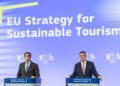
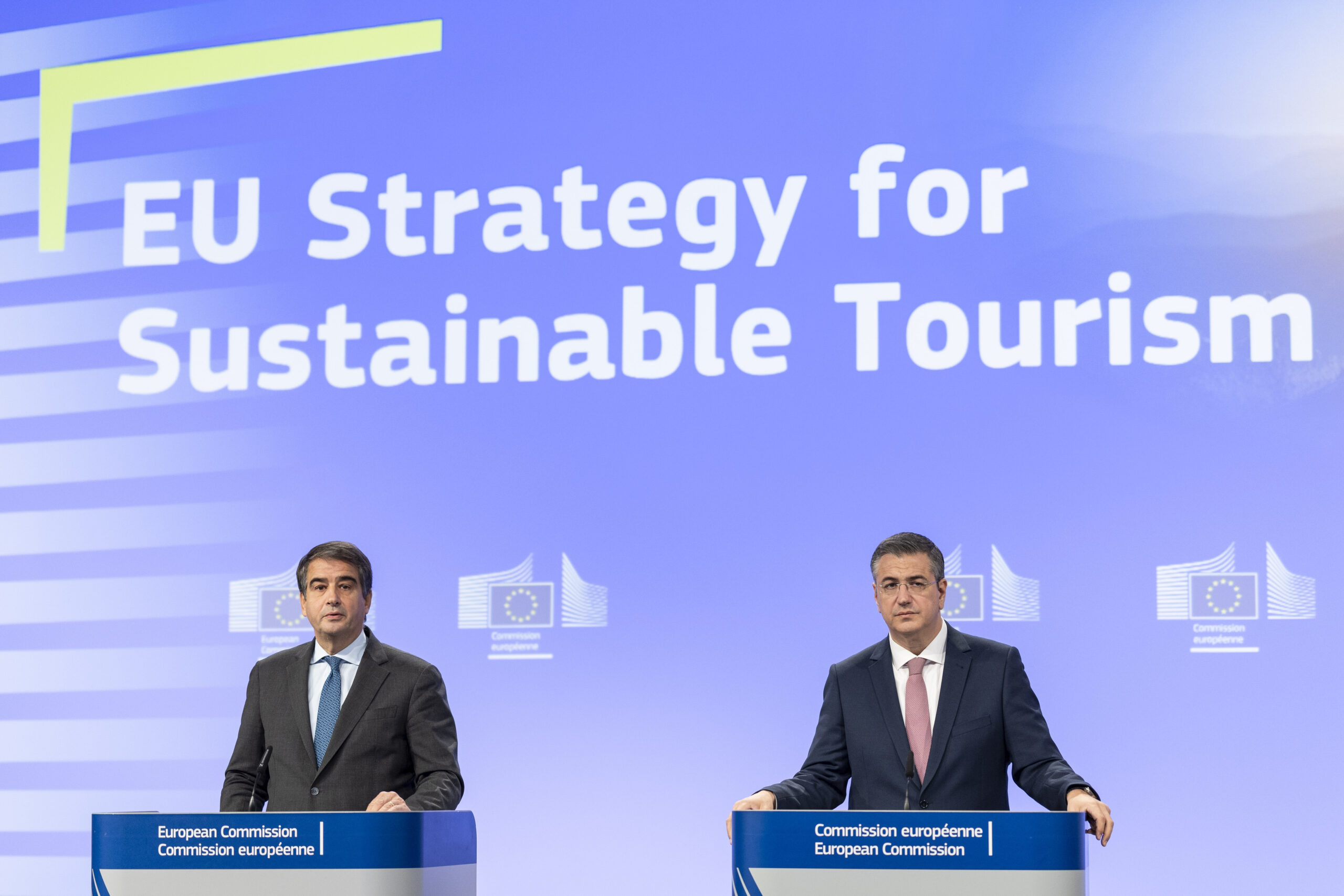
Brussels – Turning the challenges facing the tourism sector into opportunities to boost the sector’s competitiveness, sustainability, and resilience across the European Union. This is the ambition behind the new EU Strategy for Sustainable Tourism presented today (4 November) by the European Commission. “This is the most ambitious, comprehensive, and holistic European policy framework for tourism ever drawn up,” pointed out the European Commissioner for Transport Apostolos Tzitzikostas, at a press conference following the approval of the Strategy by the College of Commissioners. The Executive Vice-President for Cohesion and Reforms, Raffaele Fitto, speaking alongside Tzitzikostas, highlighted that “the European Parliament, the Council, the other EU institutions, as well as operators in the tourism sector, have asked the Commission for a coordinated response at European level to the various challenges facing the sector.” Therefore, today the Berlyamont Building is “providing European tools, benchmarks, and guidelines that Member States, regions, and local authorities can use on a voluntary basis, adapting them to their specific needs and priorities,” he clarified.
Competitiveness
Tzitzikostas explained that the strategy is based on three main pillars. The first is “competitiveness”. According to the Commissioner, the “shortage of skills and labour is one of the greatest challenges facing the tourism sector today,” causing difficulties for many small and medium-sized enterprises (SMEs). The Commission has therefore decided to establish a “European Academy of Tourism”, with the aim of “providing essential training, helping businesses and destinations to develop the right skills, attracting talent to tourism professions, and improving working conditions in the sector,” the Commissioner explained. Among the various measures is also greater support for SMEs “through a more business-friendly environment, with fewer unnecessary burdens, thanks in part to an EU simplification initiative involving Member States and the sector itself.” Furthermore, the Berlaymont will help “businesses to finance their transitions towards a cleaner and more digital future” through the establishment of an “EU Tourism Observatory” to implement data collection on the sector across the Union.
Sustainability
The second pillar is “sustainability and resilience”. The Commissioner highlighted that today “many popular destinations are struggling to manage visitor flows, particularly in summer,” noting that “13 per cent of European regions account for 50 per cent of all overnight stays in Europe.” According to Tzitzikostas, rather than focusing on numbers, we must concentrate “on lasting value, on safeguarding the quality of life of citizens and residents, and on supporting local communities and businesses.” For this reason, the Commission will commit to developing “an EU model for sustainable tourism management, a Council recommendation” on the subject and an “EU toolkit”, with a view to “helping our Member States and our destinations.” These initiatives will be “discussed with the Member States so that they are ready for the coming summer season,” the European Commission stated in a working paper.
By sustainable tourism, Brussels means “an approach in which tourist flows are in balance with a destination’s availability and capacity to accommodate them,” explains the document. This means that tourism does not have a disproportionate impact on physical infrastructure, the environment or the well-being of local communities. In this context, the so-called “toolkit” will help destinations – drawing on best practices adopted across the EU and concrete solutions – to strike the right balance between visitor demand at a given place and time and the destination’s capacity to accommodate them.
This chapter also covers cruise tourism, as “the simultaneous arrival of large numbers of passengers can place significant pressure on local infrastructure, the environment, and residents,” the document states. For this reason, the Commission will launch a “Cooperation Dialogue on Cruises”, which will bring together Member States, regional and local authorities, industry stakeholders, and civil society.
With regard to resilience, consideration was given to geopolitical crises and the way in which they may “have a varying impact on traveller confidence, international connectivity, transport costs, and tourist flows.” Although European tourism has demonstrated considerable resilience, the need for greater preparedness and adaptability has been emphasised. Therefore, the strategy proposes a Crisis Coordination Network to improve coordination between tourism authorities in responding to crises.
The EU’s appeal
“Europe remains the world’s leading tourist destination, but we cannot – and do not wish to – take this position for granted,” noted Tzitzikostas. So, the Berlaymont Building is putting forward the “Destination Europe” approach, through which “we aim to consolidate our international standing by complementing national and regional brands with a coherent and unified message. The working document defines it as “a common branding framework that enhances the visibility and appeal of Europe as a whole in the eyes of international travellers, highlighting the continent’s diversity, which is one of its greatest strengths.” It complements rather than replaces national and regional promotion, drawing on existing market analyses, past and ongoing campaigns, and the results achieved by the European Capitals of Tourism.
In addition to “Destination Europe”, Tzitzikostas announced that the European Commission will step up partnerships and dialogue on the sector with various partners, “including Japan and India, and very soon also with the Gulf states.” By the end of the year, he will also sign a new Cooperation Framework with the United Nations World Tourism Organisation (UNWTO) “to promote the sector’s competitiveness, sustainability, and resilience.” In order to “encourage visitors to discover more of Europe, explore new destinations and travel throughout the year,” it will propose the establishment of the “European Capitals of Tourism” award, designed to “recognise destinations that promote sustainable, balanced, and innovative tourism, while taking initiatives to attract visitors to lesser-known destinations and enhance their experience.”
Finally, Fitto noted that “tourism and affordable accommodation are complementary priorities” and that the Strategy adopted today and the Housing Plan, recently adopted and criticised by the European Parliament, “share the same objective: to make tourism more sustainable, more balanced, and more beneficial for the people who live and work in our regions,” he added. “We are sending out very clear messages. For example, with the revision of the current regional policy programme under the mid-term review” under cohesion policy, “we have included housing as one of the five new priorities and have allocated €35 billion to the five priorities, of which 3.6 billion is for housing.” The Vice-President also cited the example of Italy, noting that the country “has put forward a very positive proposal, as 1.1 billion of the 3.6 billion earmarked for housing came from a proposal by the Italian government, which the European Commission has adopted.” This strategy for tourism “demonstrates just how important it is to have a link between the various strategies,” he concluded.
According to estimates reported by the European Commission, the tourism sector accounts for 10 per cent of the EU’s GDP, supports more than 20 million jobs and comprises 5 million businesses, 99 per cent of which are SMEs. Europe accounts for around 40 per cent of international tourist arrivals worldwide. The aim of increasing the sector’s sustainability and resilience had been included in Tzitzikostas’s letter of appointment, signed by the President of the European Commission.
English version by the Translation Service of Withub