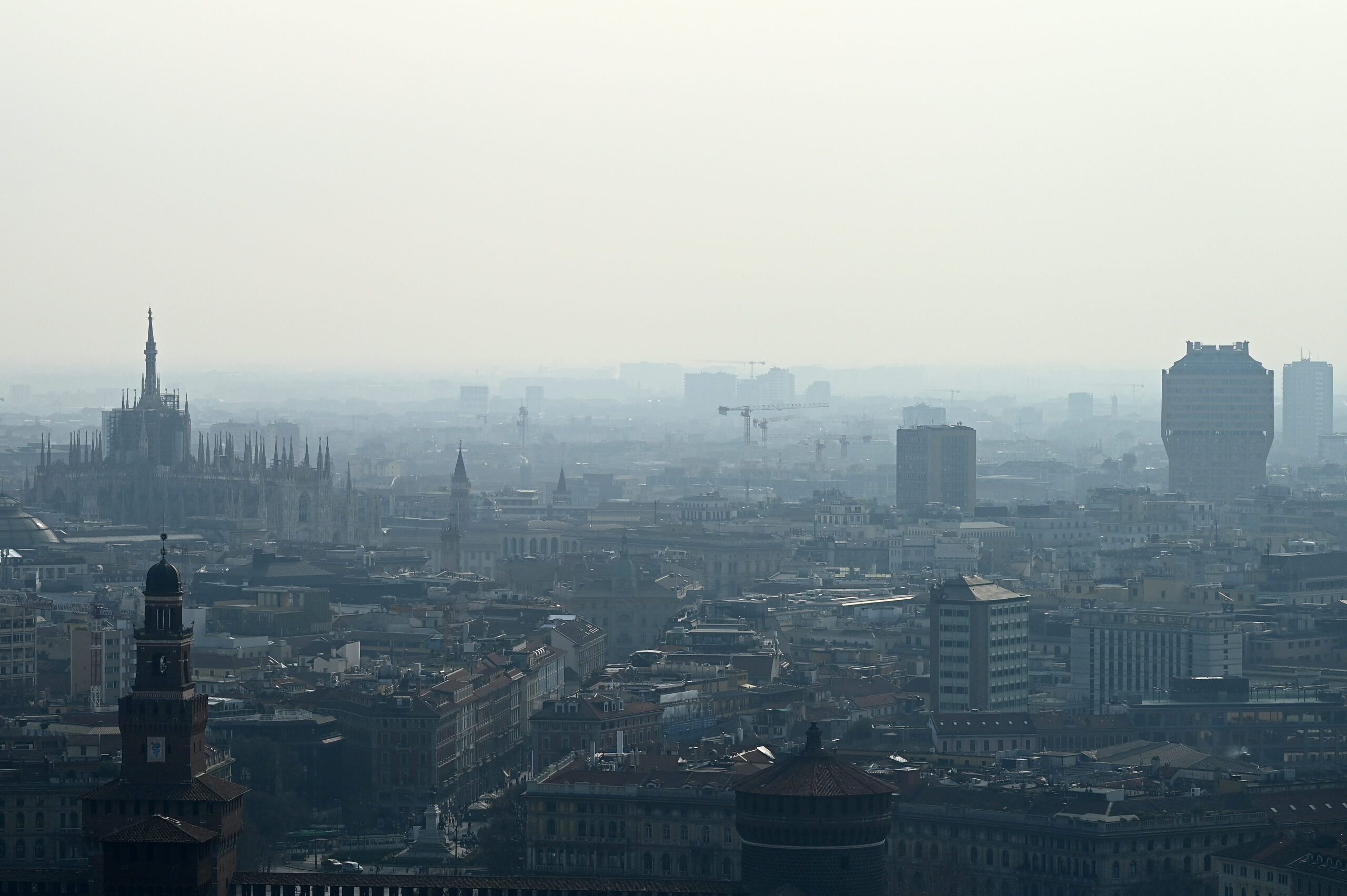
Brussels – One day and one night. That is how long the negotiations lasted between the competent ministers of the twenty-seven European Union countries to reach an agreement on amending the European Climate Act, introducing a binding interim climate target for 2040: a 90 per cent reduction in net greenhouse gas (GHG) emissions compared to 1990 levels. A “fundamental” step for Brussels to confirm and consolidate the Union’s path towards climate neutrality at mid-century.
To find a balance, however, the text initially proposed by the European Commission in July underwent quite a few changes, to accommodate the different sensitivities of the capitals as much as possible and at least get the go-ahead from the necessary qualified majority of the countries, i.e. 15 states (55 per cent of the Twenty-Seven) representing 65 per cent of the EU population. In the end, the text was supported by 21 countries. Against were Hungary, Poland, Slovakia, and the Czech Republic (in practice, the return of the Visegrád Group after a long period of fraying). Abstaining—equivalent to voting against—were Belgium and Bulgaria. Italy was satisfied, with the Minister for the Environment and Energy Security, Gilberto Pichetto Fratin, who, in a press point, called the agreement reached “good” and said Italian demands had been met. “We approved both the climate law and the NDC (the nationally determined contribution) for the COP30. I have to say that it was an intense negotiation and the Commission recognised that the distances we were bringing forward as Italy—and as a group of countries united with Italy—were relevant and balanced,” he emphasised. These included the postponement of ETS2 by one year, the reference to biofuels, the increase from 3 to 5 per cent of international carbon credits, and the openness, in the Commission’s review phase, to the use of a further share of international credits, up to 5 per cent of the national contribution. “So, a good agreement has been found,” and “it is a good compromise,” he urged.
The work, however, does not end there: to arrive at a final version of the legislation, the Council and the Parliament will have to negotiate, in the so-called trilogue, based on their respective internally agreed texts. With the document endorsed by the countries today, the Danish EU Council Presidency is ready to start negotiations. And so will the Parliament, which will vote on its position first in the environment committee next Monday, 10 November, and will then have the passage in the plenary chamber either in the mini-session on 13 November in Brussels or in the session in Strasbourg between 24 and 27 November.
The Council maintained the binding target of a 90 per cent reduction of net greenhouse gas emissions by 2040, proposed by the Commission. However, it made some changes to address concerns about the EU’s competitiveness, the need for a fair and socially balanced transition, the uncertainty around natural removals, and the differing national circumstances of member states. All these changes were guided by the strategic orientations provided by EU leaders in the conclusions of the European Council of 23 October 2025, to which the environment ministers had submitted the thorny issues. In fact, the Council extended the flexibilities outlined in the Commission’s initial proposal. In particular, on the quotas for international credits, their start date, the postponement of ETS2, the European Commission’s review, the possibility of using additional international credits equal to 5% of the national effort, natural carbon removals, and biofuels.
For example, on the collection in non-EU countries of a part of the emission reduction, with high-quality international carbon credits, to make an “adequate contribution” to the 2040 target. Here, countries raised the percentage to 5 per cent of 1990 EU net emissions—instead of the 3 per cent proposed by the Commission. This mechanism will start in 2036, as outlined by the EU executive, but the Council includes a pilot period for 2031-2035. On how these international credits will technically work, the European Commission will present a proposal that will have to shed light on various aspects, in particular, the financing of these credits. Furthermore, to reach the 2040 target, the role of zero-carbon, low-carbon, and renewable fuels in the decarbonisation of transport, including road transport beyond 2030, and concrete measures to help heavy-duty vehicle manufacturers reach their targets will have to be taken into account, considering European content.
It recognises “the realistic contribution of carbon removals to the overall effort to reduce emissions, taking into account the uncertainties of natural removals,” i.e. those of forests and land use, “and ensuring that any shortfalls are not at the expense of other economic sectors, without prejudice to the possibility for Member States to use excess natural removals to offset their emissions in other sectors.” In this context, an emergency brake is inserted, as the Commission will consider how to amend the relevant Union legislation to meet the 2040 climate target, “taking also into account the decrease of natural absorption capacity.” Therefore, this consideration may also lead to a revision of the target.
The Council agreement further stipulates that the Commission shall assess and report every two years “on the implementation of the intermediate targets and decarbonisation trajectories set out in this regulation, taking into account the latest scientific evidence, technological advances, and evolving challenges and opportunities for the EU’s global competitiveness.” This assessment may be accompanied, if appropriate, by legislative proposals. In addition, the countries request that the Commission should, every five years, make a review—an element already provided for in the Climate Act—in which it takes into account “the evolving challenges and opportunities for the global competitiveness of European industries in the Member States, in particular energy-intensive industries and small and medium-sized enterprises.” In this context, the Commission may also revise the intermediate target for 2040 and include additional measures to strengthen the support framework initiatives, also in light of the state of net removals at the EU level in relation to what would be needed for the 2040 target, and also taking into account energy price developments and their impact on industries and households. In the context of the revision, the clause requested by Italy for additional flexibility is also included, allowing countries to use high-quality international credits to realise up to 5 per cent of their post-2030 targets and efforts. It is, therefore, a national, not European, and voluntary quantity. Finally, among other new elements, there is the postponement of the entry into force of the EU emissions trading scheme for buildings and road transport (ETS2) by one year, from 2027 to 2028.
Finally, the countries have updated the nationally determined contribution (NDC) of the EU, based on the Paris Agreement, to be presented at the COP30 starting in Belém, Brazil: they have confirmed the range already made explicit in September of emission cuts between 66.25 and 72.5 per cent for 2035. “With the adoption of the EU’s MoU, we send a strong signal in the run-up to COP30: we remain fully committed to the goals of the Paris Agreement. This enables us to promote more global climate action when we meet the rest of the world at COP30,” commented Lars Aagaard, Minister for Climate, Energy and Public Services of Denmark, the country holding the six-month presidency of the EU Council.
English version by the Translation Service of Withub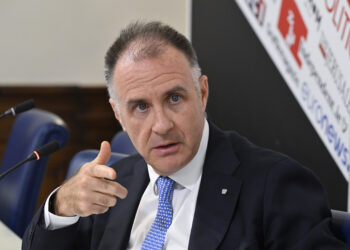





![Da sinistra: il presidente del Consiglio europeo, Antonio Costa; il presidente dell'Ucraina, Volodymir Zelensky: la presidente della Commissione europea, Ursula von der Leyen [Bruxelles, 18 giugno 2024. Foto: European Council]](https://www.eunews.it/wp-content/uploads/2026/06/euco_ua260618-120x86.jpg)
![[foto: Saverio De Giglio/imagoeconomica]](https://www.eunews.it/wp-content/uploads/2026/10/cpt-120x86.png)