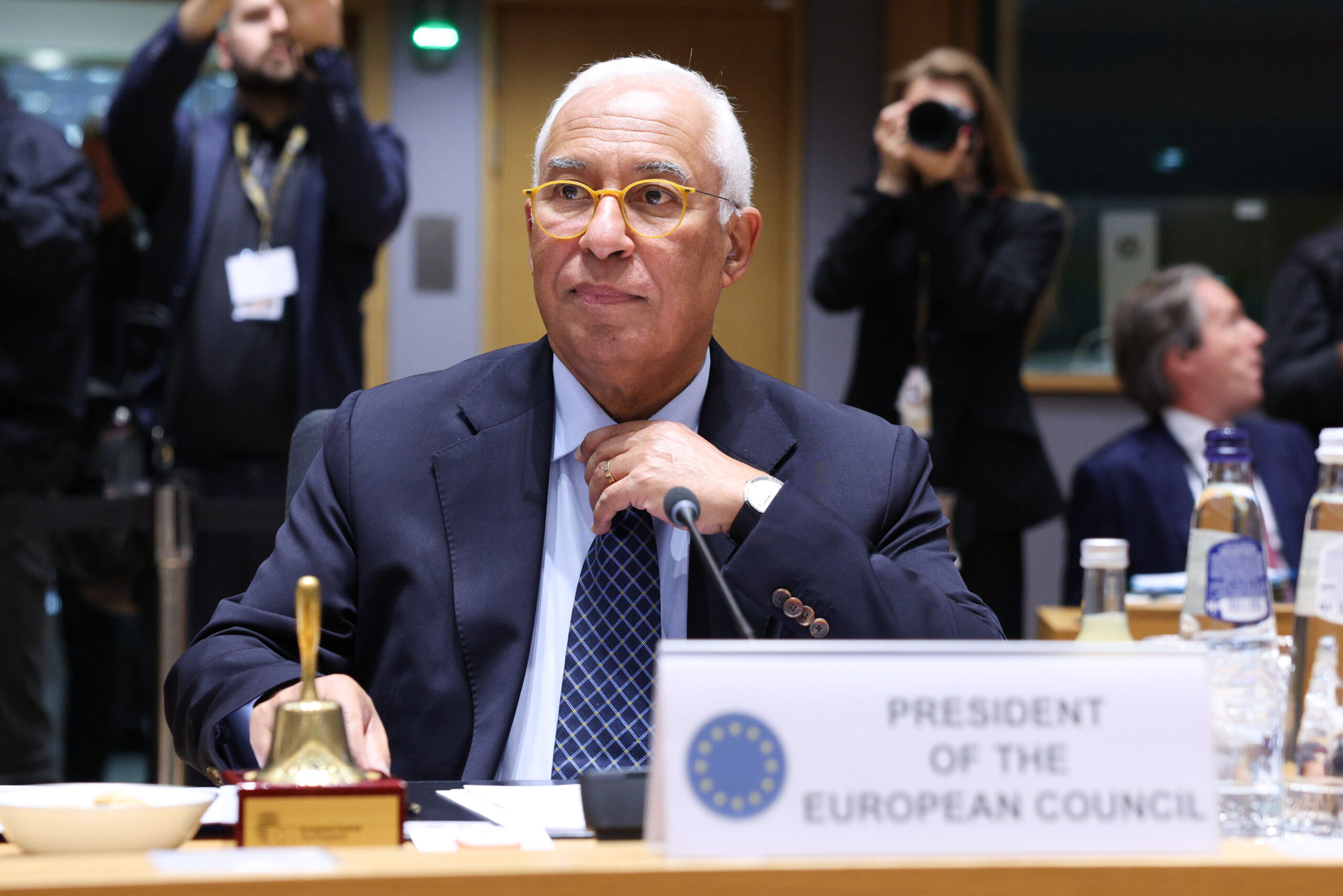
Brussels – Escalation in the Middle East, the launch of the “One Europe, One Market” agenda for strategic competitiveness, the debate on the EU budget for 2028–2034, and support for Ukraine: these are the items on the agenda for the European Council meeting on Thursday and Friday (19–20 March) set out in the invitation letter that President António Costa sent to the leaders of the EU-27. This comes amid growing international tension.
As in previous meetings, the President of the European Council aims to conclude the proceedings in a single day, promising a packed agenda ranging from energy security to the reorganisation of internal markets. The central item on the agenda will be the military escalation in the Middle East. “The military escalation in the Middle East is causing global instability, and its negative consequences are already being felt in Europe,” Costa emphasises, referring to energy prices and security of supply. “Together, we must identify the instruments we need to mobilise to ensure a timely, coordinated and effective response that protects our citizens and our companies, while at the same time working towards de-escalation and stability in the region,” the President of the European Council added.
In addition to the energy issue, the Council aims to translate the discussions of the Alden Biesen informal council into concrete action through the new “One Europe, One Market” agenda: a strategy for competitiveness and strategic autonomy. “The overall purpose of this agenda is to strengthen European competitiveness, enhance our strategic autonomy and reinforce the foundations of our social model,” Costa said. “The implementation of these measures, taken together, will contribute to our prosperity and the overall affordability of daily life for our citizens, and make the European Union more resilient to future crises. All of this requires clear and sustained political guidance from the European Council, in March and beyond,” he added. In this context, the Multiannual Financial Framework (MFF) 2028–2034 will play a decisive role as it “will be the main instrument at our disposal for common strategic action.” It is a complex issue on which Costa hopes for “honest discussion about how we can match our ambitions with the appropriate level of financing.”
Ukraine, of course, remains at the table. The summit will open with a speech by President Volodymyr Zelensky, and the message will be clear: the EU’s “steadfast” support for Kyiv and “increasing pressure on Russia until it engages in meaningful negotiations towards peace remains essential.” The leaders will also address “the worrying situation in Lebanon, Gaza, and the West Bank”, and for this item on the agenda, Costa has invited the United Nations Secretary-General, António Guterres, “to a working lunch to discuss the deteriorating international situation and how the European Union, working with its partners, can act to defend multilateralism.”
Among other issues, there is the issue of European defence. “It will be crucial to review ongoing efforts to increase our defence readiness,” and “we need to continue to push for rapid progress in strengthening the Europe of defence – including in its industrial dimension – as a fundamental component of Europe’s strategic autonomy.” The leaders will also talk about migration, an issue that remains “a priority,” and “the worsening situation in the Middle East reminds us of the need to move forward with our asylum and migration agenda.” Finally, “I have invited European Central Bank President Christine Lagarde and Eurogroup President Kyriakos Pierrakakis to share their economic analysis in the framework of a Euro Summit in inclusive format.” Proceedings will begin at 10 am on Thursday with the traditional exchange between the heads of state and government and the President of the European Parliament, Roberta Metsola.
English version by the Translation Service of Withub


![[Copyright: European Union]](https://www.eunews.it/wp-content/uploads/2026/10/euco-261015-120x86.png)