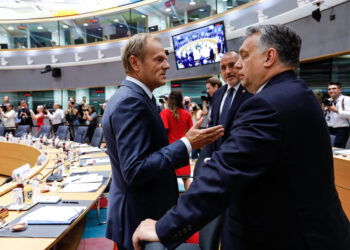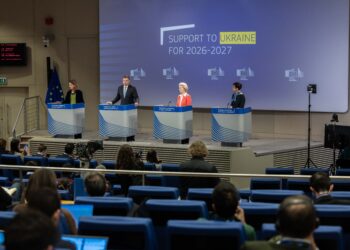
Brussels – The European Union condemns the Russian attacks carried out overnight against Ukrainian cities, reaffirming its support for Kyiv and stressing the need to continue putting pressure on the Kremlin. With the departure of the former Hungarian prime minister, Viktor Orbán, who has placed his veto on the twentieth package of EU sanctions against Moscow and on the €90 billion in financial aid to be allocated to Kyiv, Brussels hopes to resume this stance swiftly, confirming its consistency with the decision to support already adopted in December and reassuring the expectations of the Ukrainian president, Volodymyr Zelensky. For this reason too, “tomorrow will see the first meeting of a delegation of Commission colleagues in Budapest, where talks with the future Hungarian government will begin,” confirmed the EU executive’s chief spokesperson, Paula Pinho, at today’s (16 April) press briefing. “This is also a direct consequence of the announcement made by President von der Leyen earlier this week, stating that we would begin working with the new government as soon as possible on various issues, and there will be ample opportunity to discuss the new government’s positions and proceed accordingly,” she added.
Time is running out, meanwhile, as Moscow continues its bombing campaign. “Another night has shown that Russia does not deserve any easing of global policy or lifting of sanctions“, commented Zelensky on X in response to the nighttime attacks. For the president, the response must be to “defend lives by all available means” and “exert pressure for the sake of peace with the same total force.” In this context, “I thank Germany, Norway, and Italy, with whom we have already reached new agreements on support for our air defence. We are working with the Netherlands on additional supplies,” he highlighted. The EU’s High Representative for Foreign Affairs, Kaja Kallas, echoed this sentiment. “Russia wants more war, so our response is more aid for Ukraine, more pressure on Russia and full accountability for war crimes,” she wrote on X. “Europe is stepping up. In recent days, Germany and Ukraine have signed a €4 billion arms deal; the UK has announced its largest-ever drone package; and the Netherlands has pledged €200 million, among other commitments. On the EU front, it is time to release the €90 billion loan and proceed with the 20th package of sanctions. The Foreign Affairs Council will address this next week,” she specified.
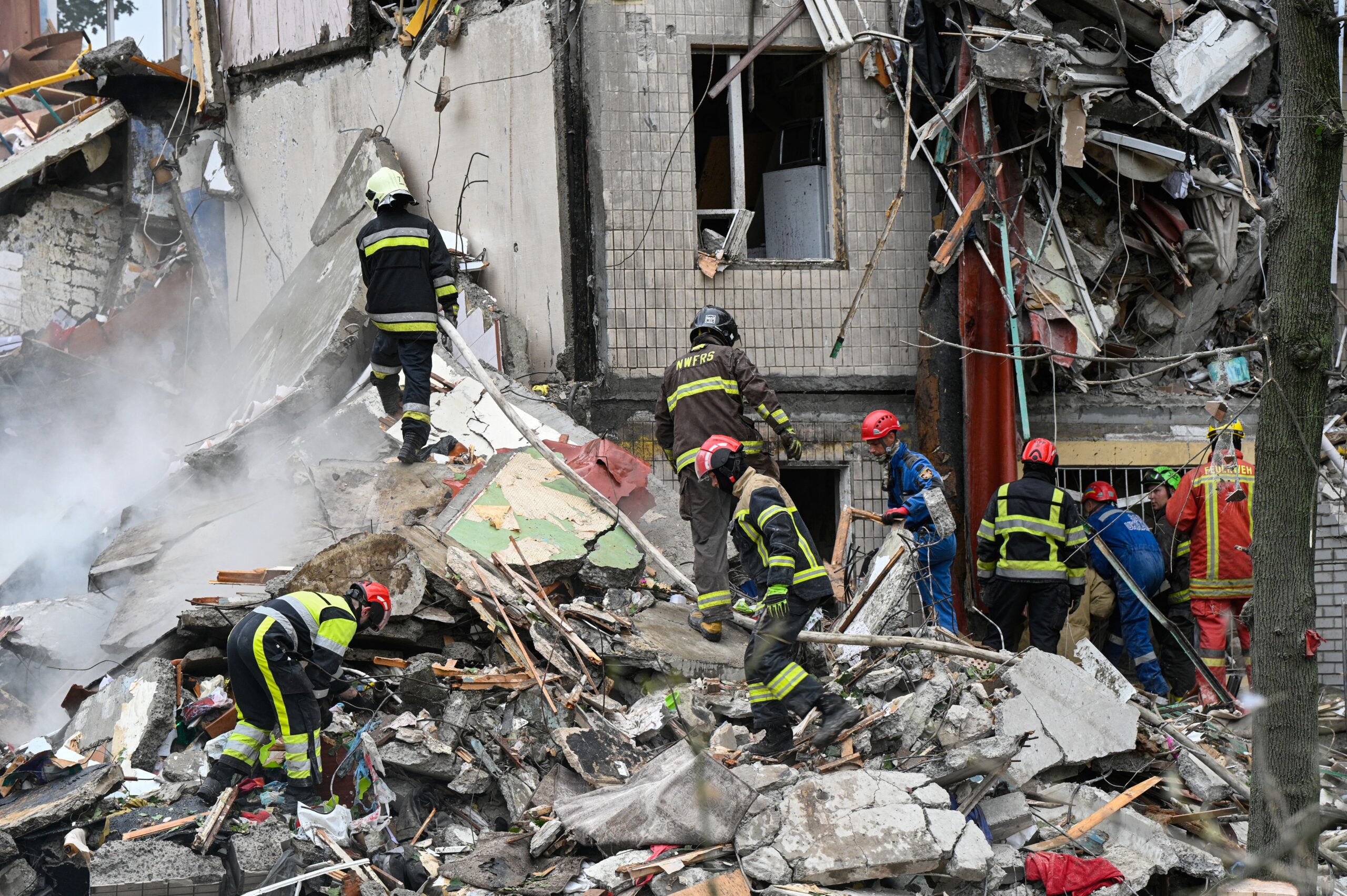
Meanwhile, according to the President of the European Council, António Costa, “Russia’s war of aggression against Ukraine has failed, and that is why Russia has chosen to deliberately terrorise civilians.” After expressing his sympathy for those affected—”our thoughts are with the injured and the families of the victims of these outrageous attacks”—the former Portuguese Prime Minister pressed on X: “Russia must put an end to this war of terror. We must achieve a comprehensive, just and lasting peace for Ukraine, based on the principles of the United Nations Charter and international law.” A terror that manifested itself last night with “yet another horrific attack on civilian targets in Ukraine: while the population slept in their homes, the cities of Kyiv, Dnipro, Odessa and Kharkiv were struck by dozens of ballistic missiles and hundreds of drones” and “the Russian armed forces deliberately launched successive attacks against Ukrainian emergency services as first responders arrived on the scene to save lives.” In this situation, Costa reiterated that “to this end, the EU will continue to increase pressure on Russia,” maintaining its “firm support for Ukraine as it defends itself against Russian aggression.” A plan that Brussels hopes to put into action shortly, with Orbán not attending the informal summit in Cyprus next week and with the upcoming change of government in Budapest.
The European Commission, through its spokesperson for Foreign Affairs, Anitta Hipper, noted that the night-time attacks “demonstrate once again that Russia is not at all interested in peace” because “the Russian armed forces have deliberately carried out these attacks against Ukraine’s emergency services, terrorising civilians.” The Berlaymont building also sends its “thoughts to the wounded and their families,” reiterates its support for the country under attack “in all its strength to resist and overcome this war of terror,” and states that it will continue to commit itself, “stepping up every effort to support Ukraine”.
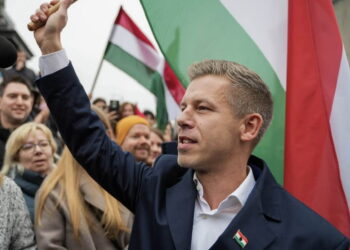
In particular, “what Putin and Russia should do is commit to a peace process in good faith and focus on their own ruined economy, rather than waging their war of terror,” Hipper pointed out. “As we saw in the first quarter of this year, Russia’s budget deficit has almost doubled compared to the same quarter last year and exceeds the entire deficit forecast for 2026 due to the war in Ukraine” and, furthermore, “Russia has suffered and continues to suffer huge losses, with an estimated total of over 1.2 million casualties.” Therefore, “the time has come for Russia to end its war of terror and its aggression against us,” the spokesperson added. From Brussels, “we will continue to work for peace with Ukraine and for Ukraine.” But the question mark over Budapest remains, given Peter Magyar’s stated opposition to Kyiv’s path to EU accession and his open yet cold stance on the veto against European aid and sanctions. “Time is running out on several issues, whether it be the loan to Ukraine or the EU funds from Next Generation EU. It is therefore clear that it is in the interests of Hungary and the EU to make progress as soon as possible,” clarified Pinho. “Therefore, these preliminary talks are taking place to ensure that, once the government is in place, concrete action can be taken, if necessary, without wasting time. That is the idea, that is the context of this meeting and the reason why it is taking place without further delay,” she concluded.
English version by the Translation Service of Withub