
- Europe, like you've never read before -
Wednesday, 3 June 2026
No Result
View All Result
  • it ITA
  • en ENG
Eunews
  • Politics
  • World
  • Business
  • News
  • Defence
  • Health
  • Agrifood
  • Other sections
    • Culture
    • Diritti
    • Energy
    • Green Economy
    • Finance & Insurance
    • Industry & Markets
    • Media
    • Mobility & Logistics
    • Net & Tech
    • Sports
  • Newsletter
  • European 2024
    Eunews
    • Politics
    • World
    • Business
    • News
    • Defence
    • Health
    • Agrifood
    • Other sections
      • Culture
      • Diritti
      • Energy
      • Green Economy
      • Finance & Insurance
      • Industry & Markets
      • Media
      • Mobility & Logistics
      • Net & Tech
      • Sports
    No Result
    View All Result
    Eunews
    No Result
    View All Result

    Home » Business » Bulgaria: excessive deficit procedure launched six months after euro adoption

    Bulgaria: excessive deficit procedure launched six months after euro adoption

    Sofia’s public finances are well above the 3 per cent threshold. Dombrovskis: “This cannot be explained by additional defence spending; we will propose launching the procedure.” The country has been part of the eurozone since 1 January

    Emanuele Bonini</a> <a class="social twitter" href="https://twitter.com/emanuelebonini" target="_blank">emanuelebonini</a> by Emanuele Bonini emanuelebonini
    3 June 2026
    in Business
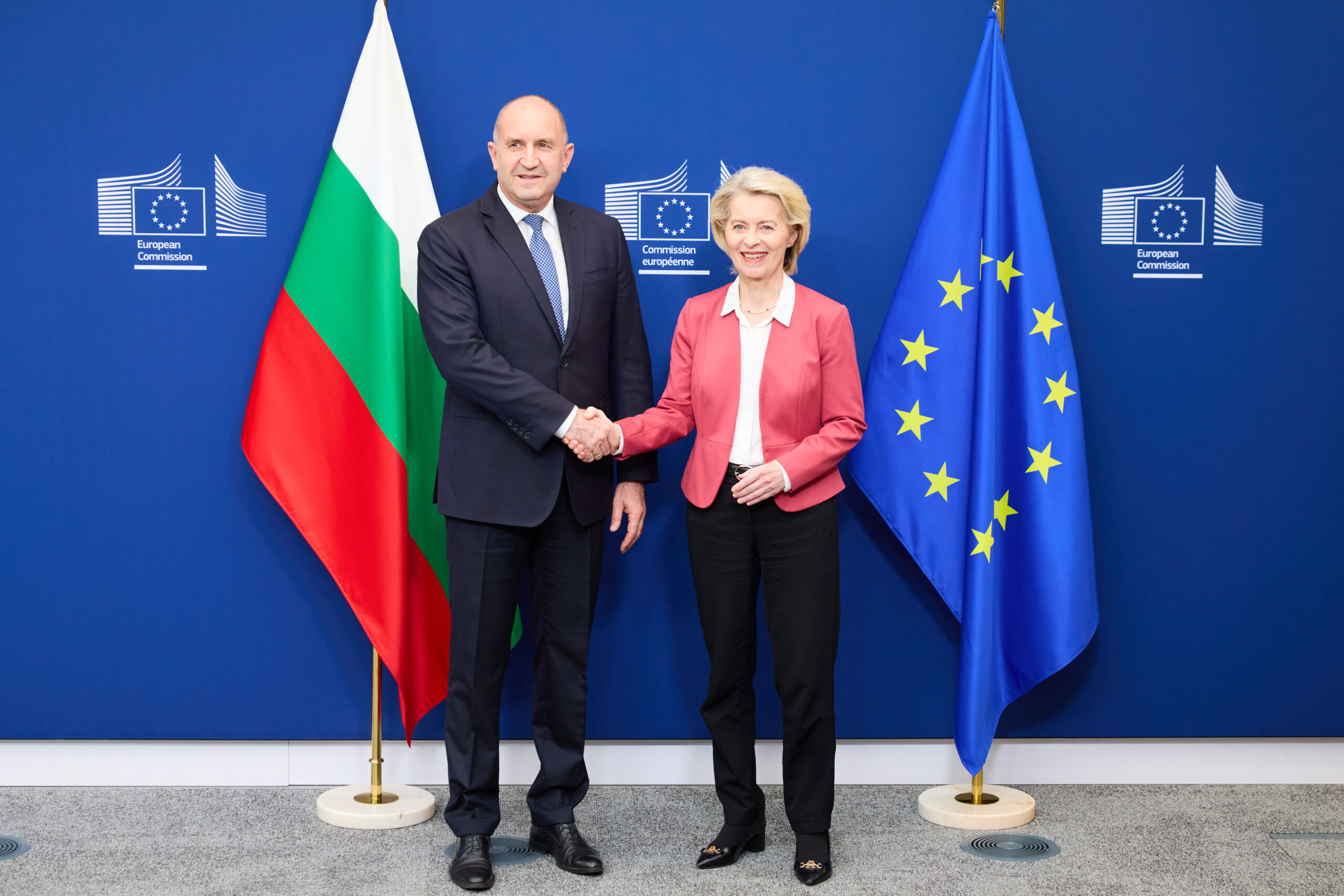
    La visita del primo ministro bulgaro, Rumen Georgiev, alla presidente della Commissione europea, Ursula von der Leyen, lo scorso 28 maggio 2026. Source: EU

    RUMEN GEORGIEV RADEV PRIMO MINISTRO DELLA BULGARIA, URSULA VON DER LEYEN PRESIDENTE COMMISSIONE EUROPEA

    Brussels – Bulgaria: from the single currency to an excessive deficit procedure in just six months. Strange, yet true: since 1 January, the country has officially adopted the euro, synonymous with economic and financial stability, and now “the opening of an excessive deficit procedure is warranted for Bulgaria at this stage.” This is the recommendation contained in the package of decisions taken by the European Commission as part of the European Semester, the process of coordination and cooperation on economic policy.

     The decision was taken based on deficit indicators. Bulgaria will exceed the 3 per cent deficit-to-GDP threshold in 2026 (-4.1 per cent) and in 2027 (-4.3 per cent). It is this significant breach of the reference values that has led the European Commission to propose initiating the excessive deficit procedure, which entails monitoring reforms and greater restrictions on public spending until the imbalance is corrected.

    However, what happened to Bulgaria places the spotlight on the decision-making process that led to Sofia’s entry into the eurozone. Adoption of the single currency is granted only after a rigorous process of reforms that ensure clear, binding criteria are met. To use the euro, inflation must be stable at below 2 per cent, public debt must be kept below 60 per cent of GDP, and the deficit-to-GDP ratio must be below 3 per cent. When the EU executive recommended Bulgaria’s entry into the eurozone in early June last year, the Commission estimated that the deficit-to-GDP ratio would be 2.8 per cent in both 2025 and 2026. Instead, something went wrong. 

    The Spring Economic Forecasts that the European Commission itself approved last month confirm that Bulgaria’s deficit had already exceeded the 3 per cent threshold in 2025 (-3.5 per cent), demonstrating that Sofia no longer met the criteria for adopting the single currency. The Commissioner for the Economy, Valdis Dombrovskis, explained that the 2025 figure included extra defence spending, which was not counted towards the deficit, while “for 2026, the deficit level is no longer entirely explained by additional defence spending,” and for this reason “the Commission will propose the opening of a procedure.” 

    In Bulgaria, a significant section of the public opposed abandoning the national currency and criticised the switch to the single currency. Faced with this wave of protests, the President of the European Central Bank (ECB), Christine Lagarde, went out of her way to explain that the euro is synonymous with competitiveness. Now the situation has changed, and the launch of the procedure risks fuelling Euroscepticism.

    English version by the Translation Service of Withub
    Tags: bulgariadeficiteurozonepublic accounts

    Related Posts

    A protester waves the Bulgarian flag during an anti-government protest in Sofia on December 10, 2025. Tens of thousands of people held anti-government protests in Bulgaria on December 10, 2025 widening an anti-corruption movement sweeping the European Union's poorest country as it prepares to adopt the euro. (Photo by DIMITAR KYOSEMARLIEV / AFP)
    Politics

    Bulgaria: Protests against new budget law cause prime minister to resign

    11 December 2025
    1 EURO CORNICE SOLDI MONETE ECOMIA FINANZA QUADRO
    Business

    The euro makes countries stronger and more competitive; Lagarde confronts eurosceptics in Bulgaria

    4 November 2025
    Business

    Euro countries agree: Bulgaria will adopt the single currency from 2026

    19 June 2025
    map visualization
    La visita del primo ministro bulgaro, Rumen Georgiev, alla presidente della Commissione europea, Ursula von der Leyen, lo scorso 28 maggio 2026. Source: EU

    Bulgaria: excessive deficit procedure launched six months after euro adoption

    by Emanuele Bonini emanuelebonini
    3 June 2026

    Sofia’s public finances are well above the 3 per cent threshold. Dombrovskis: “This cannot be explained by additional defence spending;...

    Auto emissioni

    Salini (FI) unveils the report on the revised CO2 standards for auto sector; Confindustria welcomes them but warns against weakening

    by Redazione eunewsit
    3 June 2026

    According to the MEP who drafted the report, this is "a concrete proposal that combines sustainability and competitiveness, without any...

    John Elkann, sullo sfondo Gianni Agnelli.

    Jackpot: €6.46 trillion looking for an heir

    by Roberto Zangrandi
    3 June 2026

    Between 2025 and 2045 roughly €6.46 trillion will change hands by inheritance. That is eighty Italian budget laws. Sixty NRRPs....

    Topo via Unsplash

    The EU moves towards phasing out animal testing in chemical safety assessments

    by Iolanda Cuomo
    1 June 2026

    Twenty-two measures to pave the way for a transition towards innovative approaches. Commissioner Roswall: "Today is a good day for...

    • Director’s Point of View
    • Opinions
    • About us
    • Contacts
    • Privacy Policy
    • Cookie policy

    Eunews is a registered newspaper
    Press Register of the Court of Turin n° 27


    Copyright © 2025 - WITHUB S.p.a., Via Rubens 19 - 20148 Milan
    VAT number: 10067080969 - ROC registration number n.30628
    Fully paid-up share capital 50.000,00€


    No Result
    View All Result
    • it ITA
    • en ENG
    • Politics
    • Newsletter
    • World politics
    • Business
    • General News
    • Defence & Security
    • Health
    • Agrifood
    • Altre sezioni
      • Culture
      • Diritti
      • Energy
      • Green Economy
      • Gallery
      • Finance & Insurance
      • Industry & Markets
      • Media
      • Mobility & Logistics
      • Net & Tech
      • News
      • Opinions
      • Sports
    • Director’s Point of View
    • Draghi Report
    • Eunews Newsletter

    No Result
    View All Result
    • it ITA
    • en ENG
    • Politics
    • Newsletter
    • World politics
    • Business
    • General News
    • Defence & Security
    • Health
    • Agrifood
    • Altre sezioni
      • Culture
      • Diritti
      • Energy
      • Green Economy
      • Gallery
      • Finance & Insurance
      • Industry & Markets
      • Media
      • Mobility & Logistics
      • Net & Tech
      • News
      • Opinions
      • Sports
    • Director’s Point of View
    • Draghi Report
    • Eunews Newsletter

    Attention