Brussels – The Council of the European Union officially approved today (8 June) a 20 million euro assistance measure to support the Egyptian Armed Forces (EAF) and strengthen relations between Brussels and the Cairo military. The money will be disbursed through the European Peace Facility (EPF), the 17-billion-euro fund that the EU established in 2021 to finance its common foreign and security policy activities, including support for third-country partners.
According to the official statement from the European Commission, the aim of the package is to “strengthen the capacities of the EAF to enhance Egypt’s national security and stability as well as the protection of civilians.” Furthermore, according to the statement, the “support will increase the capabilities of the EAF to ensure maritime security in the Mediterranean and Red Sea.”
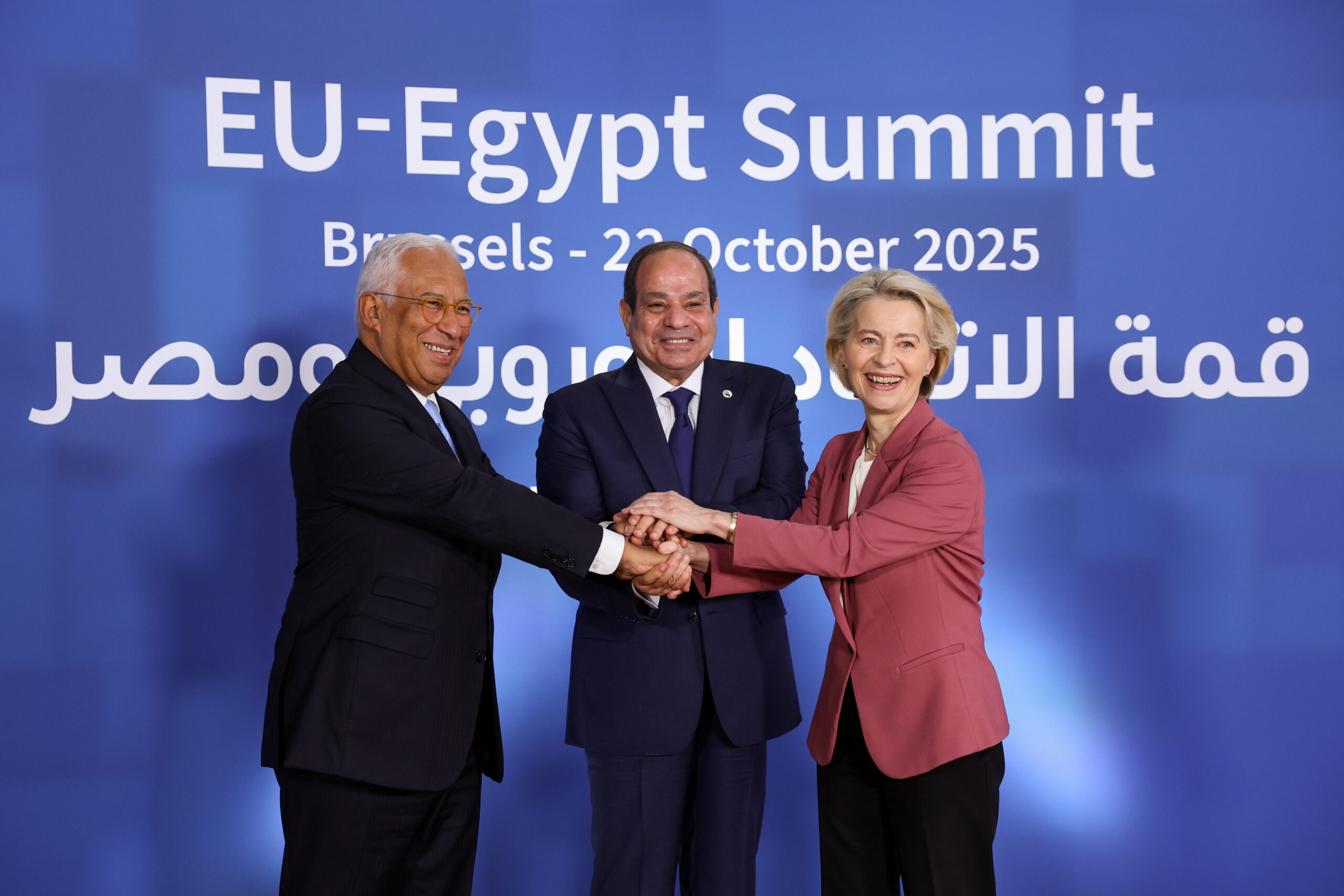
Today’s decision, in addition to another 20 million euro tranche disbursed two years ago,brings the total contribution the EU has provided to the Egyptian military since 2024 to 40 million euros. Indeed, in 2024 Brussels launched its initiative to rebuild ties with this strategic North African country, signing the Joint Declaration on the Strategic and Comprehensive Partnership with President Abdel Fattah al-Sisi. Among the six pillars of the relationship between the EU and Egypt that the document aims to strengthen is precisely that relating to security.
In its quest for a new strategic alliance with Cairo, Europe has agreed to set aside its traditional role as an international ‘champion’ of democracy and human rights, choosing to do business with and sign agreements with a regime that, since its establishment in 2014, has progressively intensified its authoritarian nature. For this reason, the partnership signed in 2024, and the initiatives that followed, have attracted widespread criticism, particularly from non-governmental democracy and human rights organisations.
The most recent accusation was by the NGO Human Rights Watch. In a report published in October, the New York-based organisation pointed out that “Since the March 2024 announcement of the new Strategic Partnership, the Egyptian authorities’ policies of systematic repression and continued intolerance for peaceful dissent, as well as violations of Egyptians’ economic and social rights, have continued without serious course correction.” To give just a few figures, the NGO notes that “around 6,000 people to trial in connection with terrorism-related offences in 2025, many solely for exercising their human rights,” and ” Enforced disappearance, torture and extrajudicial executions by security forces continue unabated in near-complete impunity.”
According to Claudio Francavilla, associate director for the EU at Human Rights Watch, “EU leaders should not ignore the many human rights abuses Egyptian people have been suffering under Sisi’s rule.” On the contrary, “Europe should use its leverage to secure concrete, overdue reforms to ensure the Egyptian government is accountable to its people and committed to respect and fulfil their rights.”
Not only has Brussels never responded to Francavilla’s appeal or to the many other experts who have spoken out in recent months, but, with today’s decision, it has chosen to provide “lifeblood” to one of the key pillars of al-Sisi’s regime: the army. As commander-in-chief of the Egyptian armed forces, al-Sisi seized power through a military coup in July 2013 that led to the overthrow of the first and (so far) only democratically elected president in the country’s history, Mohamed Morsi.
Furthermore, during these twelve years of authoritarian rule, al-Sisi has given the armed forces a central role in running the country, leading a growing number of experts to describe his regime as militaristic. One example among many is the involvement of the Egyptian army, in particular the intelligence division, in the case of Giulio Regeni, the researcher from Trieste whose abduction and subsequent murder prompted Rome prosecutors to charge four senior Cairo National Security officers.
The al-Sisi regime has repeatedly refused to extradite the defendants, prompting the Italian Constitutional Court to intervene in 2023 to allow the trial to proceed in absentia. Despite this and other cases in which European citizens have borne the brunt of abuses committed by the Egyptian government, the EU does not appear willing to review its policy of engagement with Cairo.
English version by the Translation Service of Withub