
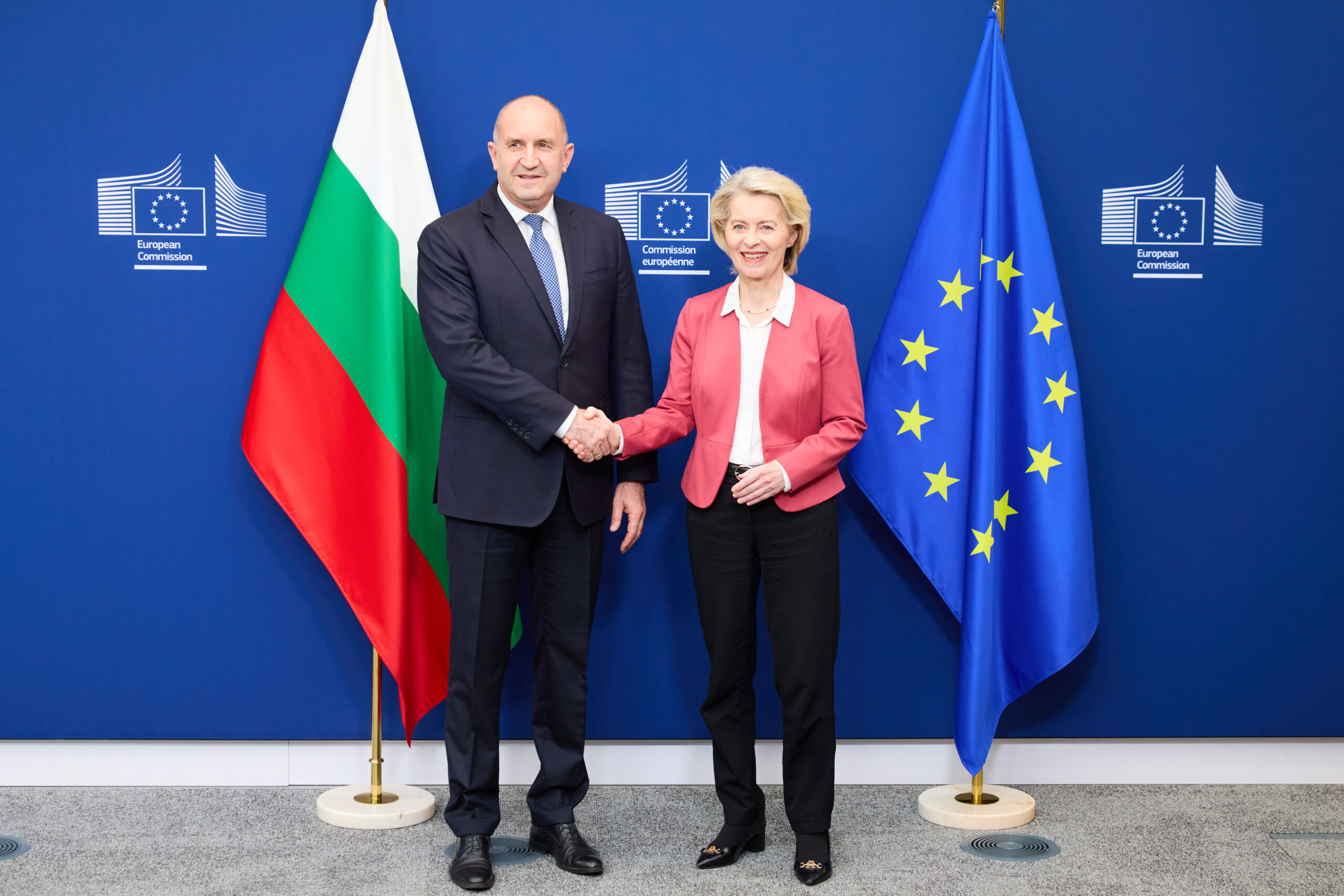
Brussels – Bulgaria: from the single currency to an excessive deficit procedure in just six months. Strange, yet true: since 1 January, the country has officially adopted the euro, synonymous with economic and financial stability, and now “the opening of an excessive deficit procedure is warranted for Bulgaria at this stage.” This is the recommendation contained in the package of decisions taken by the European Commission as part of the European Semester, the process of coordination and cooperation on economic policy.
The decision was taken based on deficit indicators. Bulgaria will exceed the 3 per cent deficit-to-GDP threshold in 2026 (-4.1 per cent) and in 2027 (-4.3 per cent). It is this significant breach of the reference values that has led the European Commission to propose initiating the excessive deficit procedure, which entails monitoring reforms and greater restrictions on public spending until the imbalance is corrected.
However, what happened to Bulgaria places the spotlight on the decision-making process that led to Sofia’s entry into the eurozone. Adoption of the single currency is granted only after a rigorous process of reforms that ensure clear, binding criteria are met. To use the euro, inflation must be stable at below 2 per cent, public debt must be kept below 60 per cent of GDP, and the deficit-to-GDP ratio must be below 3 per cent. When the EU executive recommended Bulgaria’s entry into the eurozone in early June last year, the Commission estimated that the deficit-to-GDP ratio would be 2.8 per cent in both 2025 and 2026. Instead, something went wrong.
The Spring Economic Forecasts that the European Commission itself approved last month confirm that Bulgaria’s deficit had already exceeded the 3 per cent threshold in 2025 (-3.5 per cent), demonstrating that Sofia no longer met the criteria for adopting the single currency. The Commissioner for the Economy, Valdis Dombrovskis, explained that the 2025 figure included extra defence spending, which was not counted towards the deficit, while “for 2026, the deficit level is no longer entirely explained by additional defence spending,” and for this reason “the Commission will propose the opening of a procedure.”
In Bulgaria, a significant section of the public opposed abandoning the national currency and criticised the switch to the single currency. Faced with this wave of protests, the President of the European Central Bank (ECB), Christine Lagarde, went out of her way to explain that the euro is synonymous with competitiveness. Now the situation has changed, and the launch of the procedure risks fuelling Euroscepticism.
English version by the Translation Service of Withub