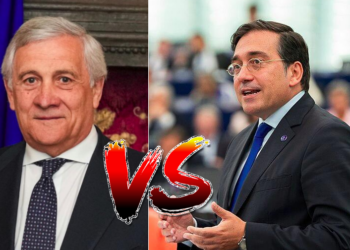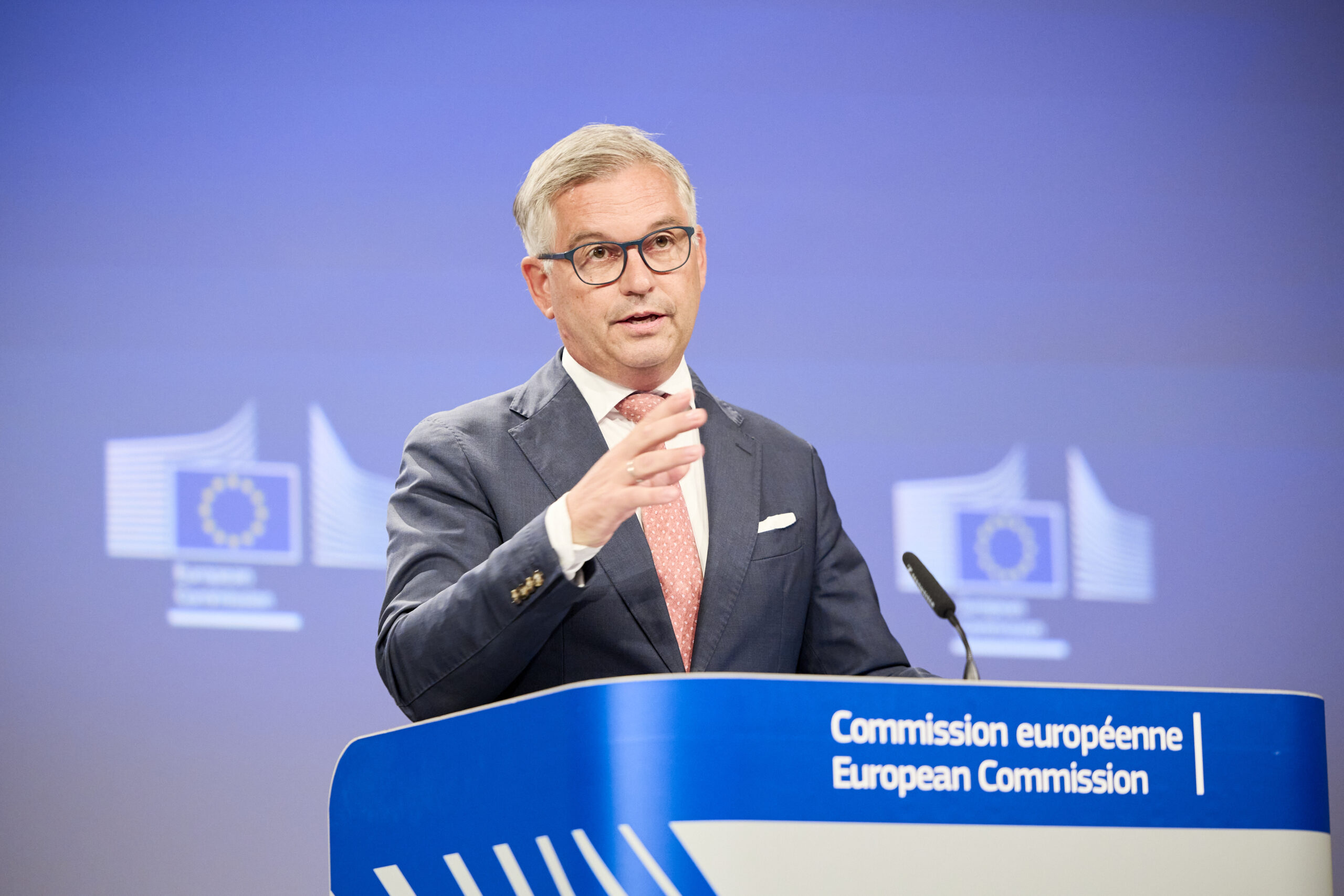
Brussels – The migration crisis in Ceuta has been a test of the European Union’s border security. A test which, according to the European Commissioner for Home Affairs and Migration, the Austrian People’s Party member Magnus Brunner, has been “successfully passed.” The reason is simple: “No migrant from Ceuta has entered the Schengen area.” Yet, while Brussels claims the system has held up, a political rift remains between Spain and Italy that the extraordinary video conference of the interior ministers of the 27 Member States failed to bridge.
During the meeting, the Member States and Schengen-associated countries have expressed full solidarity with Madrid, praising the “swift and effective” response of the Spanish authorities and offering their condolences for the victims who lost their lives while attempting to reach the enclave. According to the latest figures shared by the European Commission and the Spanish government, the vast majority of migrants who entered irregularly have already been returned to Morocco, and there have been no secondary movements towards mainland Spain or other EU countries.
However, the reassurances from Brussels are not enough to allay the discontent of Pedro Sánchez’s government, which continues to challenge Italy’s decision to reintroduce internal border controls at airports and seaports with Spain. A measure described by the Spanish Minister of the Interior, Fernando Grande-Marlaska, as “completely pointless and disproportionate.” The minister reiterated his belief that Rome will lift the restrictions “as soon as possible,” emphasising that the Schengen area “has never been in the slightest danger” due to the crisis in Ceuta.
Nevertheless, the Italian Minister of the Interior, Matteo Piantedosi, disagrees. Piantedosi used the meeting to revive the government’s policy on the management of migration flows. According to the Minister of the Interior, the crisis shows that the EU must stop “reacting to emergencies” and instead focus on stopping departures in countries of origin, strengthening repatriation efforts and using the political and economic clout of the EU-27 to secure concrete cooperation from third countries. Piantedosi also reiterated Italy’s call to introduce greater conditionality in relations with states that do not cooperate on repatriation, explicitly citing Morocco. “If a third country refuses to cooperate on the readmission of its own citizens, the EU must be able to apply strict conditionality across all sectors,” he stated, noting that Rome had already formalised this position in a letter sent to Commissioner Brunner and during the informal Council meeting in Dublin.
European Commissioner Brunner refrained from openly criticising Italy’s decision. “I understand Italy’s position. People were concerned,” he said, pointing out that “the new Schengen Borders Code allows Member States to reintroduce internal border controls on an exceptional and temporary basis in the event of serious threats to public order or internal security.” The European Commission will now verify that “the measures adopted are indeed proportionate and limited in time,” Brunner clarified. The Commissioner for Migration also noted that the situation has changed rapidly in recent days. “When Italy decided to take action, the situation was still uncertain”; today, however, Spain has confirmed that the majority of migrants have returned to Morocco and, according to the Commission, “there is no longer any risk of further movements to other EU countries.”
The conclusions from the meeting also show the direction the Union intends to take. The ministers reiterated the need to strengthen the protection of external borders, step up the fight against migrant smuggling networks, make returns more effective and consolidate partnerships with third countries. They also emphasised the importance of developing early-warning systems, including through pre-border intelligence tools and social media monitoring, as well as improving coordination of communication during crises to counter disinformation campaigns and foreign interference. The five priorities had already been set out by the President of the European Commission, Ursula von der Leyen, in a letter sent to the Spanish Prime Minister, Pedro Sánchez, in the wake of the Ceuta crisis, and have now been endorsed by the EU’s interior ministers.
English version by the Translation Service of Withub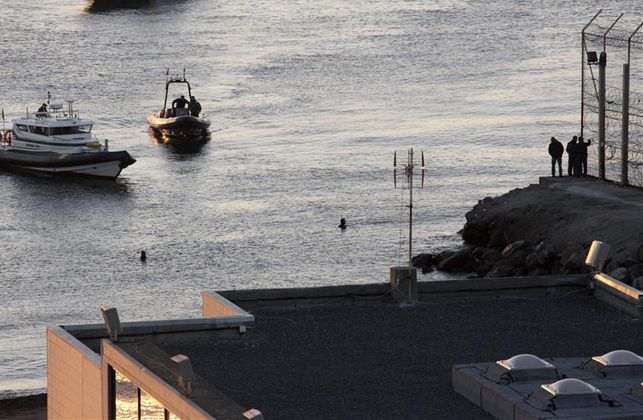

![Il vertice dei leader Ue si apre con tensioni su Schengen. La Germania chiede una soluzione [foto: imagoeconomica]](https://www.eunews.it/wp-content/uploads/2022/12/Imagoeconomica_1366264-scaled.jpg)