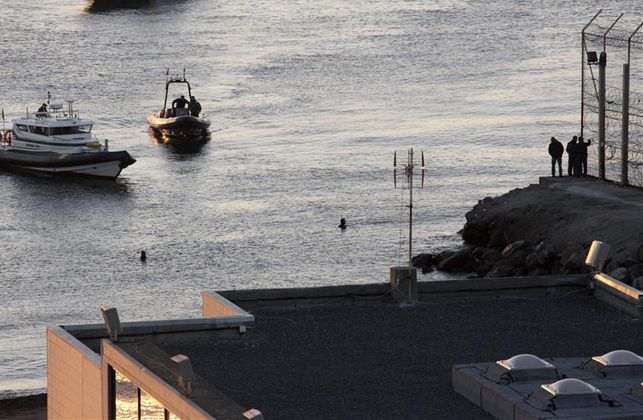
Brussels – The migration crisis in Ceuta, the Spanish exclave in North Africa, has driven a wedge between the member states of the European Union, upsetting the – already precarious – balance among European leaders and highlighting their structural differences. In response to Italy’s flat refusal to reopen the Schengen area with Spain – where the situation will remain in limbo until at least 15 August – Pedro Sánchez’s government has responded in kind: for those travelling from Italy, checks at airports and at the borders. But Spain’s countermeasures are not enough to give the Italian protectionists pause for thought. Because, for Meloni, the stakes are much higher.
And the row does not stop at Madrid. While the standoff with Spain continues, Berlin is once again calling on Rome to resume the transfers of so-called ‘Dublin cases’, reopening an issue that risks turning the management of migration flows into a new battleground between Italy and Germany. On the political front, however, Meloni has found an ally in the Danish Prime Minister, Mette Frederiksen, with whom she shares the view that repatriations must be stepped up and that the management of some migrants should be moved outside European borders.
And so, following Ceuta, the immigration debate is widening. On the one hand, Meloni is trying to form a united front with the more hardline European governments; on the other, she finds herself having to defend Italy’s position against the very same partners with whom she shares a political line. This is only an apparent contradiction, which illustrates just how difficult it has become for Europe to find a common position on border management and migrants.
For Meloni, the battle is not only being fought on the international stage. It also concerns the domestic front, ahead of next year’s elections and the growing threat posed by Roberto Vannacci, leader of Futuro Nazionale, which, with its ‘Remigration’ slogan, aims to win over precisely that section of the electorate further to the right that the Prime Minister cannot afford to lose. The crisis in Ceuta, therefore, risks being much more than a dispute over border control: it has become the starting point for a new phase in the European clash over immigration, in which Rome is called upon to balance alliances, national interests and domestic consensus.
The Italian line
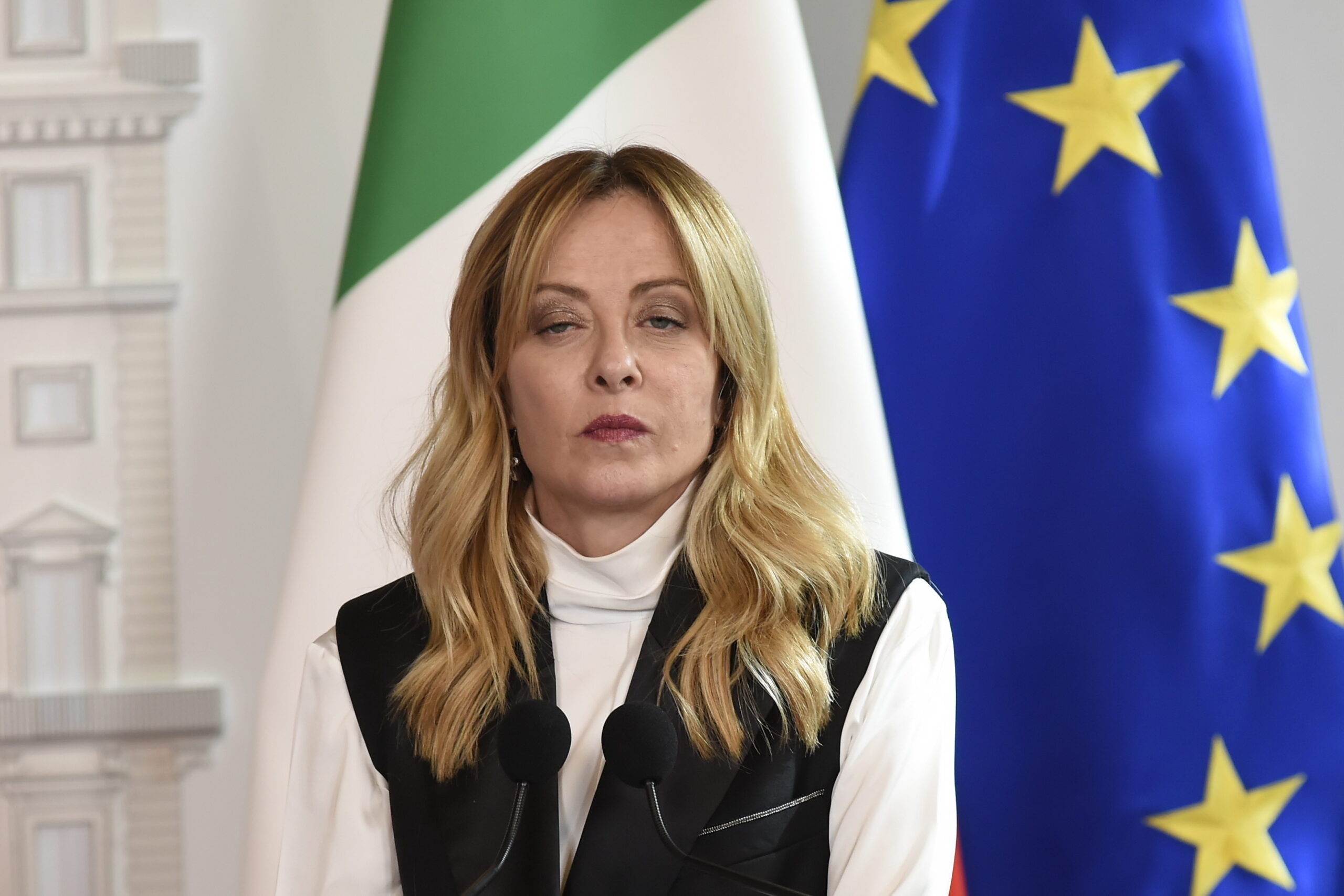
“On illegal immigration, we will not yield an inch,” Meloni wrote on X while her allies attacked the Spanish Socialist government, accusing it of failing to manage migration flows. “Defending the borders, stopping human traffickers, and ensuring effective repatriations will continue to be the line of this Government,” she added. The Prime Minister thus reaffirmed one of the cornerstones of her political agenda just as the crisis in Ceuta brings the issue back to the forefront of the European debate. The clash with Madrid therefore also provides an opportunity for Meloni to reaffirm her political identity, after years in which she has gradually cultivated a more moderate and conciliatory image in Brussels.
As also highlighted by Politico, Meloni does not want to risk being outmanoeuvred by the right on her own turf. With elections scheduled for 2027 and a new rival attempting to occupy the far-right space, the migration issue is once again being used as a tool to set herself apart and, more importantly, to ensure the government’s right flank remains protected.
Vannacci’s party, Futuro Nazionale, has risen in the polls, overtaking one of the governing coalition’s partners, the League, and gaining ground on Forza Italia. For Meloni, who has built her political career within the most radical right-wing sector, the challenge is particularly delicate: to maintain the European and institutional profile she has established in recent years without losing control of her electoral base.
And after Madrid, it’s Berlin’s turn
To further complicate matters, Friedrich Merz’s Germany is now also a factor. The German government has said it is ready “to resume transfers” to Italy of so-called “Dublin cases”, that is, asylum seekers who entered the EU in one country and subsequently moved to another Member State. The issue is apparently technical, but it risks becoming yet another source of political friction between Rome and a European capital.
Berlin maintains that, with the entry into force of the new Pact on Migration and Asylum on 12 June, the conditions that had allowed for a sort of freeze on transfers to Italy have changed. “The functioning of the Dublin system is an essential prerequisite for the success of the Common European Asylum System”, a spokesperson for the German Ministry of the Interior explained, stressing that Berlin expects transfers to Italy and Greece to resume.
Rome, however, disputes this interpretation. According to the Interior Ministry, cases relating to migrants who arrived in Europe before 12 June must be considered closed in dealings with Germany and other countries with which specific agreements had been reached. As for those who arrived after the new Pact came into force, it is still too early to determine how many have actually reached other Member States and could therefore be transferred back to Italy.
But the most interesting aspect of Italy’s position is another: any German requests should also be assessed in the light of European solidarity. Rome wants to bring to the table the disembarkations that took place following rescue operations carried out by NGO vessels flying the flags of other European countries, many of which are German. This does not mean that Germany automatically becomes responsible for asylum applications. Under European rules, it is generally the state in which the disembarkation takes place that is responsible for examining the application. However, the new Pact recognises the burden that disembarkations place on Mediterranean countries and provides for solidarity mechanisms.
This is no minor detail, as Italy has been ranked by the European Commission, along with Greece, Cyprus, and Spain, among the countries facing migratory pressure and therefore beneficiaries of the solidarity mechanism. For 2026, the European quota amounts to 21,000 relocations or other measures, or 420 million euros in financial contributions.
A widening rift
And it is precisely here that the complexity of Italy’s position following the Ceuta incident becomes apparent. The crisis with Spain has reignited the debate on internal border controls and freedom of movement; the crisis with Germany now risks bringing back to the fore the question of who should take responsibility for migrants who, having entered via the EU’s external border, move on to other Member States.
According to an assessment published by the European Commission on 15 July, in the first few weeks of the new system’s implementation, eight Member States had already sent Italy 12 transfer requests, all of which Rome rejected. Brussels pointed out that, under the new rules, the receiving state cannot simply refuse the transfer, but must, where necessary, propose an alternative date. It is in this regard that Italy’s stance on “compensation” could prove decisive. Rome does not appear willing to passively accept the return of Dublin cases without demanding, in return, greater sharing of the burden of migration.
And while the dispute with Madrid remains unresolved, other European governments are also hardening their positions. Today (10 August), Meloni and the Danish Prime Minister, Mette Frederiksen, shared on social media some reflections on public safety and the need to defend “our values and our way of life.” Among the proposals is the establishment of repatriation centres in third countries and other “innovative solutions”, always “outside Europe.” The head of the Fratelli d’Italia delegation to the European Parliament, Carlo Fidanza, argues that “the commitment of a progressive woman like Frederiksen shows that even on the left, we can find common ground on these common-sense positions.”
The risk for Brussels is that the Ceuta crisis will not remain a bilateral one. Instead, it could become a symptom of a wider rift, in which every government seeks to defend its own domestic political space and shift the burden of external borders onto others. And Italy, this time, seems determined to see the game through to the end.
English version by the Translation Service of Withub![[foto: European Council]](https://www.eunews.it/wp-content/uploads/2026/08/eu-tunisia-350x250.jpg)

![Persone migranti a Ceuta [foto: imagoeconomica]](https://www.eunews.it/wp-content/uploads/2026/08/ceuta-350x250.png)