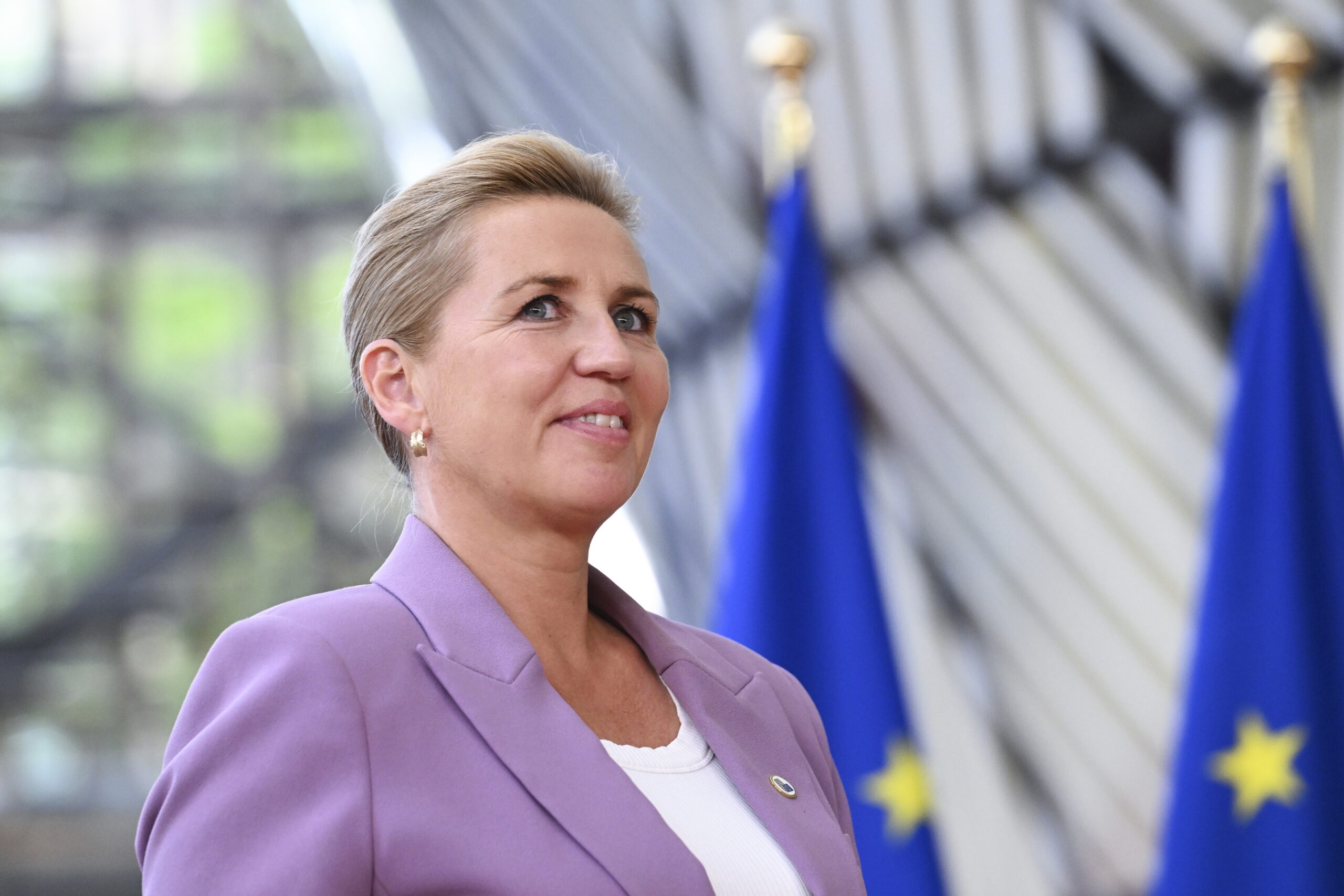
Brussels – The Danish Prime Minister, Mette Frederiksen, is not backing down one iota on the issue of migration. Indeed, just today (12 August), speaking in the Danish Parliament, she reaffirmed her determination to maintain control over the management of migration flows. Speaking before the Folketing, which had convened in an extraordinary session to discuss the crisis in Ceuta, she reiterated that “a strict migration policy is essential for Denmark and for Europe,” describing the images coming from the Spanish enclave as “disturbing.”
“We keep monitoring the situation very closely,” said Frederiksen, assuring that the government would not hesitate “for even a second” to take the “necessary measures” should there be any new movements of migrants across Europe. And among the possible measures is also the tightening of border controls, up to and including their complete closure as a last resort, with the police tasked with monitoring all points of entry into the country.
This is by no means a purely theoretical scenario. According to the Prime Minister, contingency plans are already in place and checks can be stepped up “at a few hours’ notice.” “The important thing regarding Schengen is that, if problems arise in a country, whether it be crime or refugees, the most effective weapon we have in Denmark is border control,” she told the press, as reported by TV 2
Nyheder. “I am a staunch supporter of border controls,” she added.
The Folketing’s extraordinary session comes as the migration crisis in Ceuta continues to shake up the European balance of power. Between 30 and 31 July, around 80,000 migrants from Morocco reached the Spanish exclave in North Africa, triggering a crisis that has reignited the debate on internal border controls and the future of Schengen. Madrid and Rome have found themselves at the centre of the row following Italy’s refusal to reopen the Schengen area with Spain, a measure that will remain until at least 15 August. The response from Pedro Sánchez’s government has been to introduce checks on those arriving from Italy.
But the crisis is not limited to the standoff between Rome and Madrid. Berlin has asked Italy to resume the transfers of so-called Dublin cases, reopening an issue that risks turning the management of migration flows into a new battleground between Member States. And it is precisely on this issue that Frederiksen represents one of Giorgia Meloni’s main European allies: the two prime ministers agree on the need to step up repatriations and shift part of migration management outside European borders, including through repatriation centres in third countries.
The debate in the Folketing also highlighted the delicate relationship between Denmark and the EU on matters of justice and home affairs. Frederiksen made it clear that “there are currently no plans” for a referendum on the Danish opt-out, the exemption that keeps Copenhagen outside the scope of certain European rules on asylum, immigration, border control, criminal law and police cooperation.
The Prime Minister has, however, strongly defended Denmark’s continued membership of the Schengen Area, warning of the consequences of a possible exit. This stance sets her apart from the more hardline right-wing parties, such as the Danish People’s Party, which are calling instead for Denmark to leave Schengen and introduce permanent border controls. Frederiksen, therefore, wants more borders, but not less Europe. Her approach is to make full use of national control measures while remaining within the Schengen system. And following the events in Ceuta, the message from the Danish Parliament is clear: if migrant flows resume, Copenhagen is ready to respond within a matter of hours.
English version by the Translation Service of Withub

![Persone migranti a Ceuta [foto: imagoeconomica]](https://www.eunews.it/wp-content/uploads/2026/08/ceuta-350x250.png)