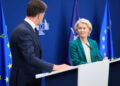
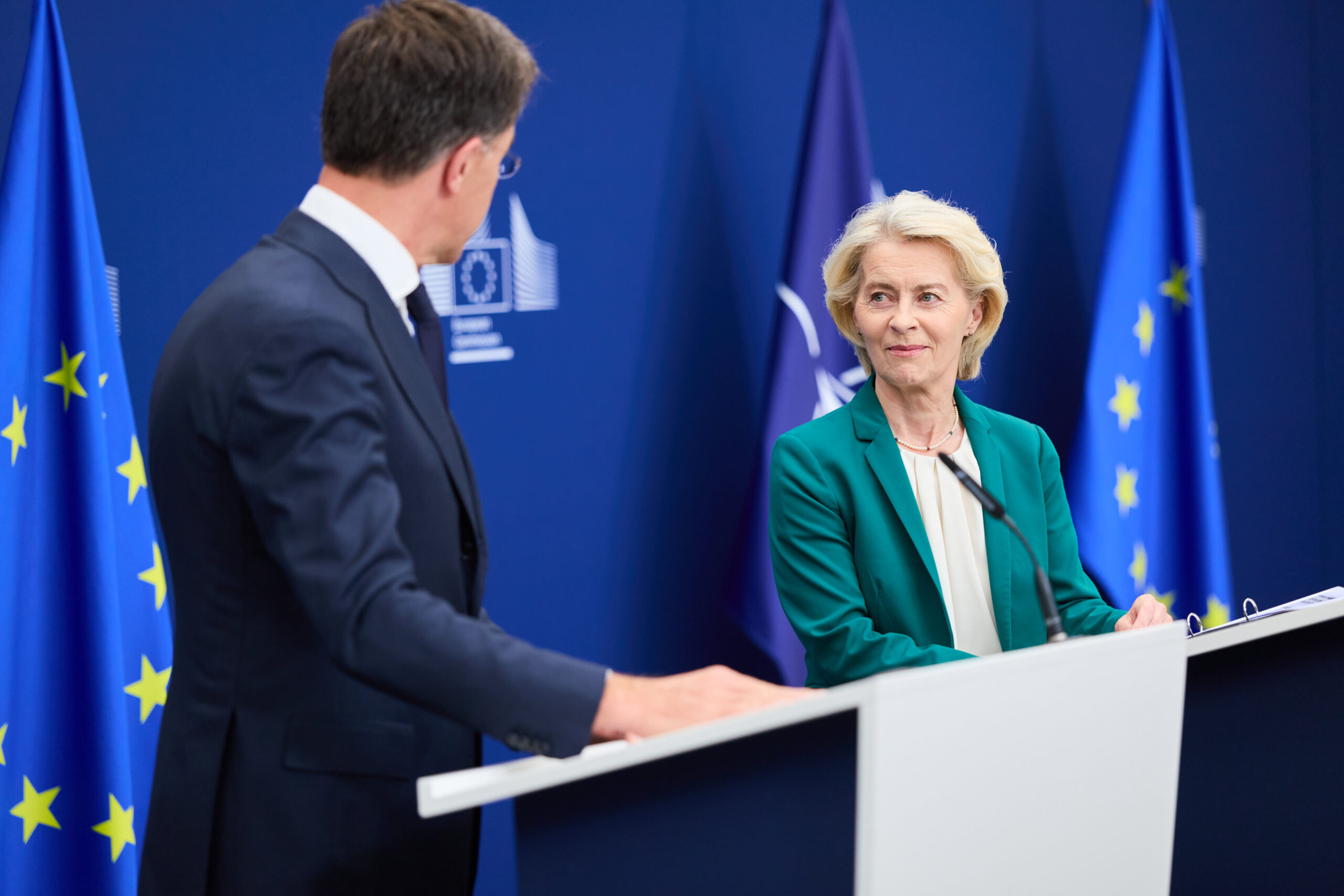
Brussels – The attack using a drone laden with explosives against cargo aircraft at Leipzig Airport (Germany)—which took place on 4 August and, following a month of investigations, has been attributed by German investigators to Russia—marks “a new escalation” within EU territory of Moscow’s war against Ukraine, which confronts Europeans with a “new normal”. This was stated today (2 September) by the President of the European Commission, Ursula von der Leyen, during a press briefing alongside the NATO Secretary General, Mark Rutte. A situation in which, according to von der Leyen, it is necessary to “take a step forward.” In other words: “It means being ready to respond to Russia’s recklessness more swiftly and effectively.”
“We are meeting today to discuss the Russian attack on Leipzig. The German government has identified Russia as responsible for an attempted attack on cargo aircraft at Leipzig/Halle Airport. Had this attack been successful, it would have caused enormous damage and possibly even loss of life. I therefore want to be very clear about what happened: this was an attack using military equipment, carried out by Russian agents on EU soil. And we will not tolerate it,” von der Leyen emphasised. An incident which, according to the President, “forms part of a broader pattern of increasingly dangerous incidents”, such as “the repeated incursions into our airspace” and the “drones paralysing our airports.” These are “interferences with our critical infrastructure” and “Europeans are facing the harsh reality that this is the new normal.” But as well as reaffirming full solidarity with Germany, the head of the Berlaymont Building also stressed that Moscow has failed, if its intention “was to make us reconsider our support for Ukraine.” Indeed, it has “strengthened the resolve”—on the part of Europe and NATO—to “maintain and intensify the pressure on Russia.”
A view shared by NATO Secretary-General, Mark Rutte. “Russia has become increasingly reckless” because “as it continues its terrible war against Ukraine, we have seen an increase in drone and missile activity in our airspace, along our eastern flank, creating a growing risk.” Furthermore, “we have also seen an increase in hostile activities directed against our territory, whether it be fires set in factories producing defence equipment for Ukraine, or the Russian hybrid attack in Leipzig.” Therefore, “the dangers posed by Russia are clear, and we are working tirelessly to ensure the safety of our citizens. If Russia thinks that this threat will divide us or deter us from supporting Ukraine, it is mistaken. Our unity is unshakeable. Our support for Ukraine is clear,” explained the former Dutch prime minister, now at the head of the North Atlantic Alliance.
On support for Kyiv, von der Leyen confirmed she had received a request for funding amounting to “several billion euros” from the country at war. This “would cover Ukraine’s air defences, including highly advanced
PAC-3 Patriot
air defence systems”, and Member States are currently examining the request. “I can say that the situation is moving in the right direction,” she added. The head of the European Commission announced that the EU is “working with Ukraine on the project
FREYJA, a European project to build a ballistic missile defence system.” She noted that “this is in addition to the support loan of €90 billion, for which the EU has already allocated €8.5 billion for drones and missiles.” These funds “will also be used to purchase fighter aircraft from European manufacturers,” she emphasised.
In this context, von der Leyen urged that “we regard our everyday infrastructure as frontline targets and protect them accordingly,” promising to support “any Member State that takes on Russia.” Europe “already has rapid response teams capable of responding to this type of attack, whether they occur inside or outside” the Union. For the President, all this increases Europe’s resilience, as well as “the strength of our Single Market.”
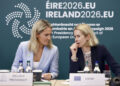
Finally, recalling how the sanctions have “weakened the Russian economy,” the President highlighted the possibility of “imposing further sanctions and keeping them ready as soon as such dangerous acts, which put human lives at risk, are attributed” to the Russian Federation. The message was clear: “Every loophole that Russia exploits is one that we must close.” For this reason, “today in Ireland, European foreign ministers are discussing new lists of sanctions” against Moscow. Europe “will continue, will prevail, and will deter anyone who attacks our freedom and security,” she concluded.
English version by the Translation Service of Withub
![Il premier israeliano, Benjamin Netanyahu (sinistra) e il presidente russo, Vladimir Putin [foto: imagoeconomica]](https://www.eunews.it/wp-content/uploads/2026/08/putin-netanyahu-350x250.png)