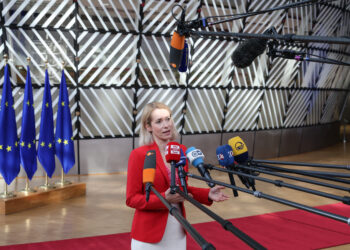
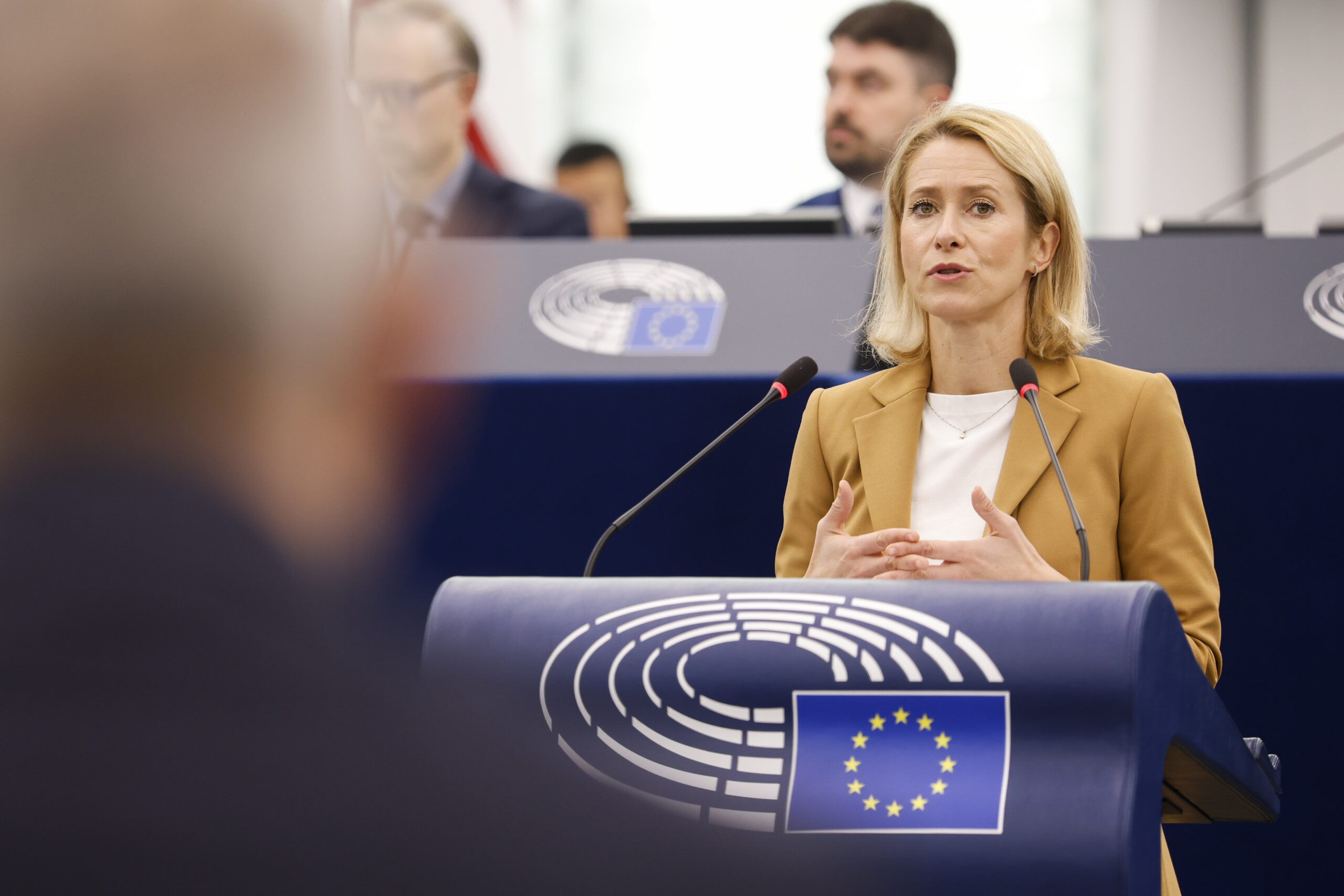
Brussels – The global food system is facing a perfect storm, according to the High Representative for Foreign Affairs and Security Policy, Kaja Kallas, who today (20 October) held a debate at the European Parliament’s plenary session in Strasbourg dedicated to the latest developments in the region. In response to Russia’s actions in the Black Sea, which “make it harder to put food on people’s plates across the world,” the European Union is called upon to respond with “a strong and united European response on three fronts”, the former Estonian prime minister now at the helm of the EU’s foreign policy explained.
The debate follows attacks carried out by the Kremlin using drones against several merchant ships – mainly carrying wheat and other cereals – off the coasts of Bulgaria and Romania, where, in recent months, Russian aircraft and drones have also repeatedly violated the airspace of several EU Member States. “There have been six attacks in the last ten days” and, at present, “rescuers are still searching for the seven sailors missing after the drone attack on two tankers near Romania’s Black Sea coast,” explains the High Representative, who believes that the EU’s response to counter the Russian Federation must be on three fronts.
“First, we work to keep Ukraine connected to global markets and protect food security,” she said, stressing the role of the EU initiative Solidarity Lanes to help Ukraine “find alternative routes.” According to estimates provided by the High Representative, since mid-July “Russian attacks have resulted in a loss of around 60 million euros a day in export revenue.” Often regarded as the “breadbasket of Europe”, Ukraine “supplies 15 per cent of global maize exports, 10 per cent of wheat, 15 to 20 per cent of barley and 50 per cent of global sunflower oil exports. Around 90 per cent of these goods move through the Black Sea corridor,” she pointed out. Now, “global grain prices are at their highest level since February 2023”, and although “global grain stockpiles are higher than in 2022, when Russia blockaded twenty million tonnes of Ukrainian grain. But the global food system is now facing a perfect storm: a super El Niño, droughts in both hemispheres and conflicts in the Middle East straining fertiliser exports,” she added. Although cereal exports have “increased by almost 2 million tonnes since July,” Russia is now “also targeting border crossings with Moldova, Romania, and Poland.”
For this reason, we must also work on a second front, namely strengthening “security along the Black Sea and the Danube.” In practical terms, this means promoting “early detection and real-time information sharing through the European Defence Agency’s MARSUR network” and “the Black Sea Maritime Security Hub, which Romania and Bulgaria are jointly establishing”, says Kallas. The MARSUR network is a federated network promoted by the European Defence Agency (EDA) that enables the navies and command centres of EU countries to exchange real-time information on the maritime situation. The Hub is an initiative designed to protect critical infrastructure, ensure freedom of commercial navigation, neutralise naval mines, combat hostile activities and respond to environmental risks in the region. However, according to Kallas, these initiatives are meaningless unless there is “faster collective decision-making when serious incidents occur.” Therefore, the EU must take action to implement “a proposed emergency protocol, meaning immediate political consultations, and better coordination in major hybrid crises, including coordination with NATO.”
The final front: focusing on diplomacy. “We are now working with international partners, with Türkiye, India and others, including food-importing countries in Africa and more broadly the Global South, to push for a freedom of navigation arrangement in the Black Sea,” Kallas said. The aim is to reach “a Black Sea arrangement (that) would protect lives and vital supplies.” However, the Kremlin “has rejected it. This is why, again, diplomatic engagement must go hand in hand with sustained pressure on Moscow and support for Ukraine,” the High Representative said.
Finally, the High Representative issued an appeal: “We must raise awareness among African countries so that they push for a security agreement in the Black Sea.” Meanwhile, in response to MEPs who, during the debate, accused the European Commission of not doing enough to end Russia’s war in Ukraine or to propose a strategy for peace, Kallas reiterated that, as things stand, the EU has no intention of “giving in to a peace that is neither just nor lasting.” We must “ensure that Russia does not repeat these attacks”, she noted, stressing that “sanctions are working”; otherwise, “Putin would not be calling for them to be lifted.” Moreover, according to Kallas, “it is precisely thanks to European support that Ukraine has not given in to Putin’s terms, even though American negotiators have been trying for a year and a half, almost two, to push it toward surrender.”
Today’s debate will be followed by a vote on a resolution “on the escalation of Russian attacks in the EU, in particular against maritime transport in the Black Sea”, scheduled for Thursday (22 October).
English version by the Translation Service of Withub