Brussels “does a lot” for culture and cinema. My film? “These days, when things go well one is stumped …”
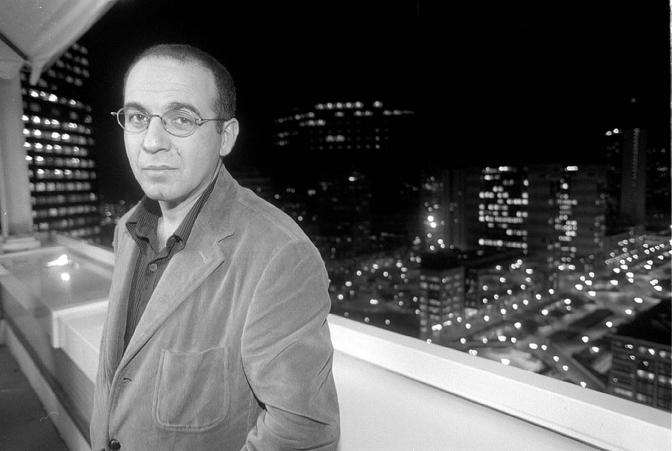
We met the Sicilian director at the Italian Cultural Institute for the Belgian premier of his latest work “The Best Offer,” a successful film, which takes place in Europe with an important cast and one which “people continually ask me why I think it is so successful…well, the truth is that these days when things go well one is stumped…..” jokes Tornatore.
“The Best Offer” is an international scale film, not just because of the cast but also for the Central European scenery that characterized it….why this choice?
The European panorama was helpful in recreating what I wanted to be an unspecified locale suspended in time in an ambiguous Central Europe which didn’t have territorial or cultural limits: perfect for the allegories of this movie. On the other hand I believed an Italian characterization could have damaged the story; it would have given a realism that films like this don’t need. It was not an Italian story: if I had filmed it in Italy or America, I would have committed a serious error.
Virgil Oldman (Geoffrey Rush), the main character, is a renowned auctioneer: what do you mean Europe was a “useful” setting for him?
I mean more universal. I agreed to give more credibility to an auctioneer who is so important that his services are sought after in many cities. This is something that, for example in Italy or other countries, could be less likely. An Italian auctioneer usually works in Italy or for a limited period of time in New York or London but only a noteworthy professional sometimes is involved in various missions that bring him to diverse cities and I needed him to move around. In this sense I say that the a Central Europe atmosphere was “useful” for the film: both from the point of view of content and from the point of view of requirements of carving the narration.
Speaking of Europe – the European Commission finances the distribution of films produced in its territory. Do you think this works?
I believe it is a good thing. I can’t say if it works or not, but I have the feeling it does: I learn from the credits that some of the movies I see at the cinema were also funded for their distribution by the European Community and it almost always regards interesting work. I feel it is very important that the European Community takes responsibility in aiding distribution of European films. Now, I don’t know if the legal system works perfectly or could be perfected; I didn’t get involved since, until now, I have never benefited from this type of financing, but I think it works for the public: I see many films that have this “seal of quality,” that’s what I call it.
For example the Media Program, which will then be replaced by Creative Europe 2014-2020, which will provide funding in support of European cinema and to cultural and creative sectors, allowing them to contribute more to employment and growth. Have you heard about this?
The Media Program is very important and valuable; I hope it continues to grow and that it continually reaches broader horizons.
Staying on the topic of employment: Do you think cinema can contribute to the recovery by creating job opportunities for young people?
Without a doubt it would be marvelous if they were to implement methods of funding to increase productivity in cinema, but I can’t really say I think this would resolve the problem of unemployment. Perhaps if they were to duplicate production, we would also have double the professional figures, in this sense, yes it is a help. Everyone in the world of cinema would like our industry to be capable of increasing the amount of movies we produce and consequently more people being employed in the world of cinema; it would not resolve the general problem of unemployment, but it would resolve many problems in cinema. I would love to go back to the great days of producing 200-300 films a year but today in Italy we don’t even reach 100.
Do you think the European Union does enough for art and for cinema in particular?
I think they do a lot. Even if, on the basis of historical period we are living, we know that it is never “enough.” I think the European Community is sensitive to the problem of preserving cultural heritage but if we wanted we could certainly do more.
What else can be done?
It is not enough to fund distribution of European works; they would also need to increase resources for production. But the real problem is that they are not keeping up with what Europe is doing: there are initiatives, certainly, but not always the institutions, especially in the suburbs; they are equipped and have useful projects to optimize resources and take advantage of the funds that the EU sends. How many times do we hear “the country or the region or the community of so-and-so does not have sufficient projects to utilize funds arriving from Europe” and therefore they remain passive….but this is in all sectors. Strangely the European fabric is not yet equipped to use what the European Community provides.
European fabric or Italian cloth?
I am referring to Italian experience but I believe it is not just an Italian problem.
In Europe continuing education is becoming a central theme. Where are we in the world of show business?
In the world of teaching there is much work to be done. In Italy we do not have a great tradition in teaching cinema. There are a handful of important schools, then for the remainder, cinema training is entrusted to private institutions and courses that people invent to benefit from periodic funding. There are not deep roots; it is an area in which Europe could do so much. Furthermore, audiovisual is the language of the future and the people who want to express themselves through this channel will always be more numerous so it is necessary that teaching this field already be introduced in traditional schools.
In your line of work what differences do you notice when you work abroad?
In setting up a production, organizing it, asking people to collaborate….I don’t notice a big difference. Mine is a rather particular world: I find the same passion that I find in Italian cinema anywhere I go. Cinema in some ways is a unique religion that makes everyone the same or similar in the way they work.
The Best Offer, a love story narrated as a mystery, addresses many issues, including perhaps, the idea that the era in which we live is so saturated with uncertainty that even feelings suffer this precariousness….do you agree?
If there is something in the film that is close to what we are experiencing, it is more general – the impossibility to recognize what is real and what isn’t. This sometimes ends by also invading the extremely delicate field of feelings obviously….The protagonist is an art expert, infallible in distinguishing authentic works from fakes, who however in his private life is not capable of recognizing a sincere person from one who is not. Well our life today is bombarded by messages and information which often we are no longer in a position to know how much of these are real or not. And this cannot help but affect the extremely fragile and mysterious world of human sentiments as well.
The core of your film, or rather the continuous series, in life and in art, of reality and fiction – it brings to mind a quote by Fernando Pessoa: “Literature, as all art is the understanding that life is not enough….”
The instinct to find something that goes beyond the horizon of everyday life, of “the known” is something that crosses historical periods. Reproduction of oneself and of one’s own life has always been man’s dream and the peculiar characteristic of cinema, which is to take advantage of more perspectives, makes a wish that he had from the beginning, since when cave-men had fun representing “scenes of life” on the walls. So yes, “life is not enough,” we need unlimited transfigurations of life, by means of literature, art, cinematography, sound and so forth. In any case, none of these artistic codes can substitute life: this is the teaching of the modest adventure of the character in my film. Virgil is a man who does not love life, who does not love others, who does not know how to love women, who cannot even look them in the eyes. All of this ineptitude sublimates him to the ritual of contemplating female portraits. It would seem that this allows him to replace life with art but he cannot because it is not possible. Life without art is not enough; it would be extremely boring, but one could say, perhaps a bit too schematically, that even the opposite is not good: art without life would be too abstract, undefinable. The two things must go hand in hand – they need each other.
Loredana Recchia