- Europe, like you've never read before -
Saturday, 14 February 2026
No Result
View All Result
  • it ITA
  • en ENG
Eunews
  • Politics
  • World
  • Business
  • News
  • Defence
  • Net & Tech
  • Agrifood
  • Other sections
    • Culture
    • Diritti
    • Energy
    • Green Economy
    • Finance & Insurance
    • Industry & Markets
    • Media
    • Mobility & Logistics
    • Sports
  • Newsletter
  • European 2024
    Eunews
    • Politics
    • World
    • Business
    • News
    • Defence
    • Net & Tech
    • Agrifood
    • Other sections
      • Culture
      • Diritti
      • Energy
      • Green Economy
      • Finance & Insurance
      • Industry & Markets
      • Media
      • Mobility & Logistics
      • Sports
    No Result
    View All Result
    Eunews
    No Result
    View All Result

    Home » Net & Tech » Critical infrastructure: Commission aims to ban Member States from selecting suppliers—they will be appointed in Brussels.

    Critical infrastructure: Commission aims to ban Member States from selecting suppliers—they will be appointed in Brussels.

    The EU Executive has presented some amendments to the cybersecurity law, proposing to make risk mitigation recommendations mandatory. The EU had identified China's Huawei and ZTE as high risk. Virkkunen: "It didn't work on a voluntary basis."

    Simone De La Feld</a> <a class="social twitter" href="https://twitter.com/@SimoneDeLaFeld1" target="_blank">@SimoneDeLaFeld1</a> by Simone De La Feld @SimoneDeLaFeld1
    20 January 2026
    in Net & Tech

    From our correspondent in Strasbourg – After six years of work on measures to address the security risks associated with the introduction of 5G, the European Commission is changing tack and proposing to make what has so far been only a recommendation mandatory for Member States, namely ensuring that components from high-risk suppliers are not used in key network infrastructure. In other words, Brussels is laying the groundwork for imposing the exclusion of suppliers, such as China’s Huawei and ZTE, from critical infrastructure. 

    This is the key passage of the cybersecurity package presented today (20 January) in Strasbourg by the Executive Vice-President of the European Commission, Henna Virkkunen. Essentially, the executive proposes amending the Cybersecurity Act, passed in 2019, to reduce risks in the supply chain of Information and Communication Technologies (ICT) from suppliers in third countries with cybersecurity issues. 

    “In the current geopolitical context, supply chain security is no longer just about the technical security of products or services, but also risks related to suppliers, in particular dependencies and foreign interference,” reads the statement released by the European Commission.
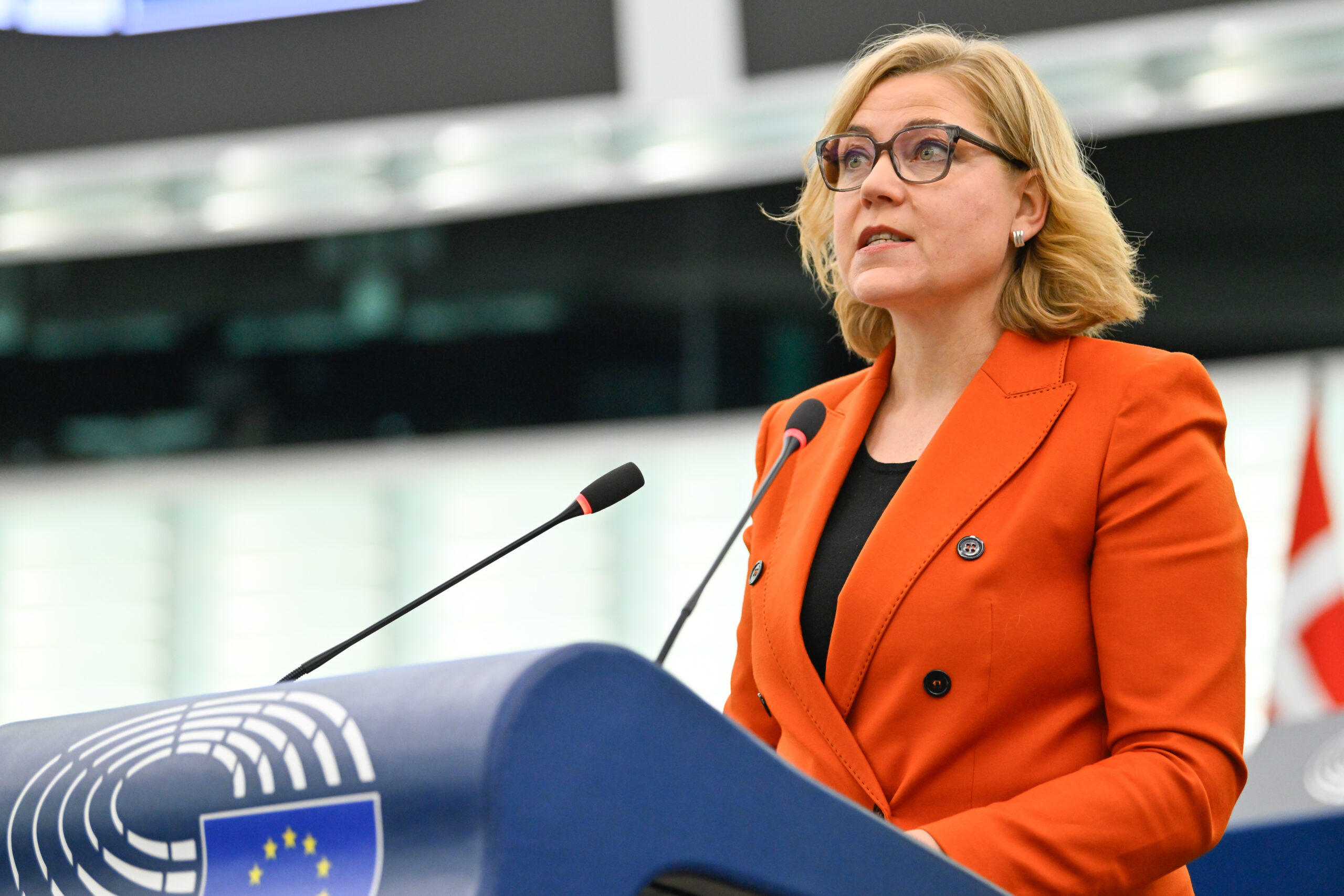
    Henna Virkkunen presents the cybersecurity package to the European Parliament in Strasbourg

    Already in 2023, the then Commissioner for Internal Market, Thierry Breton, identified Chinese companies Huawei and ZTE as high-risk suppliers and welcomed the decisions taken by some Member States to restrict or exclude the two Chinese technology companies from the list of 5G network suppliers. The point, Virkkunen said at a press conference, is that some Member States have turned a deaf ear to the recommendations in the “EU Cybersecurity Toolbox”. 

    “It didn’t work on a voluntary basis,” Virkkunen said. Just this summer the latest example, when Pedro Sanchez’s Spain chose to entrust its fibre optic telecommunications services to Huawei. A choice that, as the executive vice-president immediately warned, “could potentially create dependence on a high-risk supplier in a critical and sensitive sector, increasing the risk of foreign interference.” 

    Now Brussels wants to change tack: risk reduction in 18 critical sectors identified by Brussels would thus become mandatory, and Member States would have “three years” to comply with the European Commission’s blacklist and the restrictions indicated by Brussels. This includes not only 5G and fibre-optics, but also water and electricity supply, cloud computing services, surveillance equipment, medical devices, and semiconductors. These are all areas where it may be necessary to ban companies that pose a risk to European security. 

    “When we identify countries of concern and high-risk suppliers from those countries, we can impose restrictions on participation in EU-funded programmes or participation in our public procurement,” Virkkunen explained. Sometimes “we may restrict these high-risk suppliers entirely,” she added. 

    The Commission has not yet identified any countries or companies. It will do so at a later stage, when and if the EU Council and the European Parliament approve the new approach. “We will also have to consider the economic implications (of replacing suppliers, editor’s note), because resilience comes at a price, that’s for sure,” Virkkunen admitted.

    English version by the Translation Service of Withub
    Tags: cybersecuritycybersecurityhenna virkkunen

    Related Posts

    curriculum commissari
    Briefs

    Belgian police raid European Commission offices as part of investigation into property sales

    12 February 2026
    La icepresidente esecutiva della Commissione europea e Commissaria per la sovranità tecnologica, la sicurezza e la democrazia Henna Virkkunen e il commissario per l'equità intergenerazionale, la gioventù, la cultura e lo sport Glenn Micallef
    Defence & Security

    EU Commission presents Action Plan against cyberbullying. Virkkunen: One in four young people are victims

    10 February 2026
    EP Plenary session - Situation in Afghanistan: supporting women and communities affected by the recent earthquakes
    General News

    Cyclone Harry: EU urges stronger preparedness, unveils upcoming climate‑resilience framework

    10 February 2026
    Producer :
CE - Service audiovisuel
Photographer :
Sergei Gapon
    Green Economy

    Circular economy: new EU measures against the destruction of unsold clothing

    9 February 2026
    Ursula von der Leyen
    Politics

    Competitiveness: von der Leyen calls on Member States to step up efforts: “More enhanced cooperation”

    9 February 2026
    An employee of Bosch mounts a board with eight acceleration sensors in a centrifuge in the development section of the sensor production site of German car supplier Bosch in Reutlingen, southern Germany, on February 11, 2022.
    Net & Tech

    EU inaugurates 700 million euro NanoIC hub for advanced European chip design

    9 February 2026
    map visualization
    Gas serra

    EU greenhouse gas emissions rise by 1.1 per cent in the economy of the 27 Member States

    by Annachiara Magenta annacmag
    13 February 2026

    Eurostat data refer to the third quarter of 2025. The increase was driven by households, up 3.6 per cent, and...

    Richard Blumenthal, Ursula von der Leyen, Markus Söder, Mark Rutte, Ulf Kristersson, from left to right

    Rutte, von der Leyen and the “change of mindset” of EU countries in NATO

    by Simone De La Feld @SimoneDeLaFeld1
    13 February 2026

    Everything is ready for the Munich Security Conference, one year after JD Vance's frontal attack on the EU. For the...

    Europe grows older as median age reaches 45; one retiree for every three workers

    by Simone De La Feld @SimoneDeLaFeld1
    13 February 2026

    Over the last decade, the median age in the EU has increased by 2.1 years. Twenty-two per cent of European...

    FRONTEX

    Migrants: Frontex reports 60 per cent drop in irregular arrivals to the EU in January due to bad weather; deaths triple

    by Annachiara Magenta annacmag
    13 February 2026

    According to data from the European Border and Coast Guard Agency, there were 67 per cent fewer detections on the...

    • Director’s Point of View
    • Letters to the Editor
    • Opinions
    • About us
    • Contacts
    • Privacy Policy
    • Cookie policy

    Eunews is a registered newspaper
    Press Register of the Court of Turin n° 27


    Copyright © 2025 - WITHUB S.p.a., Via Rubens 19 - 20148 Milan
    VAT number: 10067080969 - ROC registration number n.30628
    Fully paid-up share capital 50.000,00€


    No Result
    View All Result
    • it ITA
    • en ENG
    • Newsletter
    • Politics
    • World politics
    • Business
    • General News
    • Defence & Security
    • Net & Tech
    • Agrifood
    • Altre sezioni
      • European Agenda
      • Culture
      • Diritti
      • Energy
      • Green Economy
      • Gallery
      • Finance & Insurance
      • Industry & Markets
      • Letters to the Editor
      • Media
      • Mobility & Logistics
      • News
      • Opinions
      • Sports
    • Director's Point of View
    • L’Europa come non l’avete mai ascoltata
    • Draghi Report
    • Eventi
    • Eunews Newsletter

    No Result
    View All Result
    • it ITA
    • en ENG
    • Newsletter
    • Politics
    • World politics
    • Business
    • General News
    • Defence & Security
    • Net & Tech
    • Agrifood
    • Altre sezioni
      • European Agenda
      • Culture
      • Diritti
      • Energy
      • Green Economy
      • Gallery
      • Finance & Insurance
      • Industry & Markets
      • Letters to the Editor
      • Media
      • Mobility & Logistics
      • News
      • Opinions
      • Sports
    • Director's Point of View
    • L’Europa come non l’avete mai ascoltata
    • Draghi Report
    • Eventi
    • Eunews Newsletter

    Attention