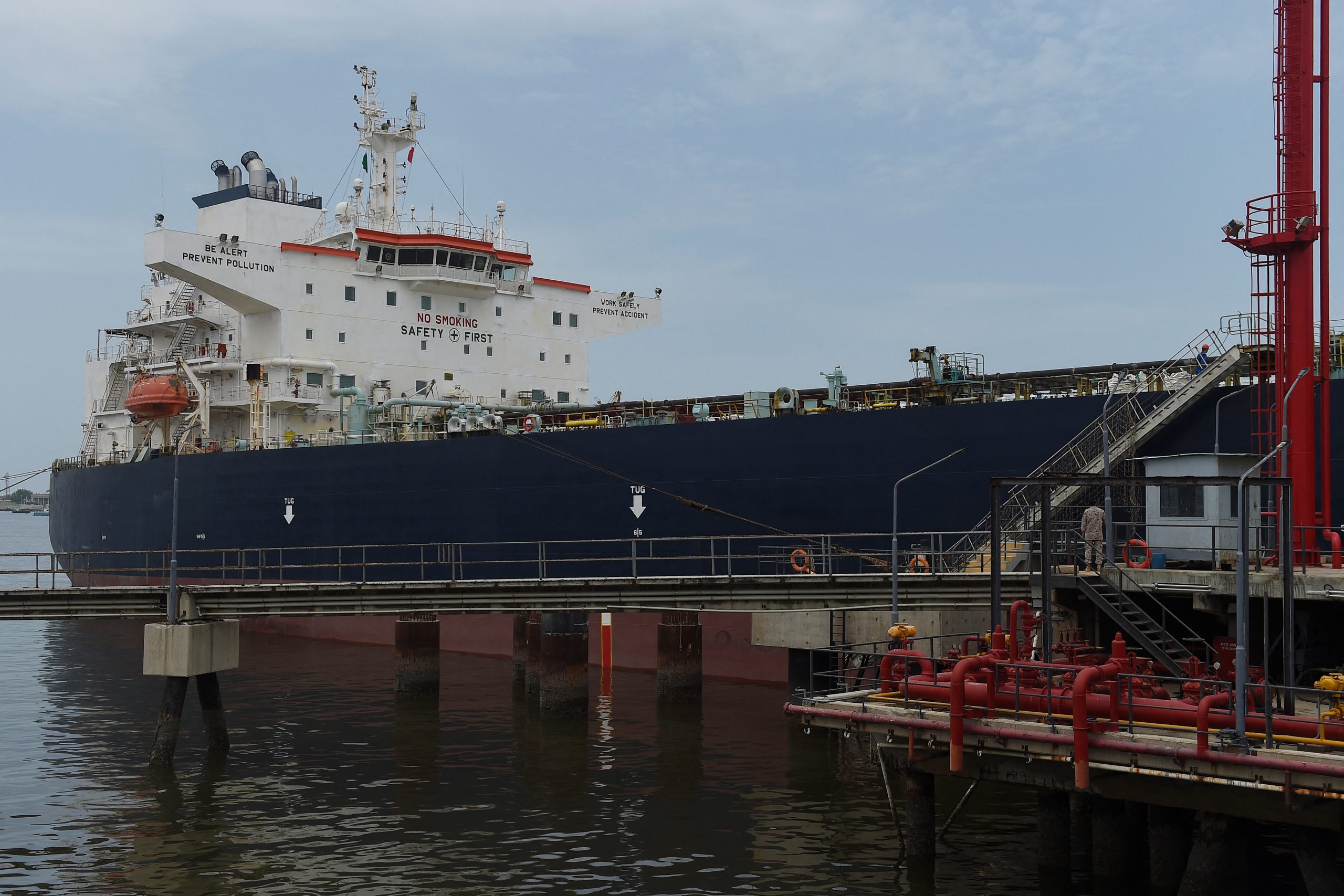
Brussels – A temporary suspension of sanctions on Russian oil. This is the latest move—unwelcome to the European Union—by US President Donald Trump. The announcement came during the night in Europe from US Treasury Secretary Scott Bessent, via X. “To expand the global reach of existing supply, the US Treasury Department is granting a temporary authorisation to allow countries to purchase Russian oil currently stranded at sea,” he writes. A measure that Bessent describes as “targeted and short-term” (the document specifies that it will remain in force until 11 April) and which “applies only to oil already in transit and will not provide significant financial benefits to the Russian government, which derives most of its energy revenue from taxes levied at the time of extraction.”
Nevertheless, however much Bessent tries to play down the measure, the full significance of Washington’s decision has not gone unnoticed in Brussels; it opens another rift in the Western front against Moscow and sets a precedent. “The United States’ unilateral decision to lift sanctions on Russian oil exports is a cause for great concern, as it has repercussions for European security,” said the President of the European Council, Antonio Costa. “Increasing economic pressure on Russia is crucial to ensure that it agrees to serious negotiations for a just and lasting peace. Easing sanctions increases Russia’s resources to wage its war of aggression against Ukraine,” he emphasised.
The Trump administration’s decision comes just a few hours after the video conference between G7 leaders on Wednesday (11 March), from which Costa and the Commission President, Ursula von der Leyen, emerged making it clear that “this is not the time to ease sanctions against Russia.” A point reiterated today (13 March) by the EU executive during its daily press briefing. “According to our information, Russia has earned US$150 million a day in additional revenue from oil sales since the start of the conflict in the Middle East. This makes Russia probably the biggest beneficiary of this conflict,” said the European Commission’s chief spokesperson, Paula Pinho. Brussels understands that “the exemption granted by the United States is limited in time and scope to ships already at sea.” However, “it remains convinced that the oil price cap and our sanctions against Russia are well-targeted and that they remain in force even in the current volatile oil market situation”, as noted by the Commission’s spokesperson for the Internal Market, Siobhan McGarry. “In the current volatile oil market situation, the oil price cap has proven effective in reducing Russian export revenues, whilst maintaining the stability of oil markets. Russian export volumes have remained largely stable, and Russia must under no circumstances benefit from the war against Iran,” she added. In this context, “Russia must under no circumstances benefit from the war in Iran“.
Meanwhile, the Ukrainian president, Volodymyr Zelensky, has spoken out against the move from Paris, where he met his French counterpart, Emmanuel Macron. According to the Ukrainian leader, “lifting the sanctions will in any case lead to a strengthening of Russia’s position.” At the joint press conference at the Élysée Palace, Zelensky explained that “this easing of sanctions by the United States alone could yield Russia around $10 billion for the war,” stressing that the US decision “certainly does not contribute to peace.” Macron was more confident about Western unity. For the French President, “the decision taken, on an exceptional and limited basis, by the United States does not call into question, in a lasting and comprehensive manner, the sanctions that they themselves decided upon within the framework of the G7”, he commented. “Russia believes that the war in Iran will offer it a respite”, but “it is mistaken” because “nothing will divert us from Ukraine,” and “our support will not waver,” he stressed. Furthermore, “the context of rising oil prices must under no circumstances lead us to review our sanctions policy towards Russia: this is the position taken by the G7, and it is logically the position of France and Europe.” German Chancellor Friedrich Merz was also critical. “Easing sanctions now, whatever the reason, is wrong,” he stated.
However, unity among the 27 member states has long since faded, and it is Viktor Orbán’s Hungarian government that is rejoicing. “The EU should follow the American example and lift sanctions on Russian oil,” wrote the Hungarian Foreign Minister, Peter Szijjarto, on X. “Reintroducing these supplies to the European market would help curb rising prices, but unfortunately, Brussels has not yet taken this step. As a result, fuel prices are rising across Europe, with petrol and diesel becoming more expensive throughout the continent. We call on Brussels to lift sanctions on Russian oil. EU decisions should not be driven by pressure from Zelensky,” he wrote.
A dispute over the Druzhba pipeline is currently unfolding between Budapest and Kyiv, with the Hungarian government accusing the Ukrainian government of refusing to reopen the oil taps in order to hinder Orbán’s election campaign ahead of the vote on 12 April, thereby exacerbating the risk of an energy crisis triggered by the closure of the Strait of Hormuz, and is fighting back by vetoing the €90 billion loan that the European Union has pledged to provide to Kyiv from as early as April, and by blocking any other decision to support the country under attack from Moscow. A tangled web that Brussels is trying to untangle, including by offering financial support for the pipeline’s restoration. “I can update you by saying that we have proposed a mission to inspect the ‘Druzhba’ pipeline to Ukraine,” explained Anna-Kaisa Itkonen, the European Commission’s spokesperson for Energy, yesterday (12 March). “We are in intensive discussions and in contact with Ukraine on this matter, as has been the case for a couple of weeks now, as well as with the Member States most closely involved,” she added.
Finally, the Kremlin has welcomed the White House’s move. Spokesperson Dmitry Peskov stated that the situation in the Middle East is characterised by “a growing crisis in the energy sector” and that “the lifting of US restrictions on oil sales to Russia will help stabilise the market.” This is also because “at present, Russia and the United States share the same interests in stabilising global energy markets.” And stabilising the global energy market, given the crisis triggered by the war in the Persian Gulf, is “impossible” without Russia’s oil production volumes.
English version by the Translation Service of Withub