
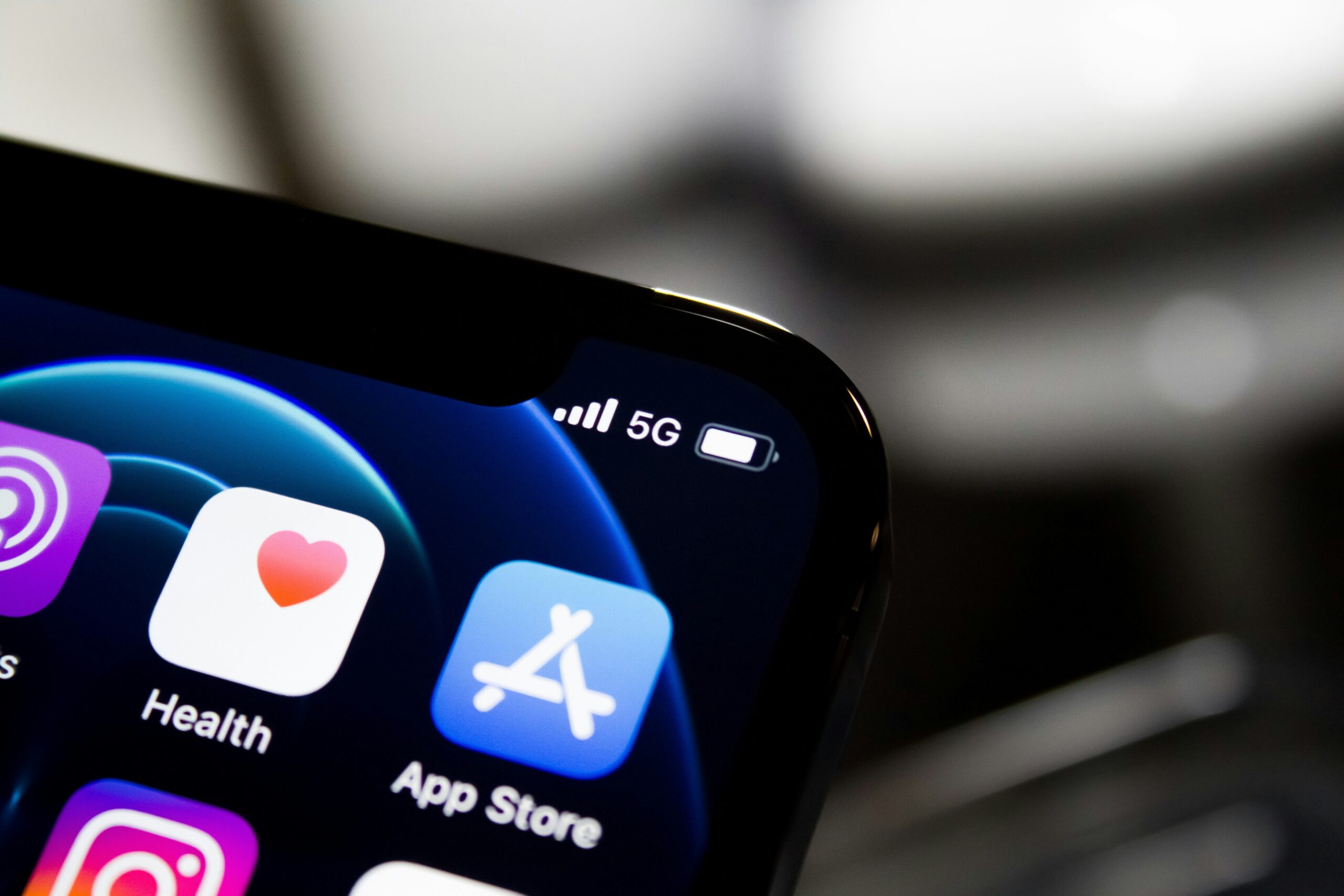
Brussels – Apple is a gatekeeper – that is, a major web platform that controls access to services – for the App Store, iOS and the Safari web browser. The General Court of the European Union today (8 July) rejected the US giant’s appeal against its designation as a gatekeeper by the European Commission and declared the appeals relating to the iMessage service inadmissible. Effectively, therefore, it upheld the EU executive’s assessment.
The case
On 5 September 2023, the European Commission designated Apple as a gatekeeper for three of its services – the App Store, the iOS operating system and the Safari browser – pursuant to the Digital Markets Act (DMA), subjecting it to the obligations set out in EU legislation to “ensure fair competition”. Furthermore, the Commission had classified the iMessage service as a number-independent interpersonal communications
service (NIICS) constituting a core platform service (CPS). In this context, Apple had brought an appeal before the General Court of the European Union to challenge “its designation as a gatekeeper for the App Store and iOS, as well as certain classifications adopted by the Commission” and the decision concerning iMessage.
The Court’s decision
Today, the Court dismissed all appeals, confirming Apple’s designation as a gatekeeper for the App Store and iOS, and declared the appeals relating to the iMessage service inadmissible. The Court ruled “inadmissible the plea of illegality raised by Apple against the provision of the
DMA relating to the interoperability obligations imposed on undertakings which are designated as gatekeepers.” The reason is that this provision “constitutes neither the legal basis of the designation decision nor a rule having a direct legal connection with that decision.” Therefore, its alleged illegality cannot be pleaded in support of an application to have that decision annulled.
The General Court also confirmed the Commission’s assessment that the different versions of the App Store
constitute a single CPS. Apple operates five software application stores – the iOS App Store, the iPadOS App Store, the watchOS App Store, the macOS App Store, and the tvOS App Store – and, according to the Court, “have the same purpose, namely to
connect app developers with end users in order to facilitate the distribution of software applications.” By contrast, the company argued that each store constituted a distinct CPS. The company’s intention was to ensure that only the iOS App Store could meet “the thresholds required to be designated as a gatekeeper” and thus be subject to the obligations under the DMA. In the Court’s view, however, the stores “relate primarily to the specific
characteristics of the devices used and do not justify distinguishing between several core platform services.”
Finally, on the issue of whether iMessage qualifies as a NIICS constituting a CPS, the Court declared the company’s appeal inadmissible because “that classification does not, by itself, produce binding legal effects that bring about a
change in Apple’s legal position.” In particular, “none of the obligations laid down by the DMA apply to iMessage since
that service has not been listed in a designation decision as an important gateway,” the Court explained in a press release.





![Da sinistra: il presidente del Consiglio europeo, Antonio Costa; il presidente dell'Ucraina, Volodymir Zelensky: la presidente della Commissione europea, Ursula von der Leyen [Bruxelles, 18 giugno 2024. Foto: European Council]](https://www.eunews.it/wp-content/uploads/2026/06/euco_ua260618-120x86.jpg)
![[foto: Saverio De Giglio/imagoeconomica]](https://www.eunews.it/wp-content/uploads/2026/10/cpt-120x86.png)