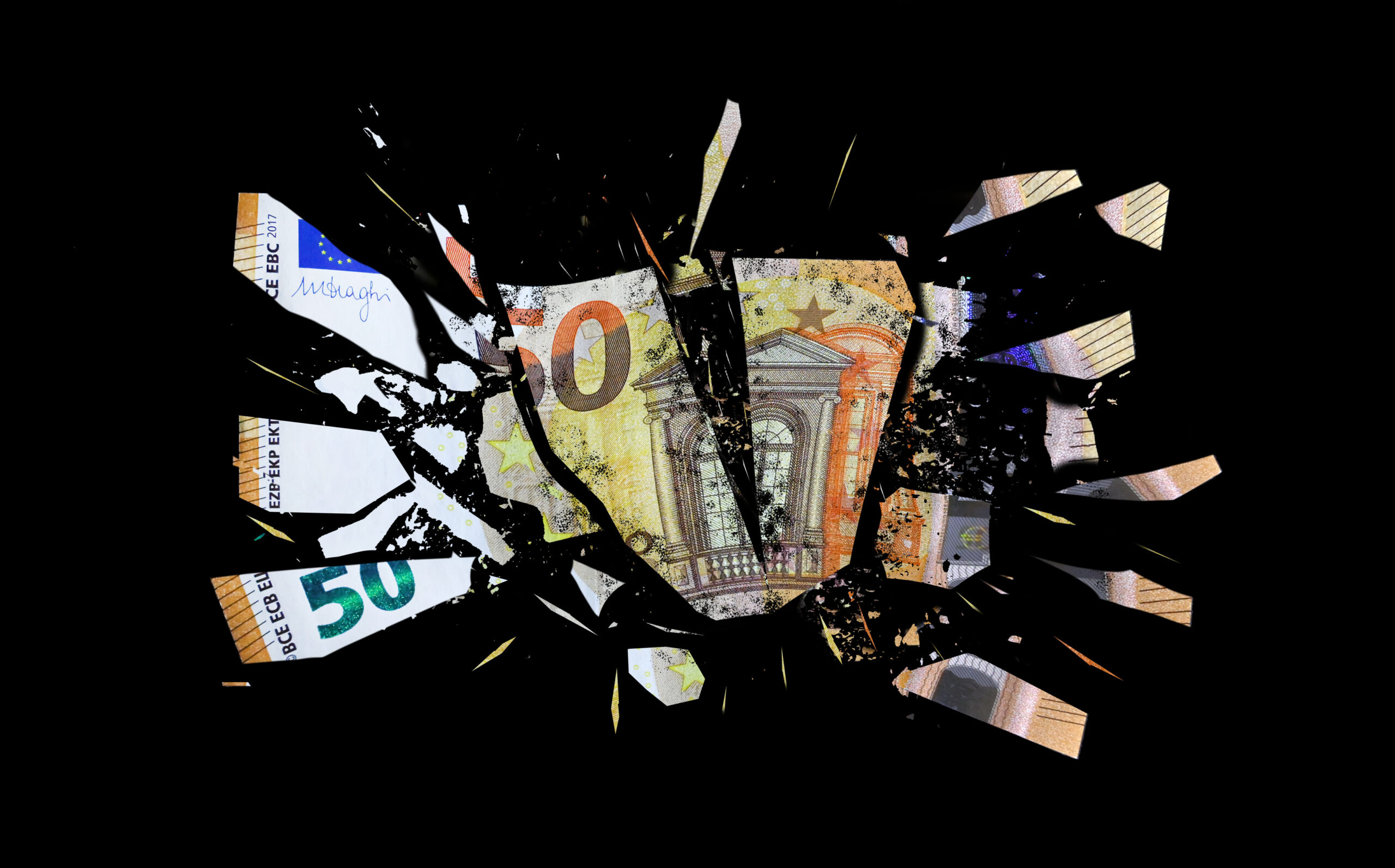
Brussels – Even more cuts. The solution proposed by the Irish Presidency of the Council of the EU for the negotiations on the EU’s multiannual financial framework (MFF 2028–2034) is characterised by further reductions to those already proposed by the Cypriot government, the country holding the previous rotating presidency. The negotiated compromise (nego-box) has sparked an outcry from the European Parliament, the European Committee of the Regions and the agricultural sector, with a blanket budget cut putting everyone on a war footing.
Total resources: another 108 billion disappears. Cuts to cohesion funding and the CAP
The first major change that stands out is the total allocation of resources. In its initial proposal, the European Commission had requested a budget of approximately 1,763 billion euros (in constant 2025 prices); Cyprus has reduced the total by around 33 billion euros, to 1,730 billion euros. Now, the Irish Presidency is proposing total commitments of 1,622 billion euros, 141 billion euros less than the Commission’s proposal and a further 108 billion euros less than Cyprus’s proposal.
For the Common Agricultural Policy (CAP) and cohesion policy – programmes brought together for the first time under a single funding instrument – a maximum budget of 914.2 billion euros is proposed, all of which is to be allocated. For agriculture and cohesion, this represents a reduction of 27.8 billion euros compared with the previous proposal from the Cypriot Presidency (942 billion euros).
The Irish Presidency is also making cuts to the competitiveness chapter, which is also a declared and universally recognised political priority, complete with a political pact. Here, the ceiling on earmarked resources is 455.6 billion euros, compared with the 502 billion euros proposed by Cyprus (-46.4 billion euros).
The Global Europe programme – the set of instruments designed to promote foreign policy, cooperation and development – is set to receive around 157 billion euros, following cuts of 26 billion euros (the Cypriot Presidency had proposed 183 billion euros). There are also cuts to administrative costs, namely salaries, office space and representation expenses: the Irish Presidency has allocated 95.3 billion euros, some 10 billion less than the amount granted by the Cypriots (104 billion).
Ireland is appeasing Member States by contradicting itself, thereby complicating the negotiations
The Irish Presidency is essentially putting forward a compromise proposal that responds to the requests of the Member States, in particular the ‘frugal’ states, which were calling for across-the-board cuts and almost indiscriminate ones. The Dublin government’s decision was driven by the recognition that a solid majority of countries would be difficult to shift, and the reduction was intended to secure an agreement.
However, political consensus must not be sought solely within the European Council. An inter-institutional agreement has to be reached with the European Parliament, where the Irish Prime Minister had promised an ambitious multi-annual budget. The proposal, on the other hand, runs counter to previous statements and intentions, negatively impacting inter-institutional relations, the negotiations, and Ireland’s hopes of ending its presidency on a political high note.
“The Irish Presidency’s proposal cannot serve as the starting point for an agreement”, thunders Siegfried Muresan, vice-chair of the European People’s Party (EPP) group and co-rapporteur on the dossier for the Parliament. “We are ready to negotiate, but the agreement must be based on ambition, not on the logic of net balances,” he adds. He then criticises Dublin: “The Irish Presidency has not taken any of Parliament’s proposals into account”.
For the EPP, co-rapporteur on own resources Danuše Nerudová, goes even further: “We are particularly disappointed that none of Parliament’s proposals has been accepted, despite the positive feedback received from many Member States.”
Carla Tavares (S&D) is also critical: “The 12.8 per cent cut to competitiveness and the 17.4 per cent cut to external action risk leaving Europeans exposed.” In particular, she laments that Europeans find themselves “less well-equipped to bridge the gap in terms of innovation and investment, support Europe’s partners, respond to crises and defend their interests and values, just as global instability is on the rise.” Meanwhile, Sandra Gómez López (S&D) warns: “Without progress on own resources, there can be no multiannual budget.”
The Committee of the Regions (CoR) also unequivocally rejects what the Irish Presidency has put on the table: “The next EU budget risks replacing a policy of investment for competitiveness — which enhances regions, boosts their capabilities and connects them to the European economy — with a form of competitiveness that is blind to geography,” denounces the institution’s president, Kata Tüttő. In her view, this would lead to a scenario of weakening, “concentrating resources in the strongest areas while forcing European regions into fiercer competition to secure what remains.”
Cuts are not enough for Berlin; heated leaders’ summit
While Parliament threatens to take a hard line, the member states in the Council appear ready to rise to the challenge, and Germany has even gone a step further by proposing further cuts. In an official statement, the German Chancellor, Friedrich Merz, rejected the Irish proposal because it does not sufficiently cut the multiannual budget. “The size of the new proposal is not a basis for agreement,” said the head of the federal government, who is displeased as the 108 billion euros of cuts are insufficient. “The EU budget must be affordable for those who bear the brunt of financing it,” he added. In other words: Berlin has no intention of contributing funds to the running of the European Union.
These positions risk undermining this week’s summit of heads of state and government (15 and 16 October), which is specifically dedicated to the common budget. Almost two-thirds of Member States – 16 out of 27, including Italy – are opposed to cuts to agricultural and cohesion policies, and the stance taken by the Irish Presidency and Germany – the leader of the so-called frugal countries keen to spend as little as possible – risks fuelling tensions and conflicts that would only serve to derail the talks.
Farmers ready to take their tractors back onto the roads
The Irish Presidency is also facing the threat of further protests by the primary sector, already capable of setting fire to the EU’s capital: “the European farming community rejects the Council’s budget proposal,” according to a statement issued by Copa-Cogeca, the umbrella organisation representing European farmers and agricultural cooperatives, immediately following the presentation of the rotating presidency’s negotiation package. The 27.2 billion-euro cut to cohesion and the CAP, as part of the overall 108 billion cut, is regarded as a robbery. “We took to the streets in Brussels and in national capitals to defend a fundamental red line: a strong, common and adequately funded CAP,” recalls Copa-Cogeca. The result of all this? “Two years of warnings that have been ignored.”
English version by the Translation Service of Withub