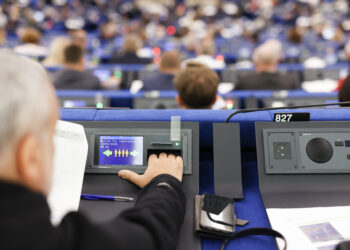
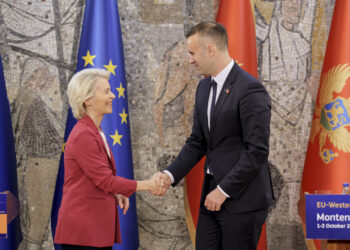
Are we all on the wrong end of the stick when we think about the European Commission? Maybe, a more politicised Commission would be a mistake. I know this is just making ripples on the water, but the debate on the structure of the future European institutions has been opened for a long time – still, it is not very popular: studied by stern and wise scholars, we cannot say it’s everyone’s bread and butter here in Brussels. Here, it’s all about whether the Parliament has the right to indicate the next Commission President to the Council. Very poor debate indeed, damaging, with unclear purposes and characterised by the low appeal exercised by parties’ candidates on citizens. They were supposed to motivate participation…and it was not like that.
For sure, the great revolution called “Lisbon Treaty” hasn’t been started a long time ago, some powers were redistributed, yet there are too many wobbly things around – particularly, when there is a crisis. European Institutions cannot keep up with necessities, partially because of history, of time passing day by day. The only debate you can hear is “more powers to the Parliament.” The opinion can be shared for sure, yet it brings several questions: more powers in which areas? For doing what? What would be the agreements within majority and minority? How would you guarantee MEPs independence from their national parties? Has the birth of true European parties been favoured by the excellent work of the Barroso Commission – was it enough to overcome the current associations of national parties? These are just some of the questions we should ask ourselves.
I am not a constitutionalist, then I’d like to focus my thoughts to a single elements – on everyone’s lips in Brussels and in every chancellor’s offices: citizens do not seem to be very interested in this (and we should discuss about this too, sooner or later). The President of the European Commission should represent someone and something: who? What? We all know what’s his, or her, role. And this should be kept as it is, for the time being. That is not the problem. Well, as far as the European Commission does not invest itself with a political connotations it hasn’t. Or has it? This is the core: is the European Commission mainly political? Is it mainly technical? It is said to be “keeper of the Treaties” first of all. This wouldn’t leave much room for politics, making those twenty-eight Commissioners (by the way, they are too many, aren’t they?) simple “refiners” of political choices made by politics. Well, it is clear some politics has to be ‘put in place’: everyone has their political thoughts, at least lato sensu, and at that level of responsibility a choice isn’t usually made between a wrench and a screwdriver, because of the political implications of any decisions taken there.
We could imagine political power lying in the two most explicitly political institutions, as per their own composition: the first, elected directly by citizens, the second, as expression of governments directly elected by citizens too. We are not talking about democracy, to be clear: the European Commission is perfectly democratic and legitimised to do what it does. We can even say that ‘politics killed the cat’: if everyone has a political role, who’s in charge of choosing the best methods of administration of the cure decided by politicians? A healthy separation of offices: national reasons would be elaborated and synthesised by the Council, citizens’ reasons would be represented in the Parliament, and ‘technical’ reasons (Italians don’t be too scared by ‘technical’, please) would be expressed in the Commission? I mean, why the Commission President should be a renowned politician, sometimes not very appreciated even in his own country, such as Juncker, or without career outlooks, such as Schulz, or a former Prime Minister, such as Blair (just to say a name), or even a Prime Minister in charge, from a little country, such as the current Danish PM Thorning-Schmidt, or such as Barroso?
Delors’ Presidency covered two terms because of enthusiasm, not because of lack of ideas (as per Barroso), and it was probably the best Commission ever (without taking into consideration remarkable individual initiatives such as the EU enlargement decided together with Prodi). It was characterised by innovation, it was able to draw governments and Parliaments over, it changed Europe – forever. And it was not composed of political elements, it was not an expression of the Parliament: it has wrapped itself with a “technocratic” role and this allowed it to act without being bothered (too much) by political tensions and ambitions.