




The market follows an upward trend, with an expense amounting to 21€ billion just in 2012. The Commission aims at aligning norms and have more stringent and targeted controls. Commissioner Cioloș “The future of the organic sector in the EU depends on the quality and integrity of the products sold under the European organic logo.”
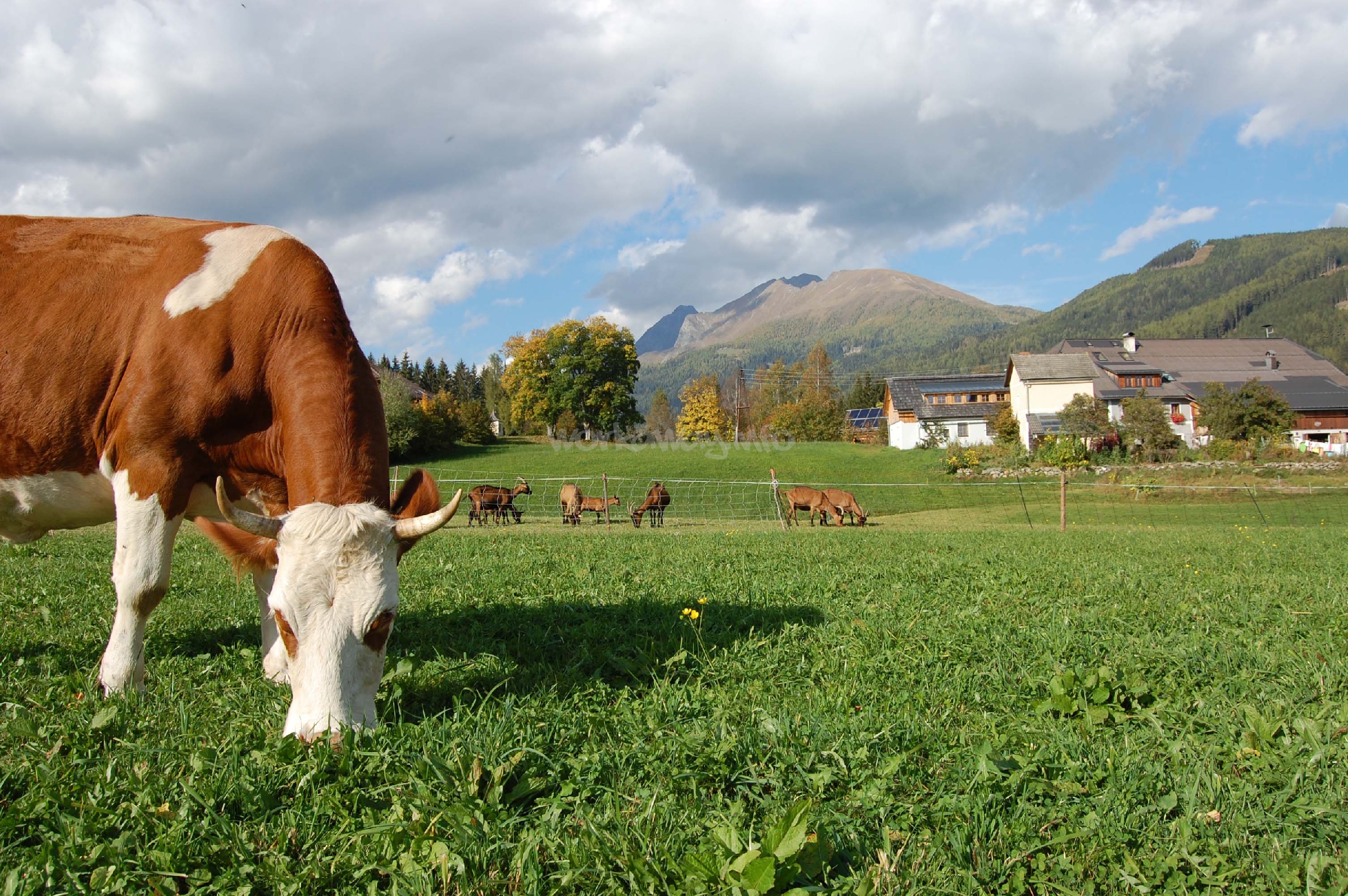
The EU organic market has quadrupled in size over the last decade, and the European Commission has decided to publish a new proposal of Regulation, which seeks to update and adjust rules, making them aligned among the Member States. In 2012, consumer spending on organic food products amounted to €20.9 billion, increased from the previous year (in which it amounted to €19.7 billion); there are more than 186,000 organic farms across Europe, cultivating an area of 9.6 million hectares, that is, 5.4 percent of the total agricultural area in the European Union. Italy, with its 1.1 million hectares, is the second state of the union in respect of cultivated area, after Spain (1.8 million hectares). Figures show that organic holdings are generally bigger than conventional farms, and their managers are younger. Permanent pasture represents the biggest share of the organic area (about 45 percent), followed by cereals (around 15 percent) and permanent crops (about 13 percent). Dealing with organic livestock, poultry registers the highest number of animal organic heads, the rest is led by sheep (46 percent) and bovines (30 percent). “The future of the organic sector in the European Union depends on the quality and integrity of the products sold under the European organic logo,” said Dacian Cioloș. According to the Commissioner for Agriculture and Rural Development, “this new package is good for consumers and good for farmers. Consumers will have better guarantees on organic food made and sold in the European Union and farmers, producers and retailers will have access to a larger market, both within and outside the Union.” The proposal, which will now be submitted to the European Parliament and the Commission, calls for strenghtened controls on each part of the organic chain, hence not only on the prouduction, given that according to the Commission’s surveys the highest amount of frauds happens during packaging and sale.
“Non-compliant subjects will have the label removed immediately,” said Cioloș.

Control will be based on a risk-based approach, that is less controls for more virtuous holdings, more controls for the ones showing several failures. Organic agricultural holdings will have to be entirely managed in compliance with the requirements applicable to organic production – no more ‘mixed’ holdings, with conventional and organic productions, because “controls are more diffcult in these cases and the risk of ‘contamination’ of products is higher,” as sources from the Commission explained. Non organic animal feed will be banned, while crops and livestock from non organic parents will be allowed for a transitional period, up to 2021. “That’s due to the fact that some species are still difficult to find into the organic market, ” said the source, “hence without the derogation farmers would have several problems in finding them.” The “contamination” treshold from GMOs, that is, the possibility for animal feed or crops to get in contact with genetically modified food, will be kept at 0.9 percent, “but it will be necessary to prove that the contact happened by chance, and investigate into the source of contamination,” added our source.
Furthermore, astem of group certification shall be introduced for small-scale farmers, to reduce inspection and certification costs and the associated administrative burden. Rules will be strengthened and harmonised in all Member States to enhance fair competitiveness. “Currently, if a contamination is proved, the EU organic logo is taken off in some Member States,” added our source, “in others the product is taken off the market, in other it is possible to require further controls before a decision is taken. This is not fair.” Only the percentage of contamination from pesticides still has to be clarified. The Commission has prepared a list of products suitable for organic farming, “or some plant species cannot survive,” explained our source, yet no treshold for contamination has been estabilshed for non-compatible products. It is supposed to be very low in any case, probably the one adopted for children’s food. These standards will also be requested for products coming from third parties. If the new Regulation will enter in foce, the control bodies of non-EU countries will then be progressively shifted towards the compliance with the new regulation, hence imported products will have to comply with a single production regulatory framework.
Alfonso Bianchi




![Il ministro dei Trasporti, Matteo Salvini [Bruxelles, 5 dicembre 2024. Foto: Emanuele Bonini per Eunews]](https://www.eunews.it/wp-content/uploads/2024/12/salvini241205-120x86.jpeg)
![[foto: Bogdan Hoyaux. Copyright: CE - Service audiovisuel, European Union , 2026]](https://www.eunews.it/wp-content/uploads/2026/10/eu-inc-120x86.jpg)
