- L'Europa come non l'avete mai letta -
sabato, 18 Aprile 2026
No Result
View All Result
  • it ITA
  • en ENG
Eunews
  • Politica
  • Esteri
  • Economia
  • Cronaca
  • Difesa
  • Salute
  • Agrifood
  • Altre sezioni
    • Cultura
    • Diritti
    • Energia
    • Green Economy
    • Finanza e assicurazioni
    • Industria e Mercati
    • Media
    • Mobilità e logistica
    • Net & Tech
    • Sport
  • Newsletter
  • Invasione russa in Ucraina
  • Energia
  • Israele
  • Usa
    Eunews
    • Politica
    • Esteri
    • Economia
    • Cronaca
    • Difesa
    • Salute
    • Agrifood
    • Altre sezioni
      • Cultura
      • Diritti
      • Energia
      • Green Economy
      • Finanza e assicurazioni
      • Industria e Mercati
      • Media
      • Mobilità e logistica
      • Net & Tech
      • Sport
    No Result
    View All Result
    Eunews
    No Result
    View All Result

    Home » Politica Estera » Il Belgio non è uno Stato fallito (ENG)

    Il Belgio non è uno Stato fallito (ENG)

    Sir Michael Leigh, Senior Fellow del German Marshall Fund of the United States, spiega perché a Bruxelles non si possono addossare più colpe di altre capitali per gli attentati terroristici, ma anche cosa si potrebbe fare per rendere il Paese più efficiente

    Redazione</a> <a class="social twitter" href="https://twitter.com/eunewsit" target="_blank">eunewsit</a> di Redazione eunewsit
    5 Aprile 2016
    in Politica Estera
    Belgio, Bruxelles, terrorismo, prevenzione, gmf, attentati

    Il giuramento del premier belga Charles Michel davanti al re Filippo del Belgio

    WASHINGTON – Belgium has received intense criticism following the deadly Brussels airport and metro attacks on 22 March that left 32 people dead and many more wounded. Commentators have labelled Belgium a “dysfunctional divided country,” “an incubator of terror,” and “a country that operates on the basis of “linguistic apartheid.” Some have even likened Belgium to Syria and Iraq as failed states.

    But it is simplistic to blame Belgium for Europe’s vulnerability to terrorism. Every major security failure from Pearl Harbor to 9/11 and the Paris attacks last November has been followed by revelations of warnings that were ignored and of raw intelligence that was not evaluated in a timely and effective manner.

    The NSA, CIA, and FBI were alerted before the 9/11 attacks but the terrorists slipped through their fingers. The 9/11 Commission report showed that the different jurisdictions of law enforcement authorities in New York City and across the U.S. made coordination difficult. In 1984, when the IRA bombed the British Conservative Party conference, the Prime Minister Margaret Thatcher narrowly escaped with her life, despite tip offs.

    Belgio, Bruxelles, terrorismo, prevenzione
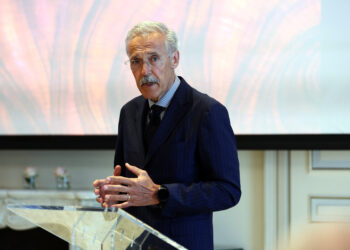
    Sir Michael Leigh

    Belgian leaders acknowledge the shortcomings that preceded the Brussels attacks. Two ministers offered their resignations, and the government rushed through overdue legislation to permit round-the-clock house searches, limit arms sales, and create a single counterterrorism database. There have been calls to increase resources for social inclusion and counter-radicalization programs in the Brussels municipality of Molenbeek and other deprived areas.

    The French Urban Affairs Minister Patrick Kanner has acknowledged that France has around 100 municipalities with potential similarities to Molenbeek. In France, these are mostly isolated suburban neighborhoods where amenities are inadequate and violence is widespread. In Belgium, immigrant-based communities live in the cities themselves and many members of Belgian regional parliaments have immigrant backgrounds.

    Just the same, poorer municipalities in Brussels, like Molenbeek, need better playgrounds, schools, youth clubs and other social facilities; local communities must play their part in ensuring that such facilities are maintained. Additional resources are needed both to give the Muslim population a stake in Belgian society and to ensure more effective policing.

    But resources are scarce.

    Besides its immigrants, Brussels hosts a large international presence, including the EU, NATO, three diplomatic communities, and some 2,000 international bodies, as well as thousands of ex-pats. Many of these bodies are tax exempt and commuters pay tax in the areas outside Brussels where they live.

    Despite Belgium’s multi-level system of governance, the country does better than many European states in rankings of the quality of justice, income equality, and perceptions of corruption. Belgium’s “linguistic wars” have rarely degenerated into violence. The country has remained stable during the prolonged negotiations that often precede the formation of new governments. Belgium has evolved from a unitary state to a highly decentralized federal state, while preserving sufficient consensus to maintain social peace.

    Following the Brussels attacks, many Belgians sympathized with the call by Jean-Claude Juncker, the European Commission President, for a European “security union.” Yet kneejerk calls for “more Europe” do not necessarily produce results in the 28-member European Union. The EU lacks legal powers in the fields of intelligence and security, which are essentially the preserve of national authorities.  In fighting terrorism, Belgian intelligence services need to cooperate with the CIA and Mossad as much as with the DGSE in France or the BND in Germany. Where “Europe” has acquired real responsibilities like the Schengen Information System, Europol, or the “European arrest warrant,” these areas should be reinforced and used to the fullest extent possible.

    Belgium cannot prevent terrorism through an “escape into Europe.”  But it can achieve much by improving coordination between the federal, regional and local levels and by renegotiating their respective responsibilities. Nineteen separate municipalities and six separate police forces are too many for a capital region of just over 1 million inhabitants. Despite linguistic sensitivities, the municipalities should accept greater coordination at regional and federal levels while local authorities should be informed of investigations underway and of the identity of inhabitants who have returned from Syria or Iraq. Recently a trilingual citizens’ petition demanded that a single metropolitan police force be set up, giving further proof of the vibrancy of the city’s civil society.

    For half a century, Belgium has made a major contribution to European security through NATO and the EU.  Instead of maligning the country, other Europeans should work with Belgium to overcome the EU’s mutually reinforcing crises and to ensure the survival of its major accomplishments, including the Schengen open internal borders system and the single European currency, the Euro.

    Leggi l’articolo di Sir Michael Leigh sul sito GMF.
    Tags: attentatibelgiobruxellesGMF @itprevenzioneterrorismo

    Ti potrebbe piacere anche

    Terroristi, fondamentalisti [foto: Carlo Carino/imagoeconomica, via IA]
    Politica Estera

    Il Medio Oriente preoccupa l’UE: “Occhi aperti sulla minaccia del terrorismo”

    17 Aprile 2026
    I vigili del fuoco lavorano tra le macerie di una sezione di un condominio di nove piani nel quartiere di Sviatoshynskyi, distrutto dall'attacco missilistico e con droni russi a Kiev, il 31 luglio 2025. Sei persone sono morte nella capitale, tra cui un bambino di sei anni e sua madre, e decine sono rimaste ferite. Fonte: Ipa Agency (Foto di Danylo Antoniuk/Ukrinform) (Foto di Ukrinform/Ukrinform/Sipa USA)
    Politica Estera

    L’UE dopo gli attacchi russi alle città ucraine: “Aumenteremo la pressione su Mosca”

    16 Aprile 2026
    manifestazione gaza palestina bruxelles
    Diritti

    Il Belgio alla sbarra per Gaza, la Corte d’Appello: Non ha impedito il trasferimento di armi a Israele

    27 Marzo 2026
    [foto: Carlo Carino/imagoeconomica, via IA]
    Cronaca

    Prevenzione e sensibilizzazione, l’UE si attiva già contro gli incendi

    25 Marzo 2026
    MINISTERO DEGLI AFFARI ESTERI
FARNESINA
SCULTURA GIO POMODORO (Imagoeconomica)
    Cultura

    L’Ambasciata d’Italia in Belgio accoglie la “Sfera” di Arnaldo Pomodoro: un ponte ideale tra Bruxelles e Roma

    23 Marzo 2026
    Roberta Metsola
    Politica

    Metsola ai leader: “Parlamento UE sia pienamente coinvolto su agenda di competitività”

    19 Marzo 2026

    TUTTI GLI EVENTI CONNACT

    Il Rapporto Draghi in italiano

    di Redazione eunewsit
    9 Settembre 2024
    CondividiTweetCondividiSendCondividiSendCondividi
    Made with Flourish
    Il presidente francese Emmanuel Macron, accompagnato dalla premier italiana Giorgia Meloni, dal primo ministro britannico Keir Starmer e dal cancelliere tedesco Friedrich Merz, arriva al Palazzo dell'Eliseo per una conferenza sull'iniziativa per la navigazione marittima nello Stretto di Hormuz il 17 aprile 2026 a Parigi, in Francia. Foto di Jeanne Accorsini/Pool/ABACAPRESS.COM. IPA Agency

    Hormuz riaperto, da Parigi i volenterosi pronti a missione pacifica

    di Giulia Torbidoni
    17 Aprile 2026

    Al vertice organizzato dai leader di Francia e Regno Unito, arriva e viene accolta con favore la notizia della riapertura...

    Seggi elettorali. Fonte: Sara Minelli via Imagoeconomica

    Dopo Ungheria, Bulgaria, Cipro, Svezia e Lettonia: le elezioni nell’UE nel 2026

    di Redazione eunewsit
    17 Aprile 2026

    Il centrodestra ad aprile 2026 guida 13 governi su 27, ai quali si aggiungono tre governi di destra (come quello di Giorgia Meloni...

    La commissaria europea al Mediterraneo, Dubravka Šuica, presenta il Patto Mediterraneo Piano d'Azione (17 aprile 2026). Fonte: EC - Audiovisual Service

    Trasformare le sfide attuali in opportunità: l’UE presenta il piano d’azione per il Mediterraneo

    di Annachiara Magenta annacmag
    17 Aprile 2026

    La commissaria per il Mediterraneo Dubravka Šuica ha illustrato oggi i tre pilastri fondamentali: persone ed educazione, economia, sicurezza e...

    Terroristi, fondamentalisti [foto: Carlo Carino/imagoeconomica, via IA]

    Il Medio Oriente preoccupa l’UE: “Occhi aperti sulla minaccia del terrorismo”

    di Emanuele Bonini emanuelebonini
    17 Aprile 2026

    Il tema al centro dell'agenda dei ministri degli Esteri. Prevista conversazione col premier libanese e possibile finestra per le sanzioni...

    • Editoriali
    • Eventi
    • Opinioni
    • Risultati Europee 2024
    • Chi siamo
    • Contatti
    • Privacy Policy
    • Cookie policy

    Eunews è una testata giornalistica registrata
    Registro Stampa del Tribunale di Torino n° 27

    Copyright © 2025 - WITHUB S.p.a., Via Rubens 19 - 20148 Milano
    Partita IVA: 10067080969 - Numero di registrazione al ROC n.30628
    Capitale sociale interamente versato 50.000,00€

    No Result
    View All Result
    • it ITA
    • en ENG
    • Politica
    • Esteri
    • Economia
    • Cronaca
    • Difesa e Sicurezza
    • Salute
    • Agrifood
    • Altre sezioni
      • Cultura
      • Diritti
      • Energia
      • Green Economy
      • Gallery
      • Finanza e assicurazioni
      • Industria e Mercati
      • Media
      • Mobilità e logistica
      • Net & Tech
      • News
      • Opinioni
      • Sport
    • Editoriali
    • Podcast / L’Europa come non l’avete mai ascoltata
    • Report Draghi
    • Risultati Europee 2024
    • Eventi
    • Le Newsletter di Eunews

    No Result
    View All Result
    • it ITA
    • en ENG
    • Politica
    • Esteri
    • Economia
    • Cronaca
    • Difesa e Sicurezza
    • Salute
    • Agrifood
    • Altre sezioni
      • Cultura
      • Diritti
      • Energia
      • Green Economy
      • Gallery
      • Finanza e assicurazioni
      • Industria e Mercati
      • Media
      • Mobilità e logistica
      • Net & Tech
      • News
      • Opinioni
      • Sport
    • Editoriali
    • Podcast / L’Europa come non l’avete mai ascoltata
    • Report Draghi
    • Risultati Europee 2024
    • Eventi
    • Le Newsletter di Eunews

    Attenzione